This year the bags of new organic raised-bed potting soil felt like ground up particleboard, and (even after several rounds of sowing and planting) the garden seeds and plants just haven’t grown at all.
This was disheartening for me personally, but brought a new appreciation for healthy gardens. Chatting with one gardener, I asked an admiring question “Wow, the plants look good. Did you feed them something really special, like raw fish?” The gardener fell silent, and went into his house. Perhaps he was following the Greek Orthodox precaution, that open praise might involve a demon of envy and allow the evil eye to harm his vegetables. (Another gardener answered the same question with “That’s right! It was the fish emulsion.”)
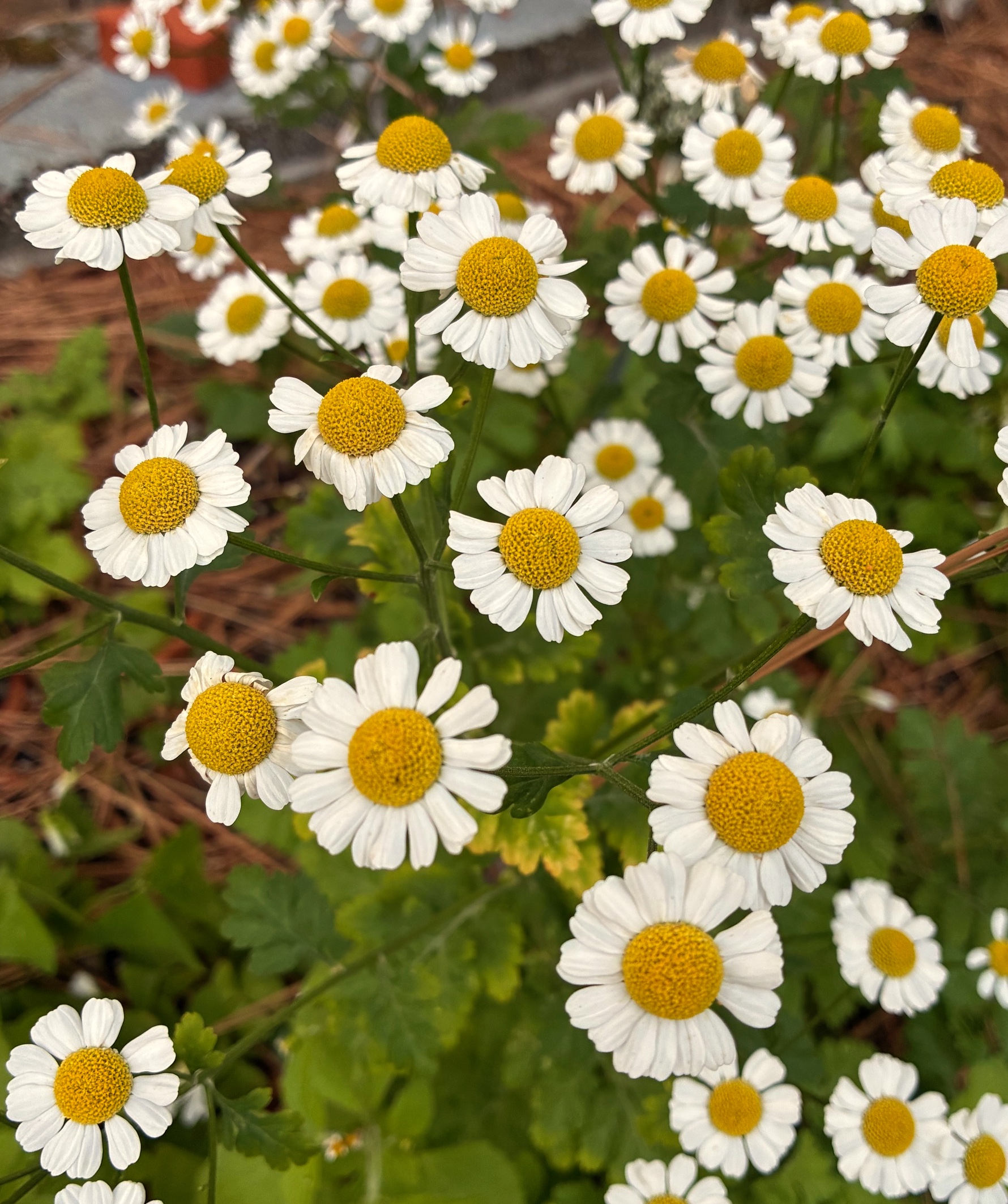
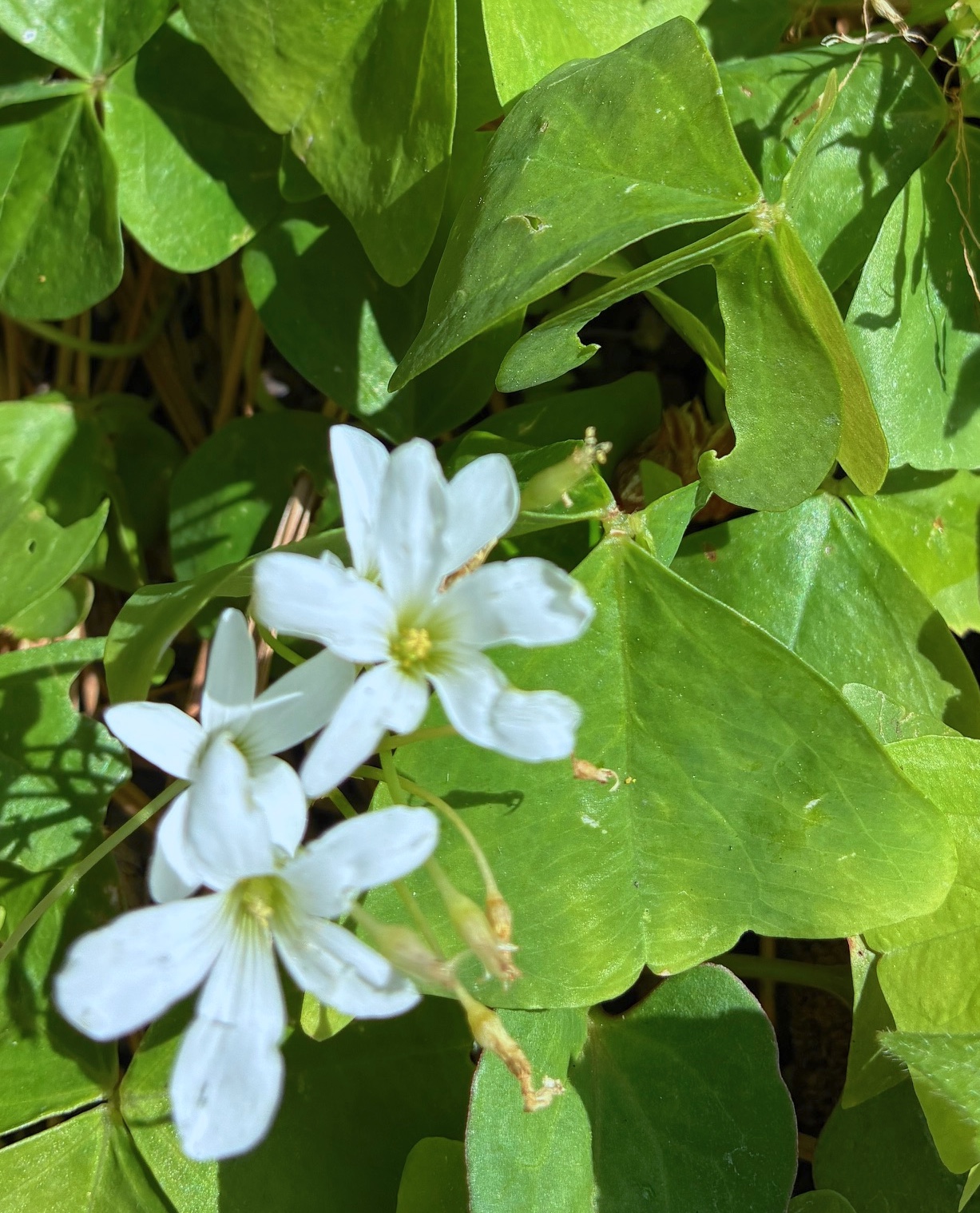
Fortunately a few garden plants did prevail, just enough to let the neighbors know that someone was still trying; all of the plants are stuff that I didn’t even try to grow. Sunchokes and fish mint cozied on over from the Wing Family side of the patch. Two other plants have bloomed all summer with pretty white flowers: volunteer feverfew, and oxalis (shamrock) descended from a plant bought at Trader Joe’s years ago. Here are the intrepid little troopers.
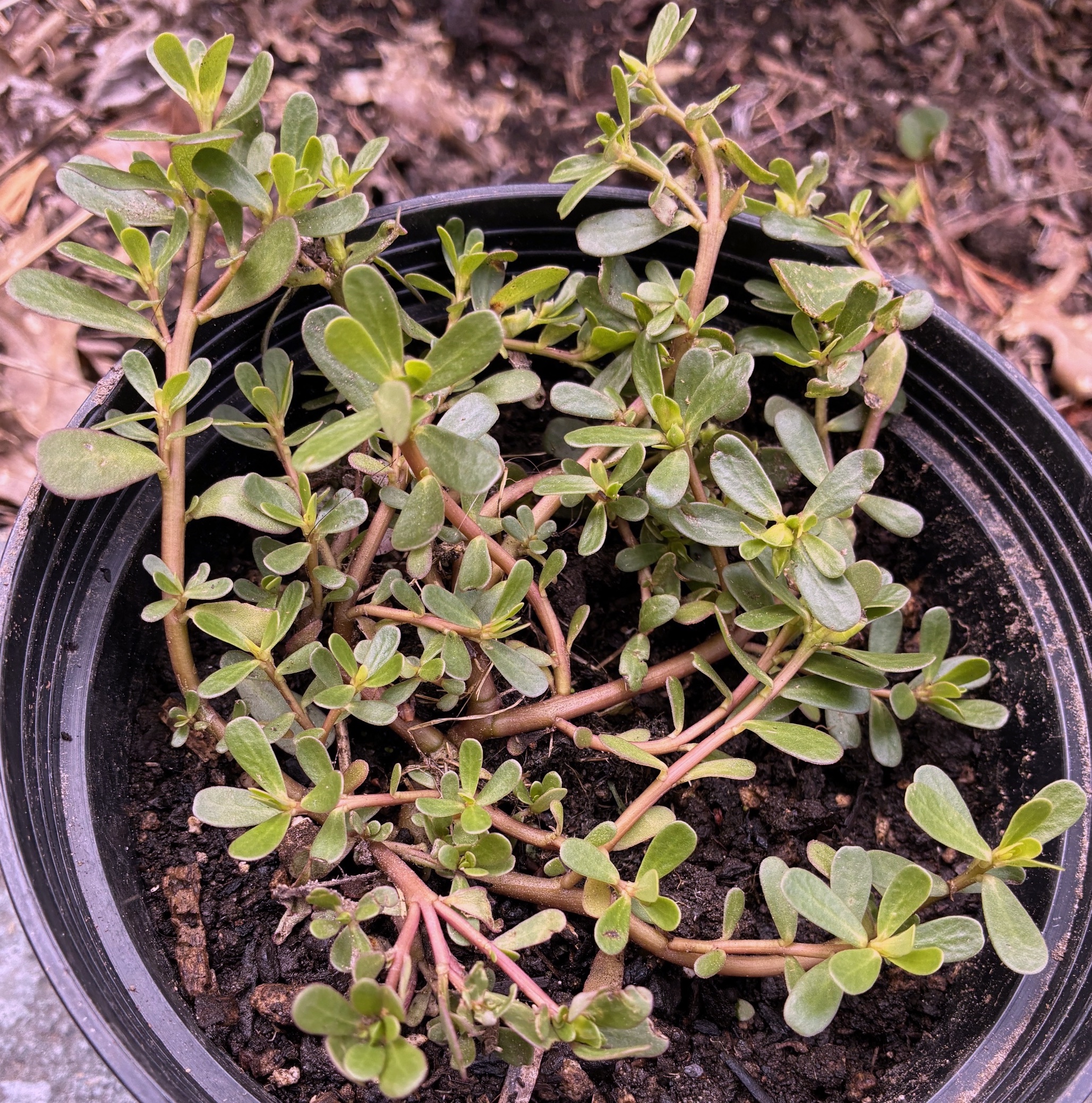
Then from a crack in the sidewalk outside the campus gym, I dug up some truly filthy trampled purslane plants. With some cleaning up and some poor-quality commercial potting soil, several containers of purslane are growing as a source of greens and seeds:
When vegetables don’t need tending because they didn’t grow this year, that grants plenty of leisure to ask, How are some plants popping up this hot dry summer, given no care at all — in gardens, on the street, and in vacant lots?
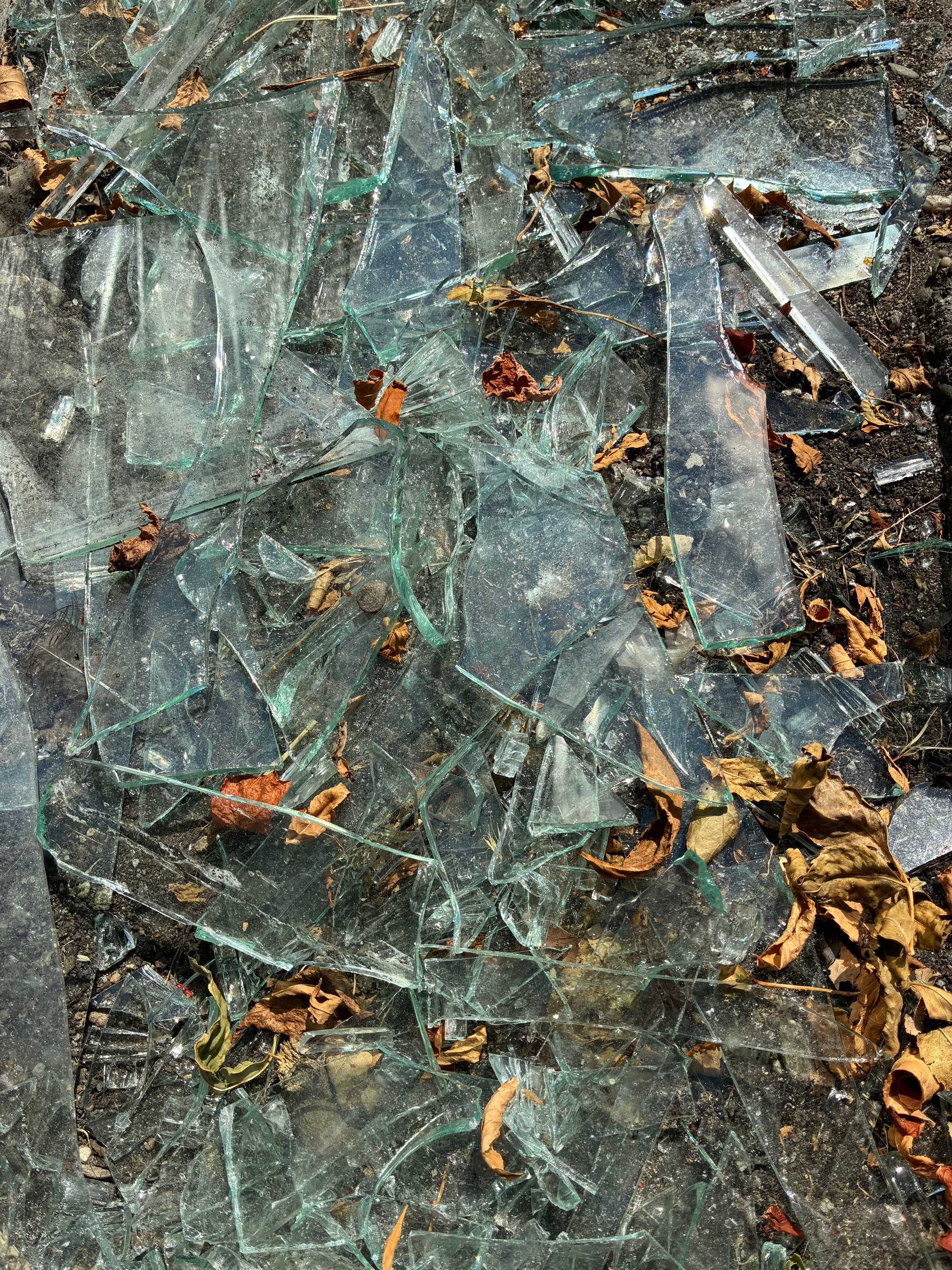
Here’s one habitat: hardpan dirt and concrete mulched with smashed glass at my bus stop, between a marijuana dispensary, a Smoke & Vape store, and a gas station popular with men who don’t own cars.
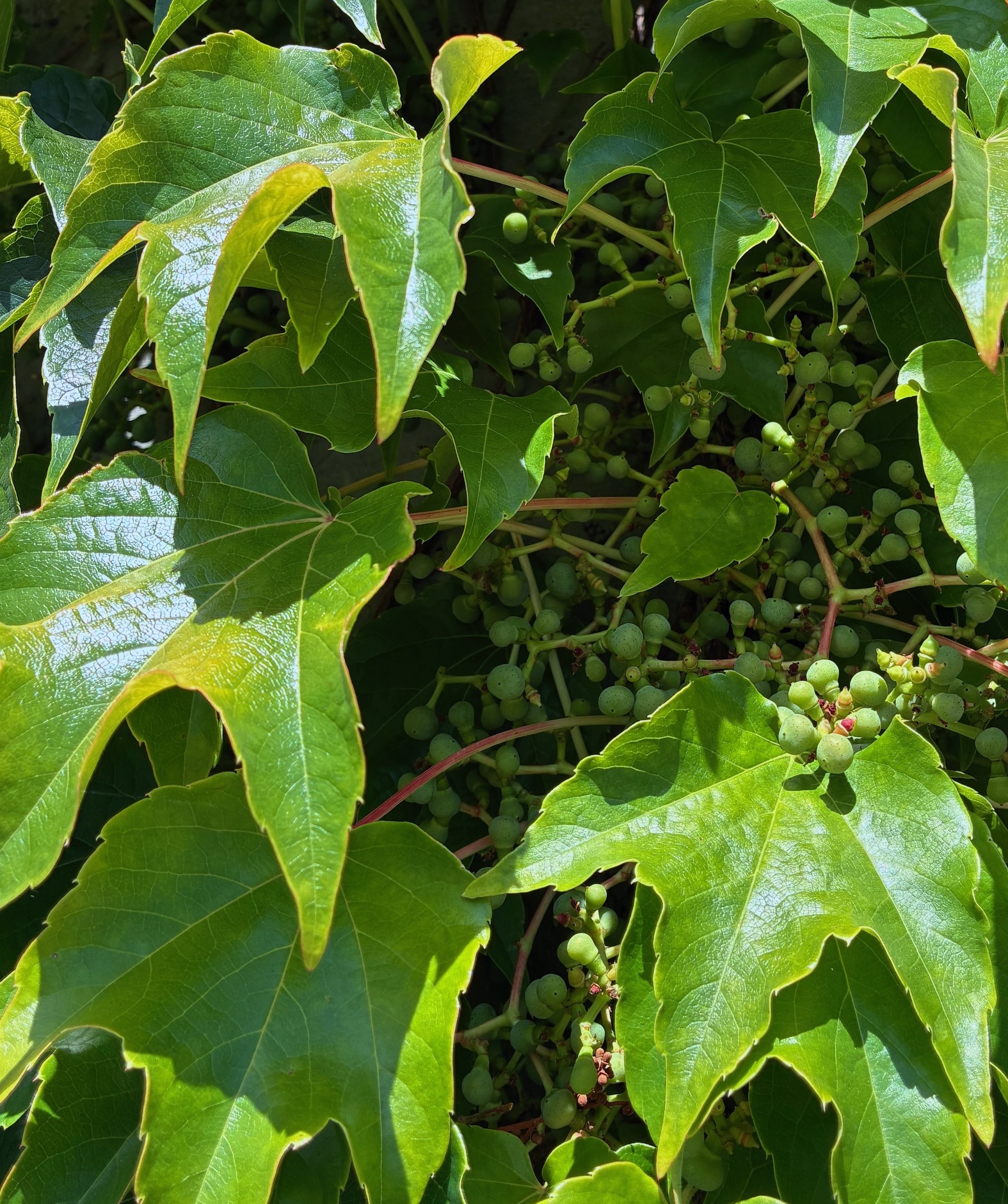
What could grow here? Well, there was a thick grove of Poison Hemlock; luckily it was removed, perhaps by workers from the city. Here is still healthy Boston Ivy growing right up the bricks of the vape shop:
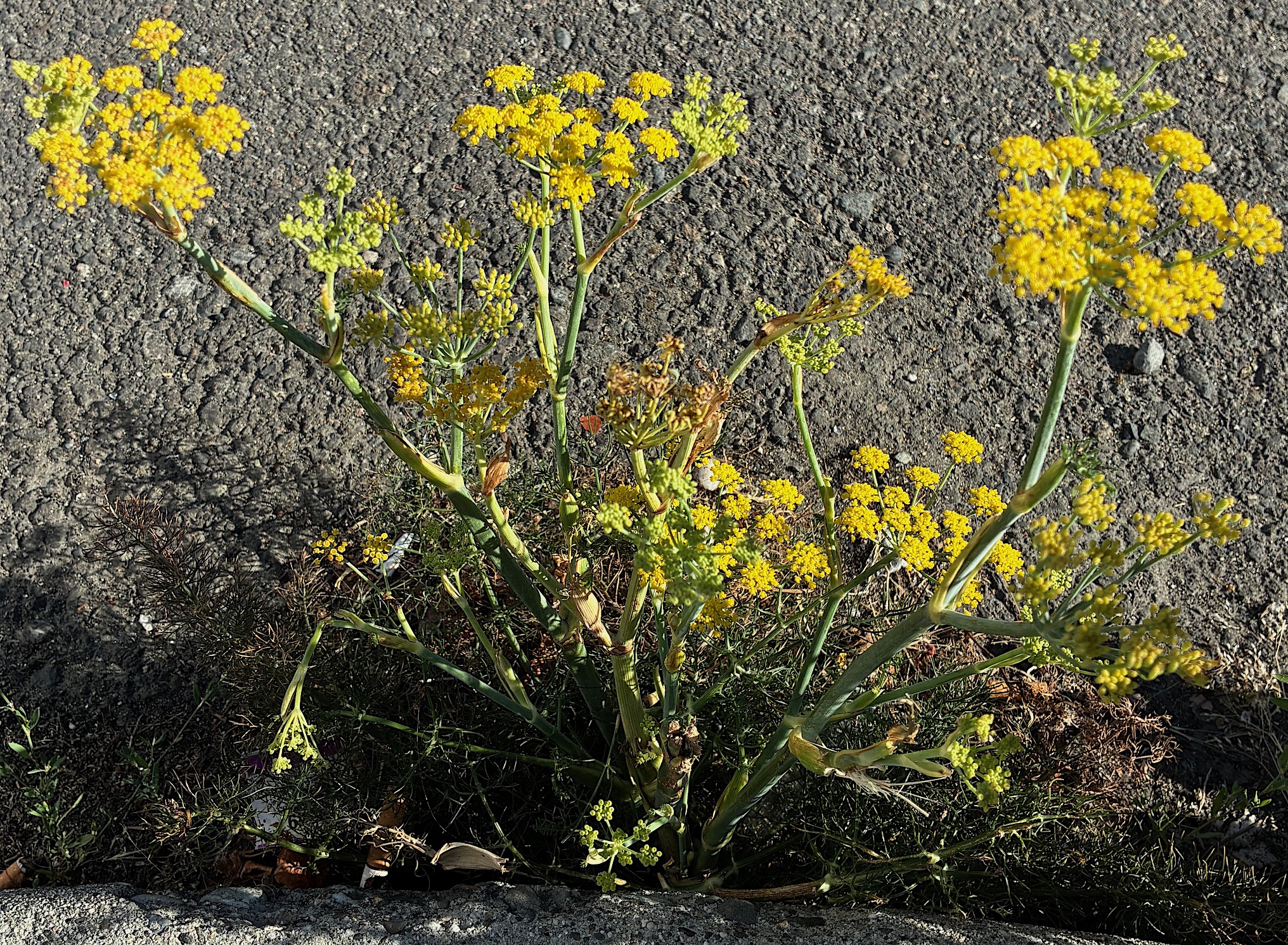
And fennel, right out of the pavement; not at its usual eight foot high glory, but soldiering along between concrete and hot asphalt at the edge of the bus lane.
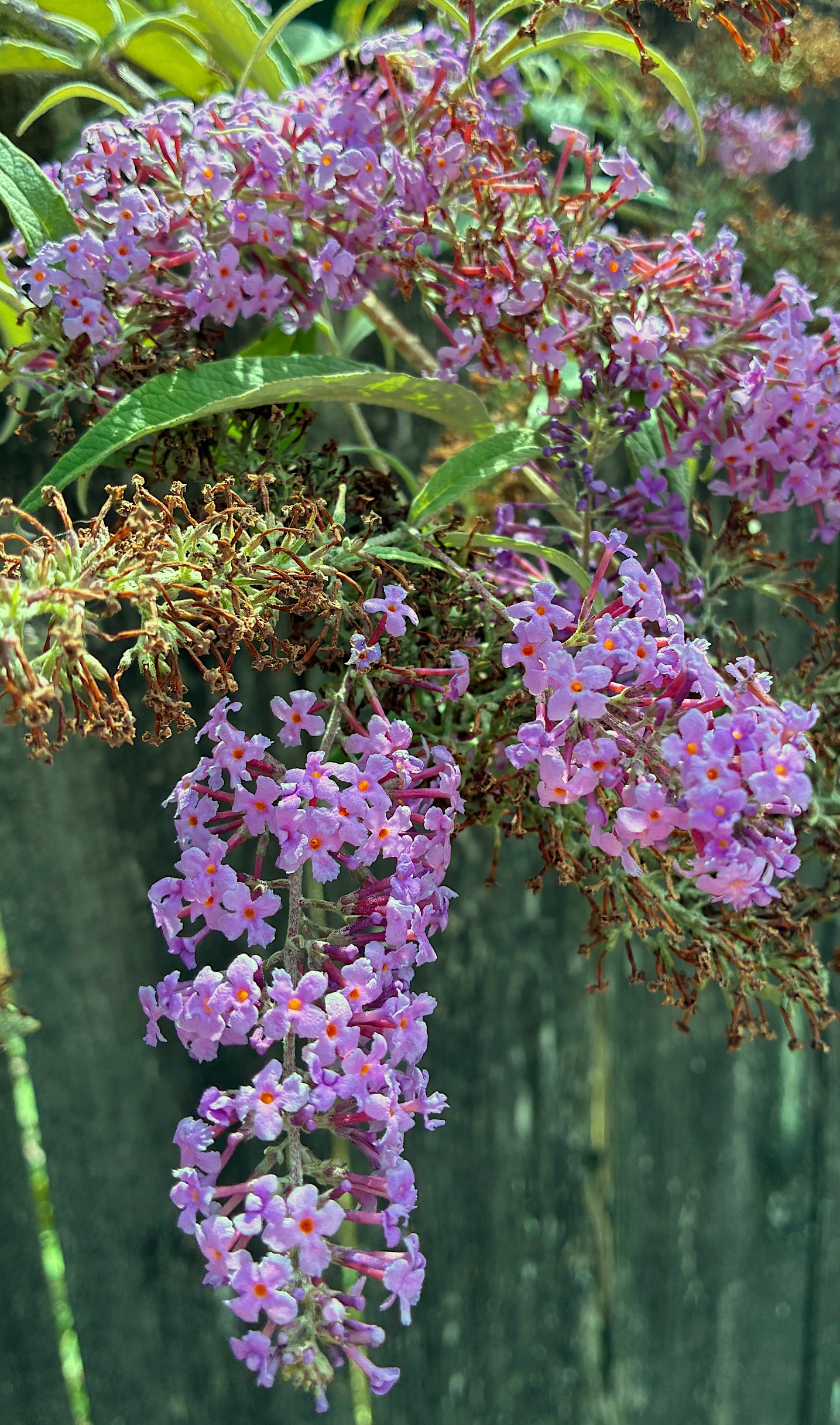
Butterfly Weed is the ubiquitous purple flower shown up top. The gangly leggy aimless dull foliage flails around right up through concrete and in the nicest yards (they’re a popular seller at garden centers). The flowers are colorful enough, at least for a couple of days as they turn brown from the bottom up, but they’re a false pollinator; butterflies and bees waste their time hovering around, but there’s no nectar and nothing for caterpillars to eat.
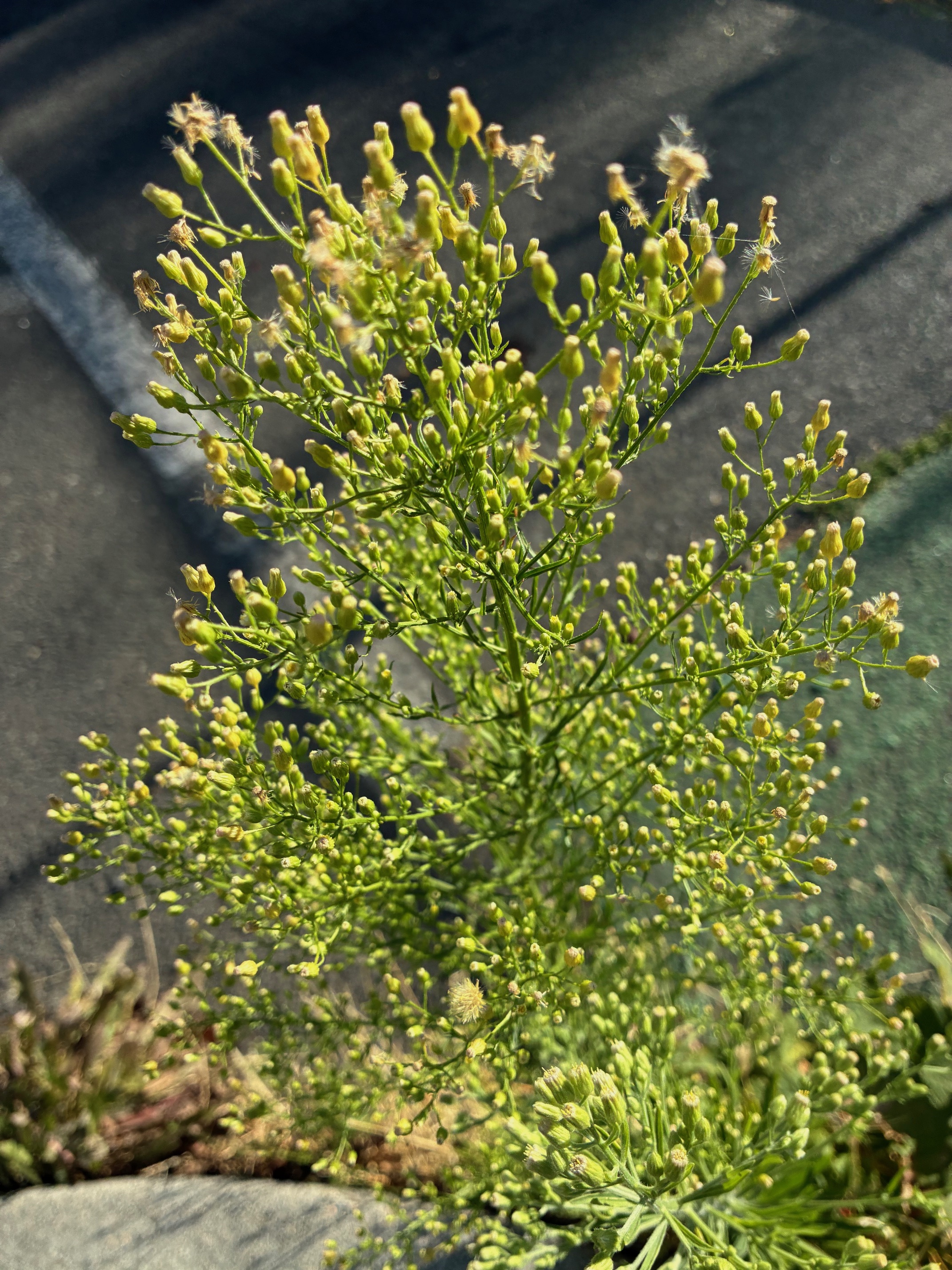
Horseweed has finished blooming for now, but the dried plants stand tall all along cracks in the pavement.
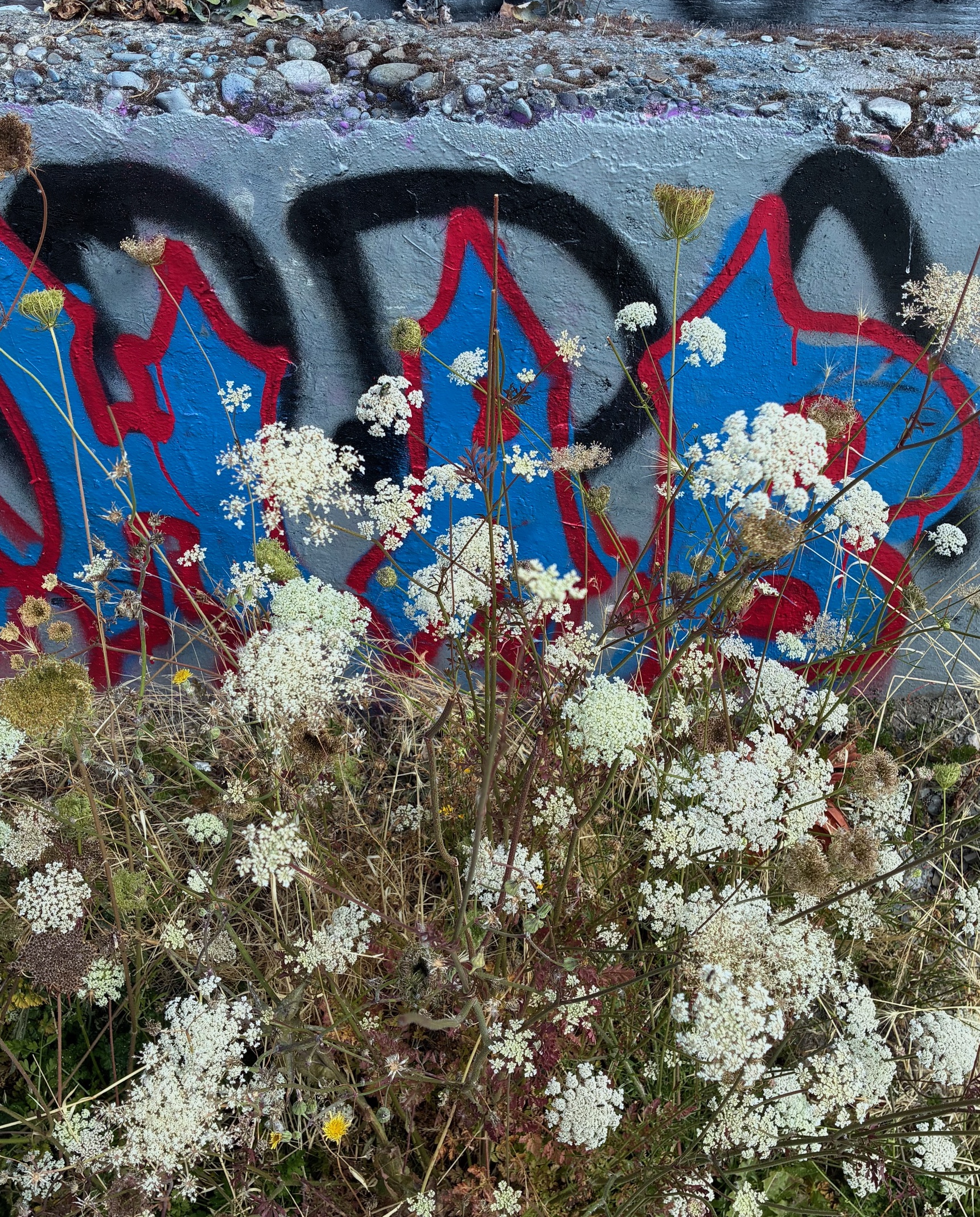
Queen Anne’s Lace gets along anywhere:
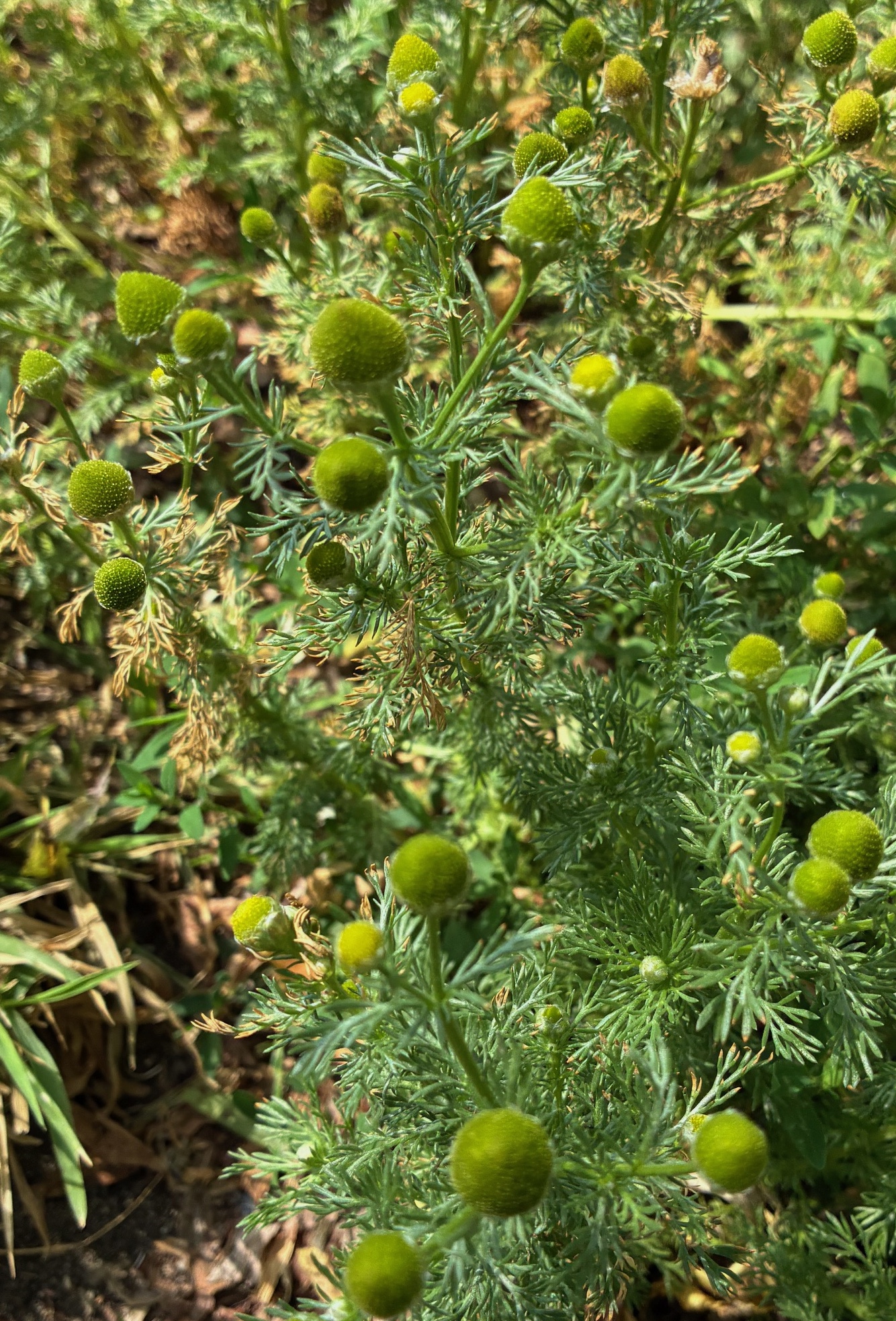
Pineapple Weed is common, but I often overlook it because it survives even trampled in the dust in areas with high foot traffic. The crushed plant has a pleasant fruity fragrance.
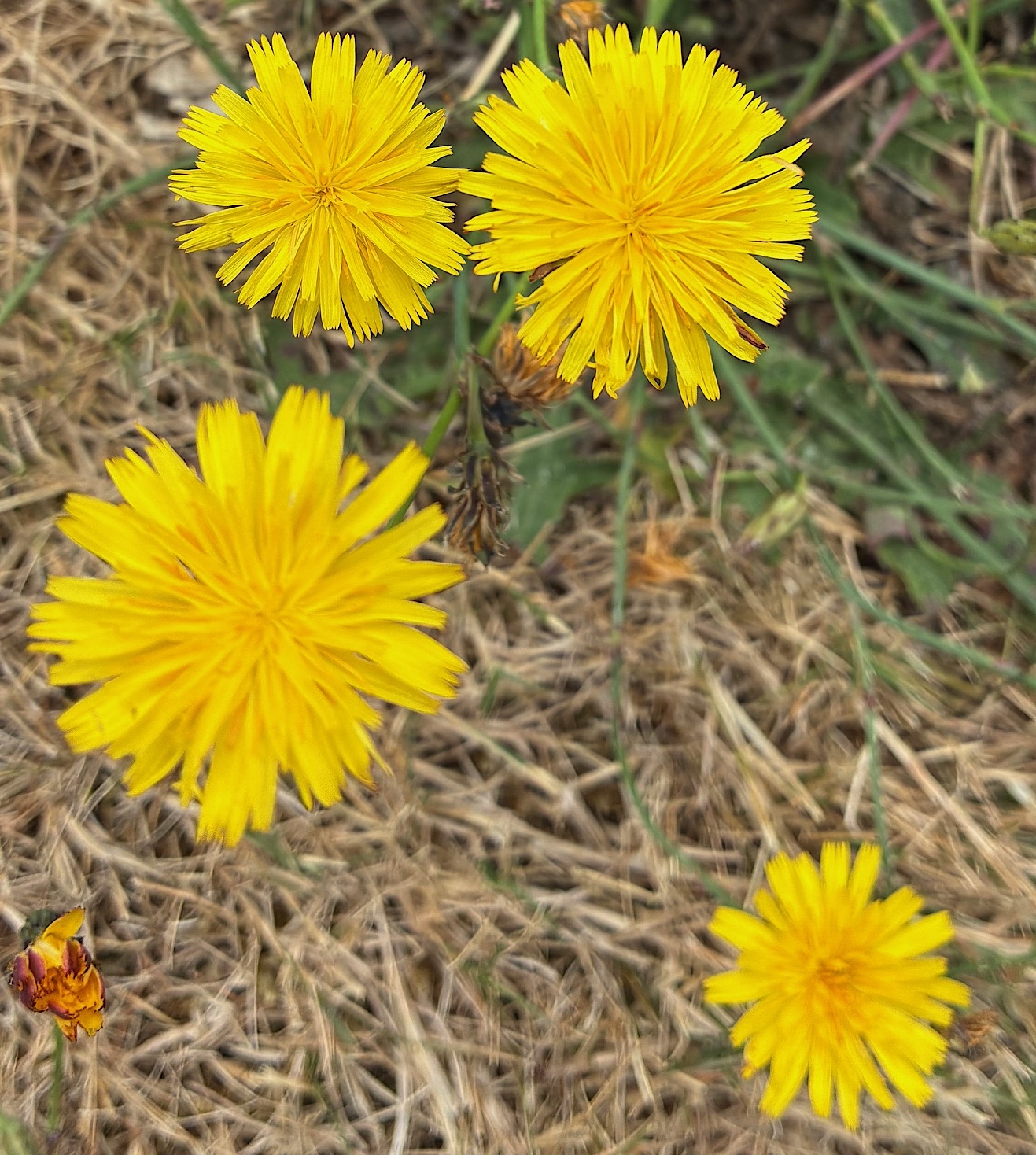
Away from paved streets, on lawns gone brown for the summer, Flatweed (Hairy Cat’s Ear) stays green.
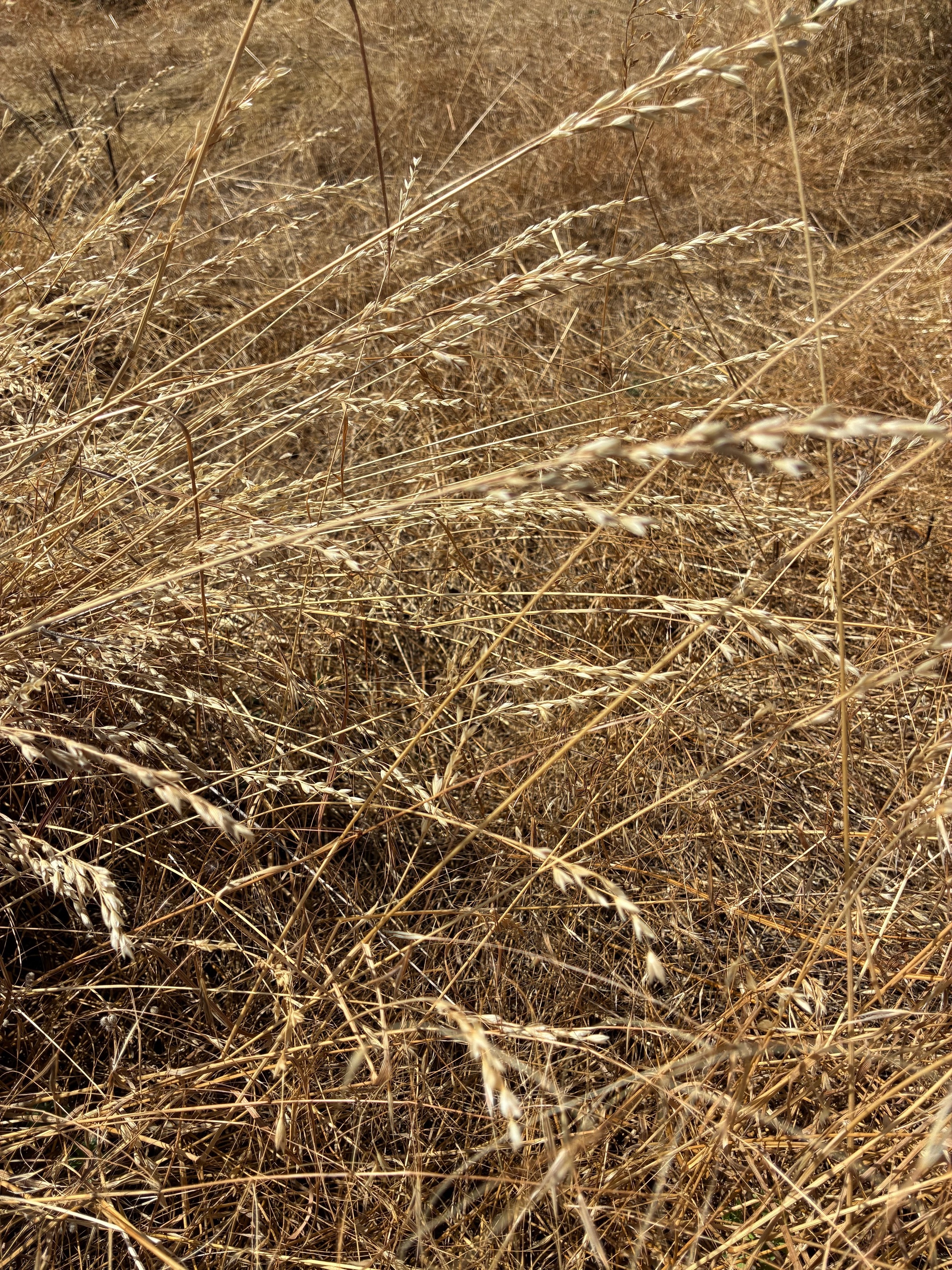
On campus, on an overpass over a busy bus transit intersection, there’s a couple of acres of tall dried grass. In this drought and to my safety-first mind it looks like so much dryer lint. How would you get a fire truck up there?
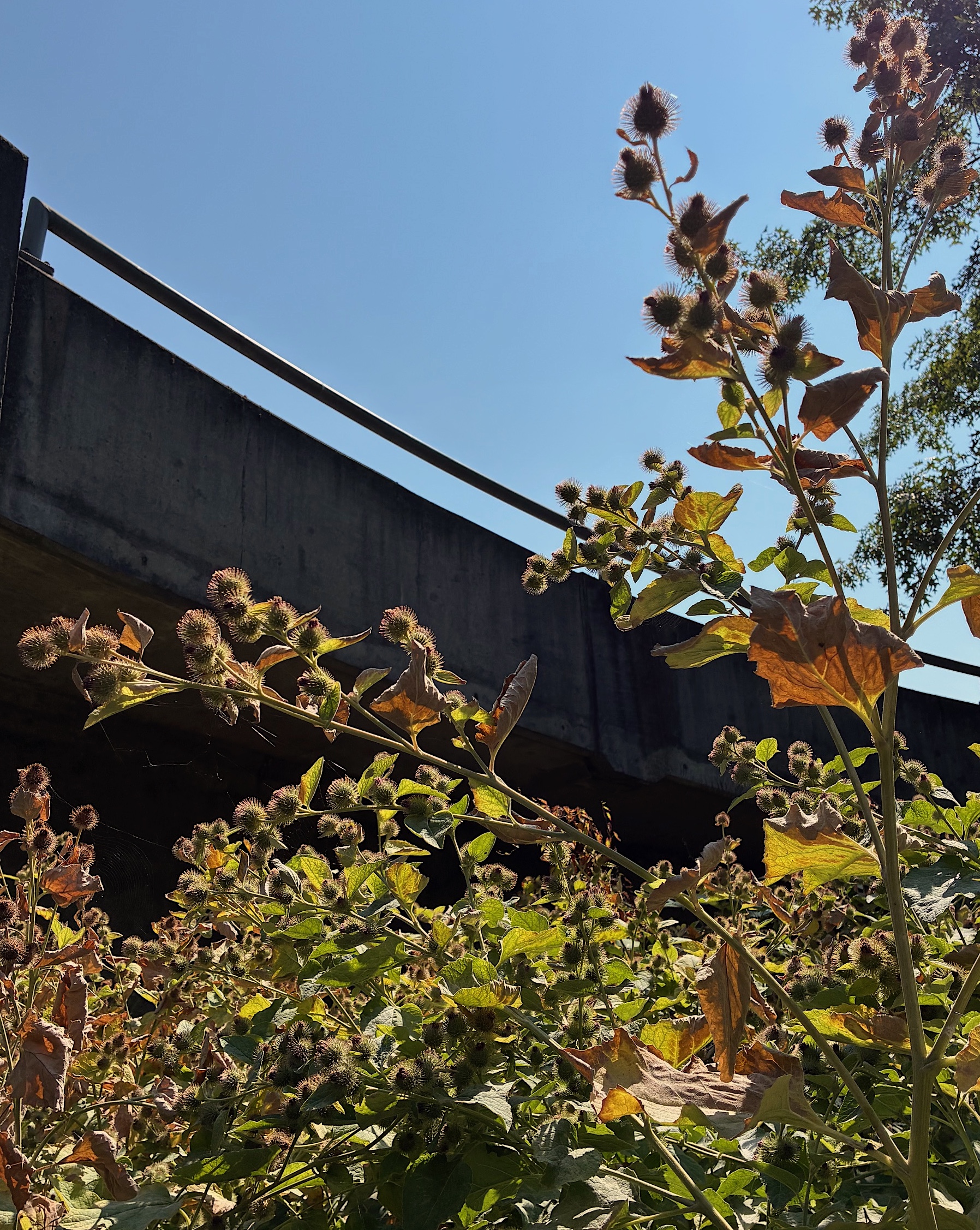
Burdock staked out the entire area under this bridge. Underground dampness from a dried creek might account for its tall growth.
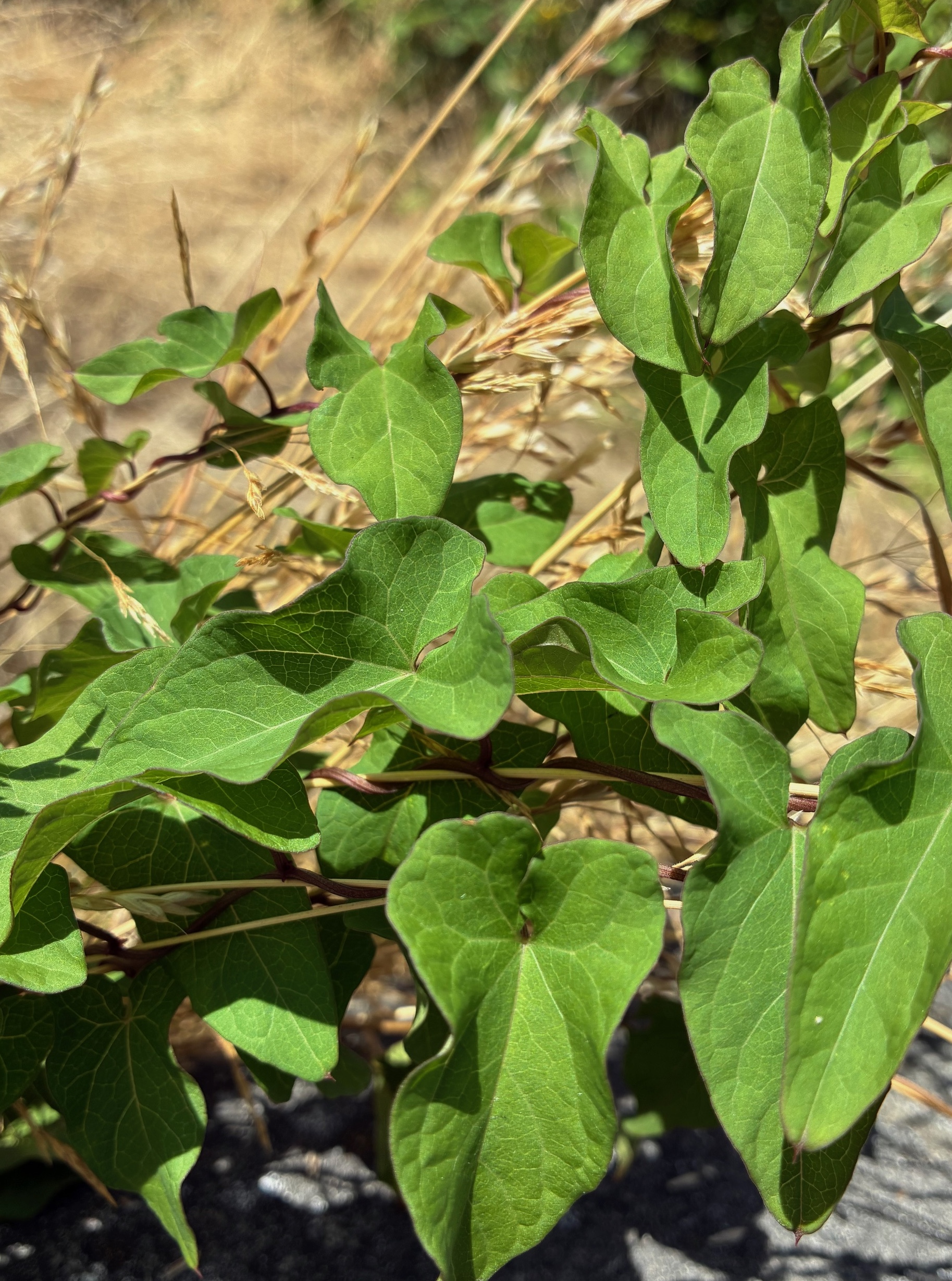
Bindweed has nice Morning-Glory flowers, but has a habit of taking over.
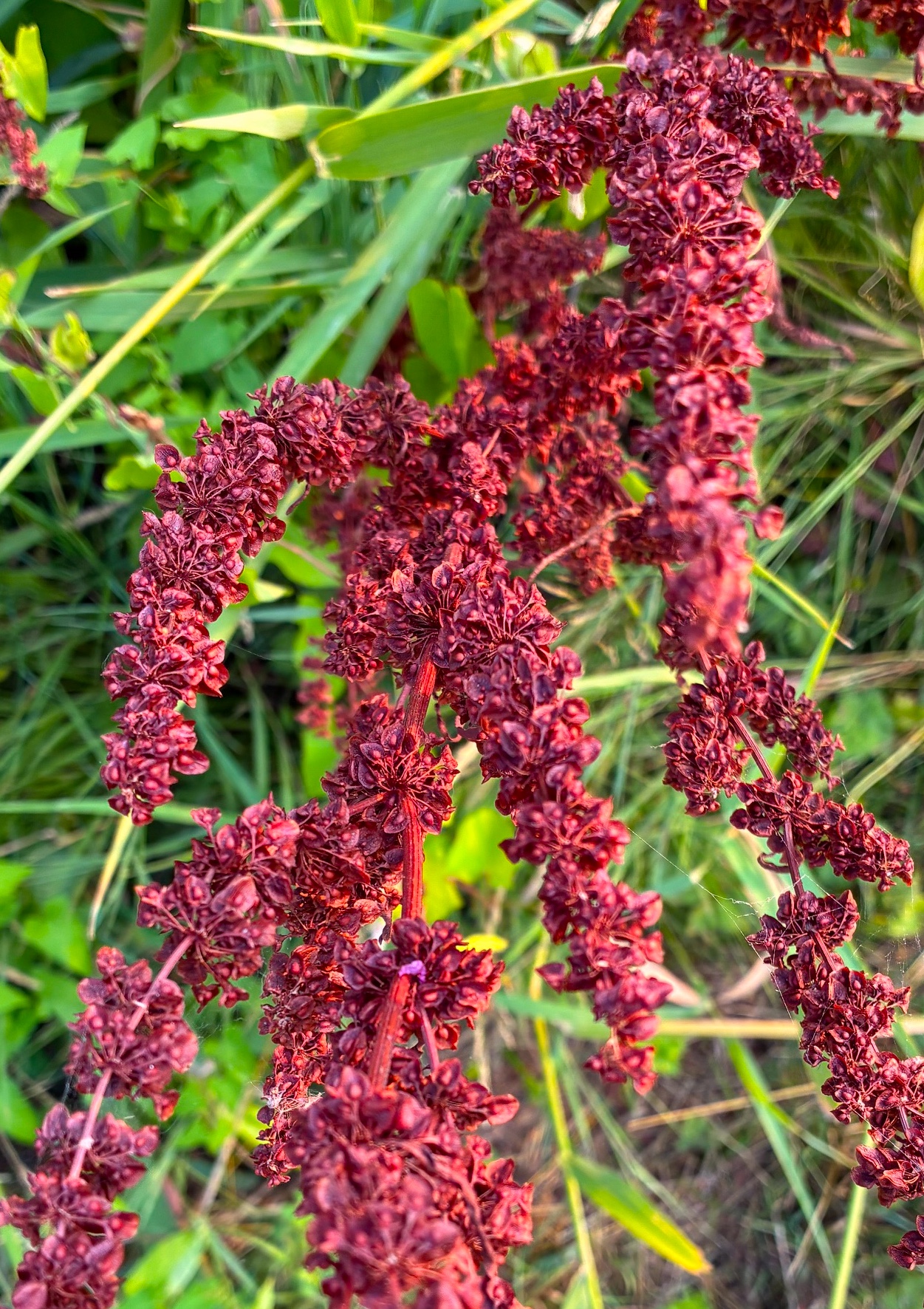
Any battered dirt patch can grow a Rumex plant; this might be Curly Dock.
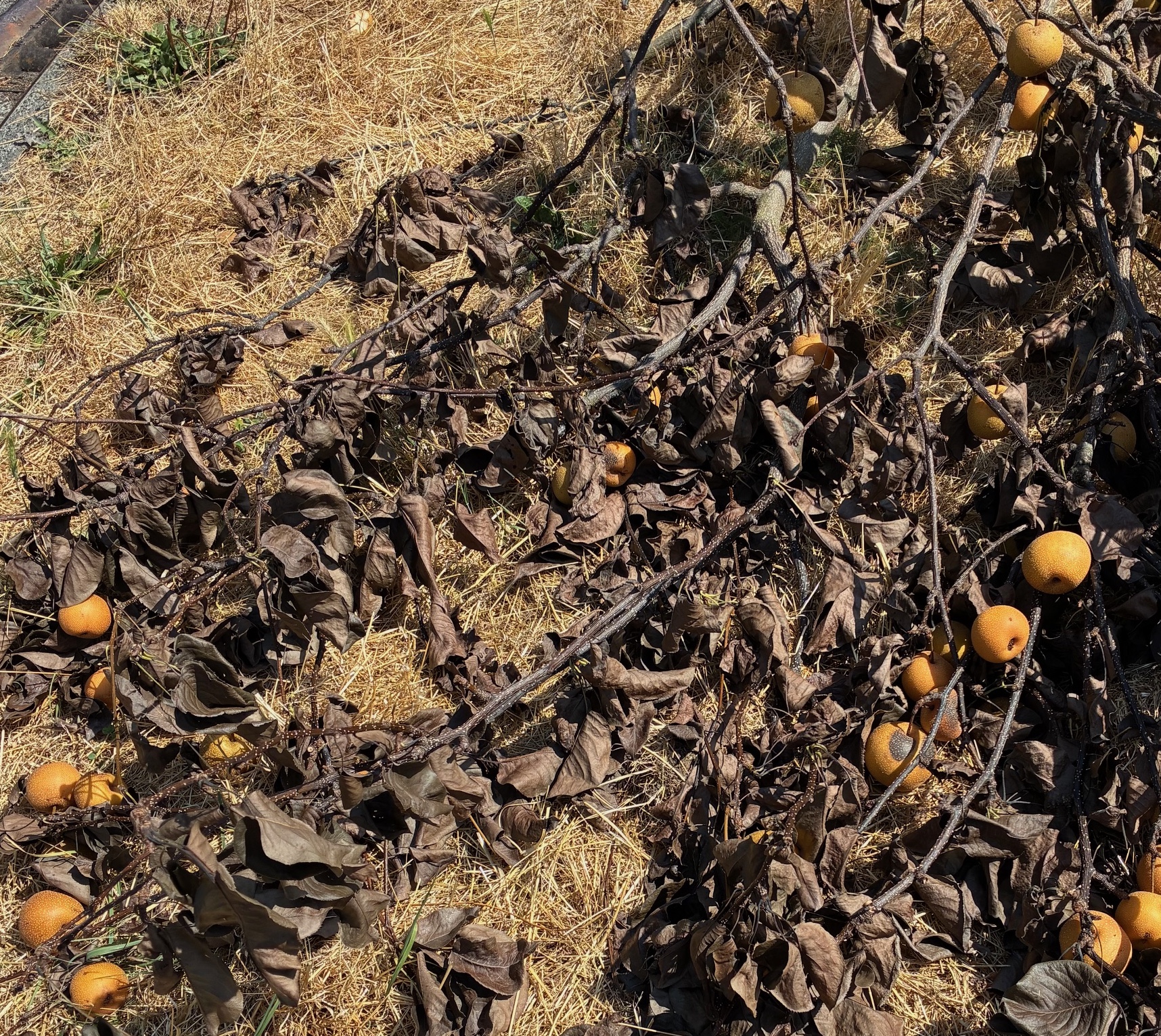
Surprise! This Asian Pear tree grew in an uninhabited strip along the interstate. The tree was split and knocked down, so the sun-ripened pears were right in reach. I picked the sound ones, about 30 pears. Peeled and cooked they made an excellent puree.
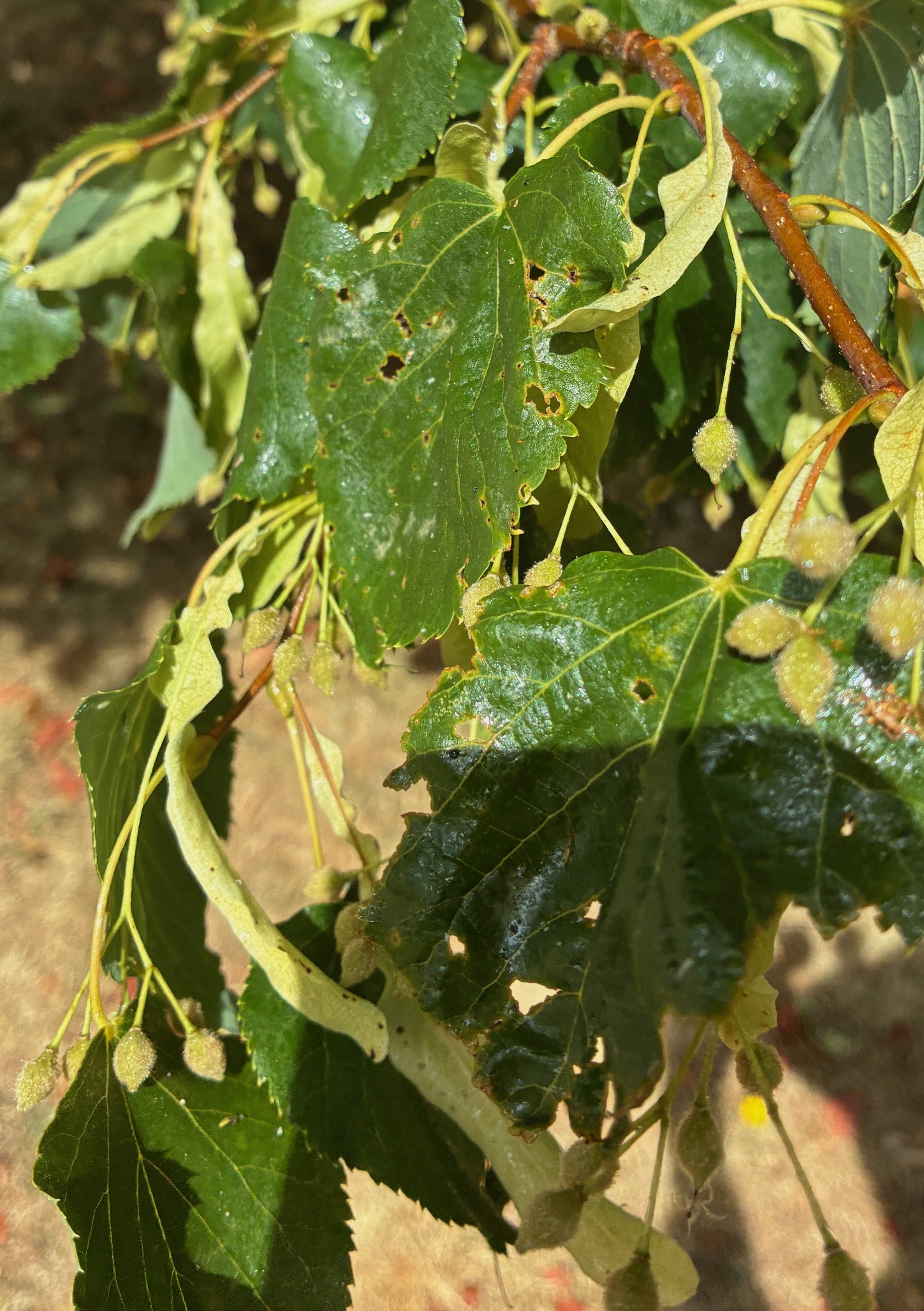
These linden trees are very wilted with some sun burn. In the interests of science I touched a couple of sticky leaves to my tongue; that sap tasted like sugar syrup.
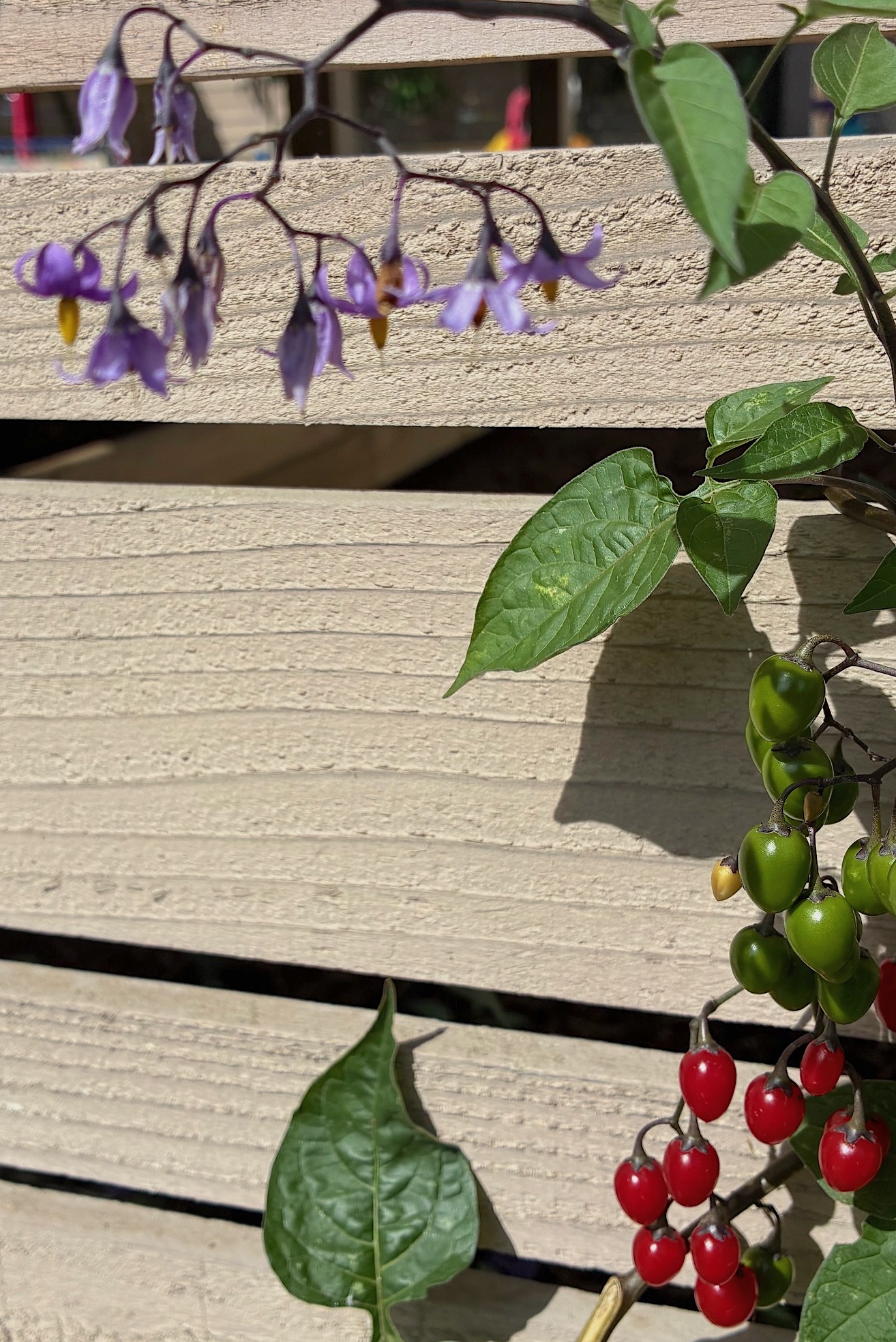
This nightshade grows all along a south-facing fence. My tongue isn’t getting near any of that.
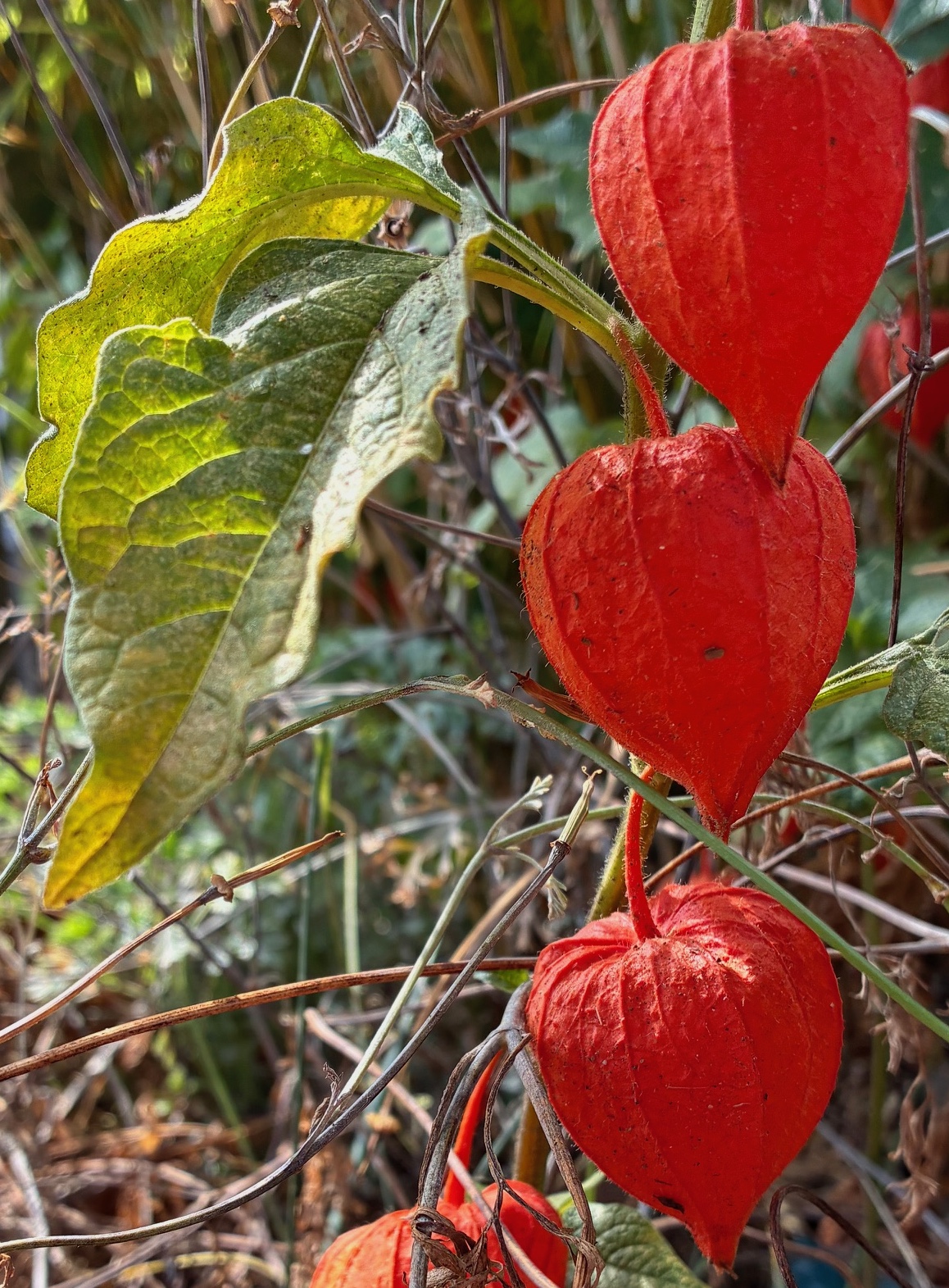
Paper Lanterns escape from gardens and tiptoe into open hedgerows when no one is looking.
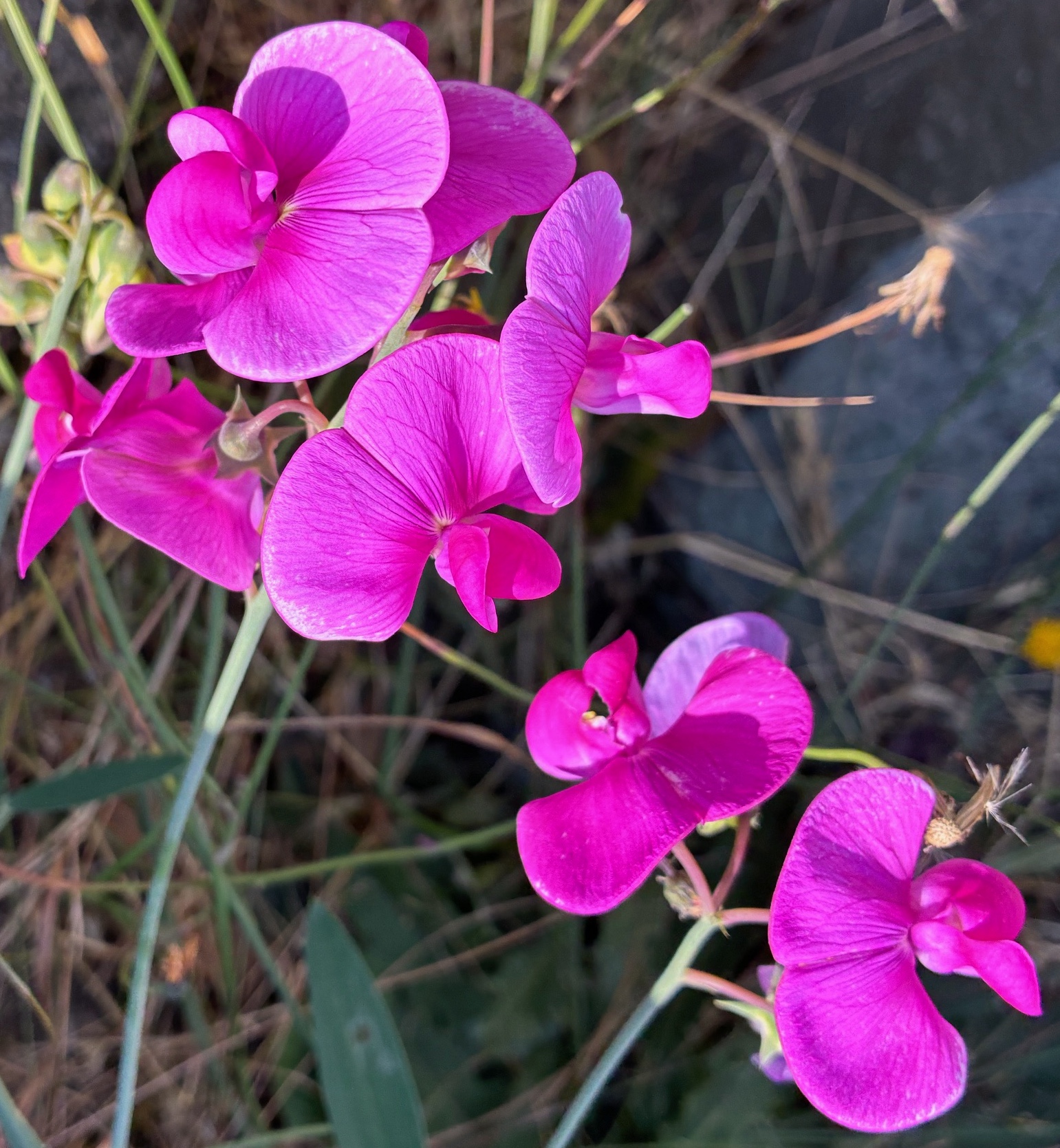
Everlasting Pea plants enjoy climbing sunny fences and rock walls.
Even on a day that is tiringly hot, even in liminal spaces like bus stops and alleys, there can be interesting plants to ponder, resilient uncultivated champions growing all on their own. With the planet running hotter, these weeds might inspire new xeriscaping ideas for our gardens and yards.
Meanwhile, I’ve been foraging unclaimed fruit and berries that go to waste all over town, with a dream of one day raising my own fruit adapted to this area and to warm weather. Another habit is washing weeds and raw vegetable peels and windfall fruit cores, putting them into the Vitamix with water, then pouring that water on the ground to give something back to the earth.
And on every trip outside, just looking around. Which plants are doing fine? What can they teach us?


Love the photos!
Wendy, Hello! Thank you so much, it is lovely to see your message. There’s a lot of transit areas in life that I just want to get through and away from, on the way to somewhere else. So finally it made sense to just look around and see what kind of life forms are around and might teach me something. Thank you again, it’s always delightful to hear from you! Mary