Every year it is remarkable to see public spaces overrun with unclaimed fruit.
The cultivated apples in nicely tended yards, they’re each dressed up in neat mesh bags as protection from insects. But most apples are untended green ones falling all over the streets. They are hard and tart, more for cooking than for eating out of hand. But green apple sauce can help substitute for oil in recipes for baked goods. It’s also good with balsamic vinegar and spices, to balance out the taste of dandelion and mustard greens.
For apples on residential streets, if they fall and cover the ground and spoil there untended, I’ll reach down and pick just two or three freshly fallen ones in passing. But on one small street corner cut off years ago by the interstate, between the highway and a couple of old wooden bungalows there are two brave little apple trees right at the curb. The branches are weighed down with fruit. So at just this time of year I stroll over there and cut the apples down right off the tree before they fall.

To keep from hurting the branches or knocking apples to the ground, I use a scissor to carefully cut off each one. Twenty minutes of work got this many apples.
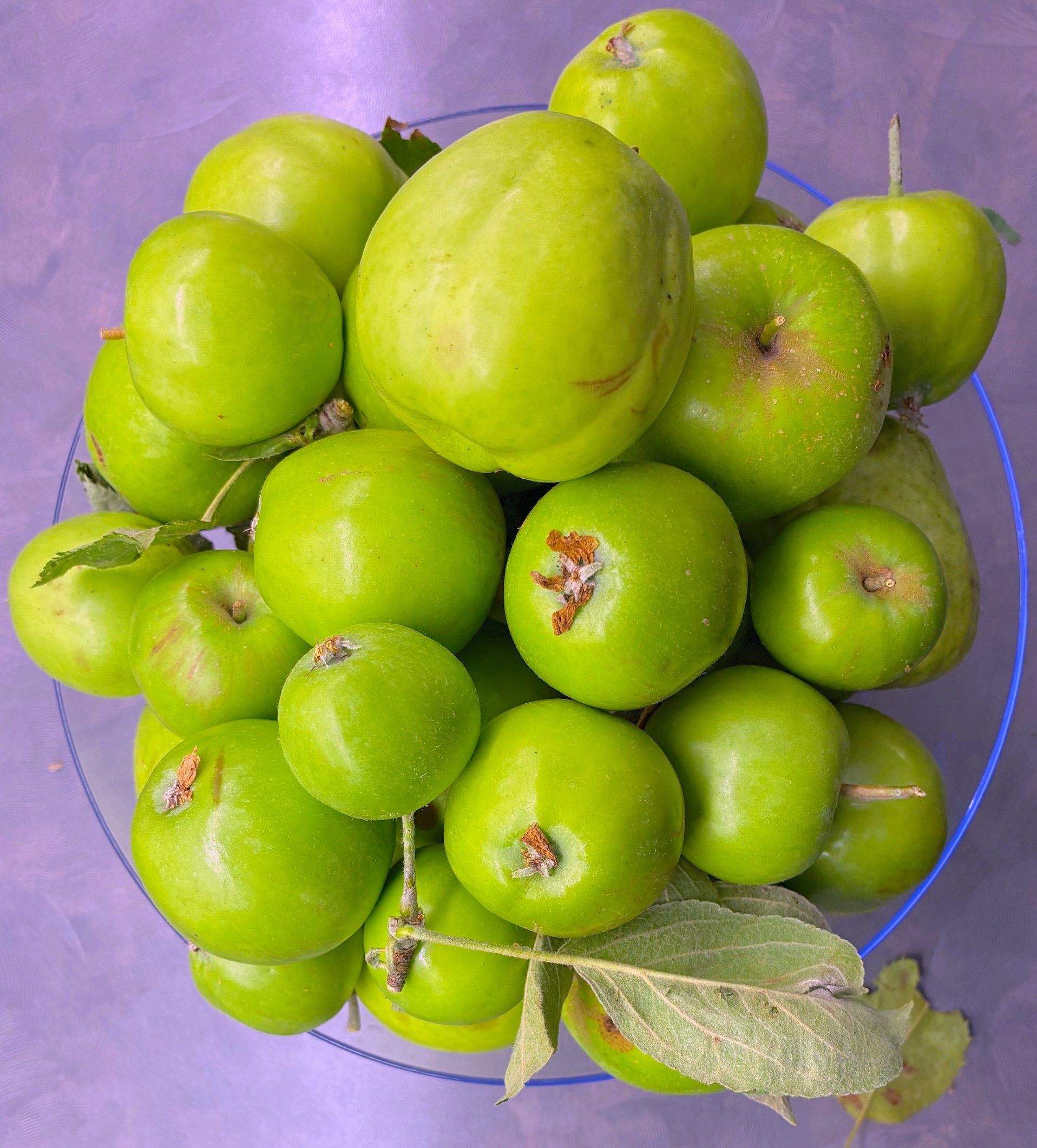
Of course, the real work is trimming and cooking. Windfall apples are prone to insects and need extra trimming, while apples picked from a tree are usually in better shape. First step is to wash and check them over, remove stem and leaves, and quarter them with the cores set aside. The seeds are toxic and go in the compost, the cores go into soup stock, and the whole apples with peel and all can go in a glass pot with just a dash of water, to cook down in their own juice. Then they can be blended in batches and labeled for the freezer.
And now, life being life: a couple of days ago at those neglected trees on that abandoned cul-de-sac I trimmed off a last batch of apples for the season. Luckily I was not there the day before. That’s when the police stormed one of those forlorn little bungalows, and discovered a stockpile of drugs and cash and guns & ammo. Now those little houses will probably be demolished, and the trees along with them.
———-
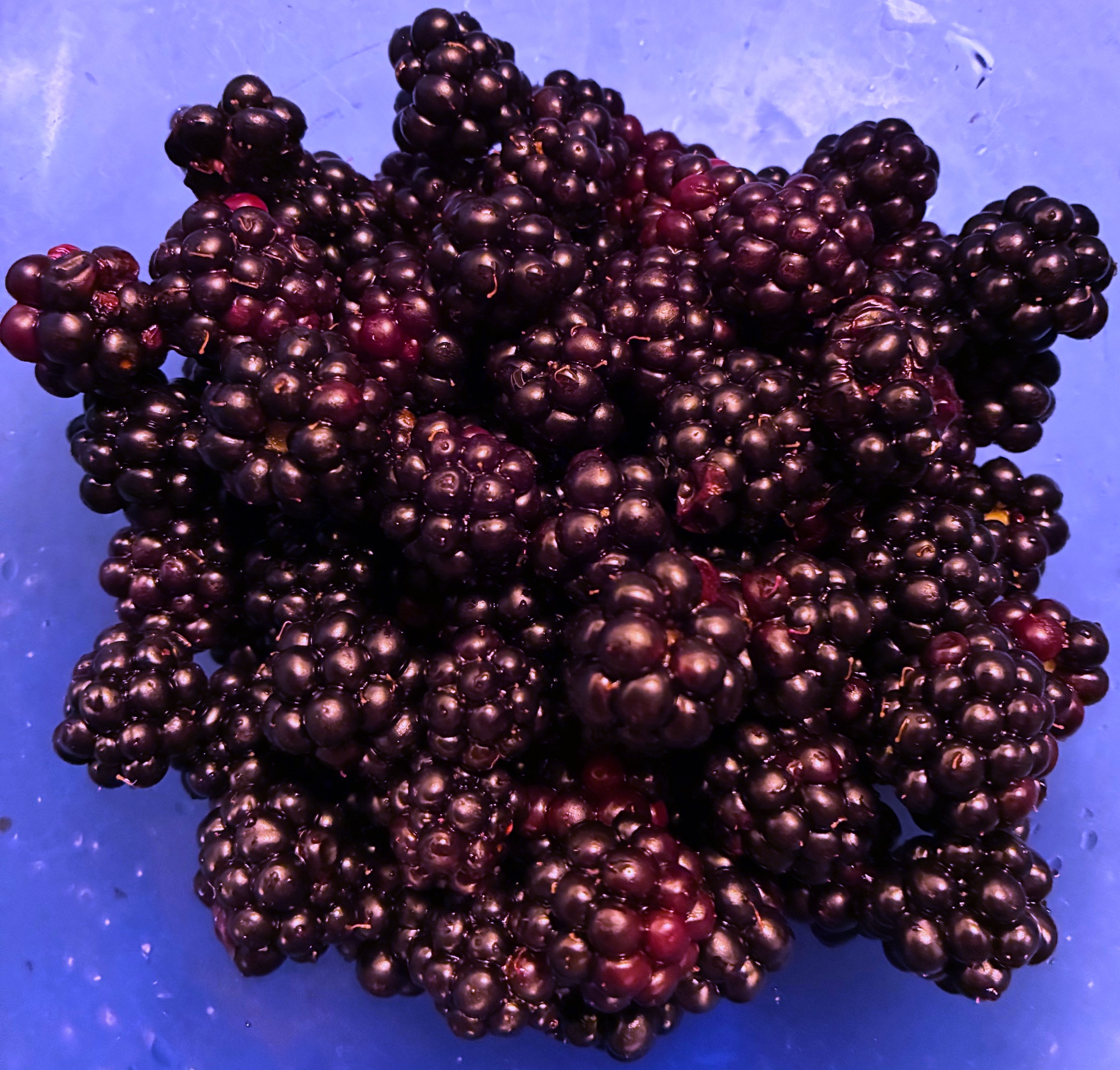
Yesterday and today I tackled the Himalayan blackberries. These blackberries, with their thorn covered canes, overrun hillsides and highways and vacant lots and fencerows. There are berries enough for the entire city. Maybe that is why people don’t give the fruit a second glance; I’ve never seen anybody else pick any. If I owned land that was overrun this way, each year I’d endeavor to harvest all the berries, then rent a wood chipper and cut the canes to the ground and let them grow back each spring.
For equipment I need a Mason jar with lid, sun hat, goggles, my thick multi-layered lower leg support wraps as protection from the thorns, scissors to trim stray thorns that whack at one’s clothes, and a white plastic coat hanger to gently and carefully bend branches for easier gathering or to gently bend branches out of the way. Using the coat hanger in the right hand, I pick with just my left; that way only one hand is tinted with juice, and the other hand stays clean enough.
Today, peak season at my usual favorite thicket, the outer plants looked like this.
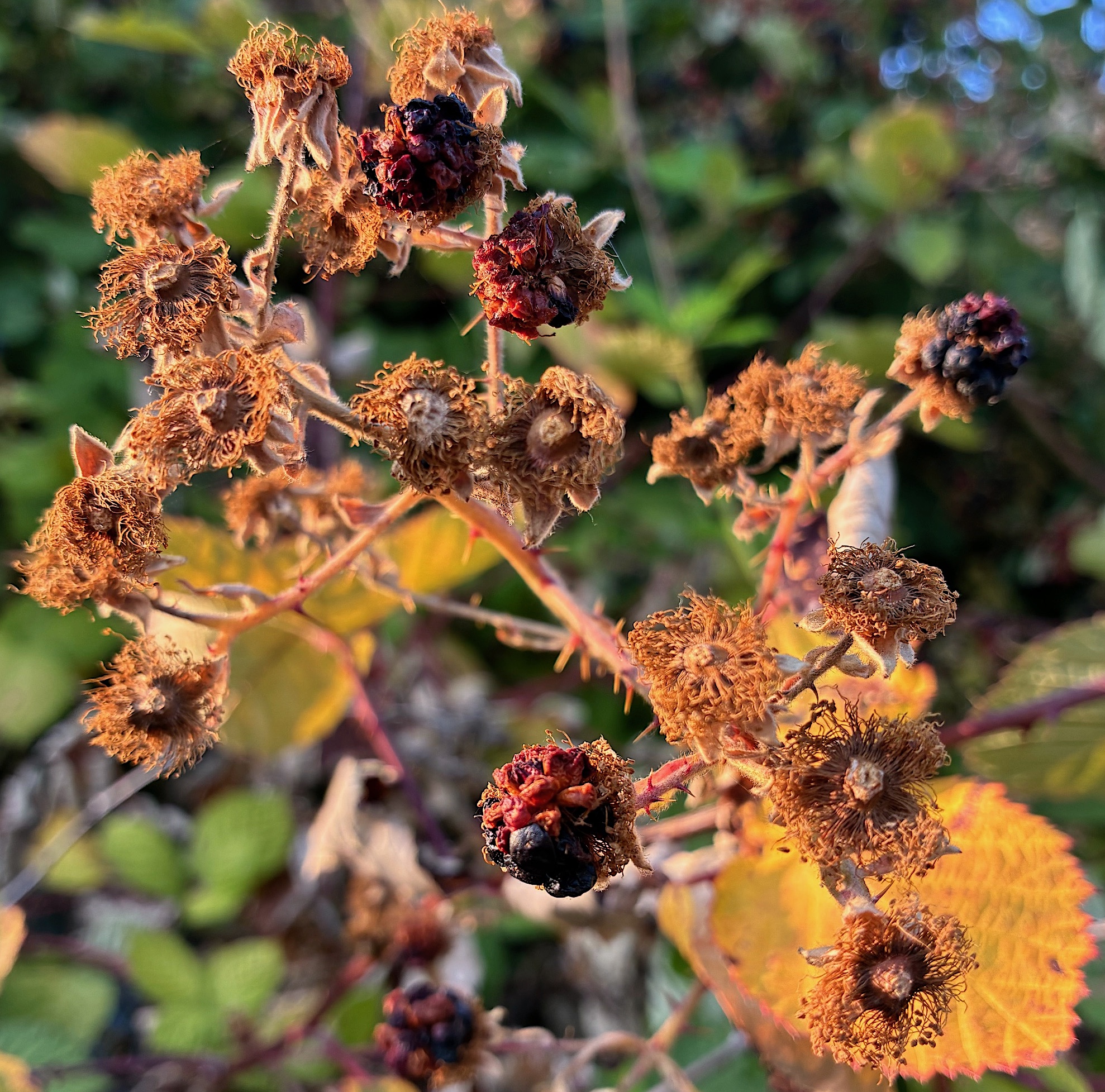
The leaves were yellow, and some berries dried on the plant. Now I’m no Luther Burbank (he introduced Himalayan blackberries, by the way), but even I could tell that these plants were in distress. Is it the heat? The drought? The wildfire smoke? Whatever the case, the front row of bushes were a loss. But it seemed that they did protect the inner branches. Those inner branches in the shade still had berries, but not as large as usual. Now ideally, the berries taste best when fully ripe, when they just begin to seep enough juice to give the surface a damp shine. But those sweetest berries fall apart in wash water and often fall apart when you try to pick them. So I just pick berries that are ripe but still firm. Peak sweetness is not the goal; the sour essence is a fine flavoring agent.
After today’s gathering session I sat at a public picnic table to pack my gear for the trip home and to wrap the Mason jar of berries. In a flash, a Glaucous-Winged Gull appeared and sidled right up to me on his pink feet, giving me an inquiring side eye.
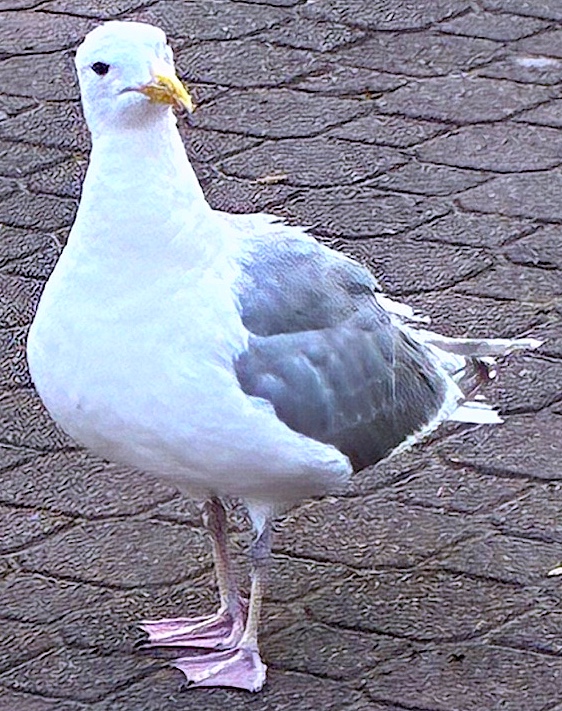
Soon other gulls joined in, dropping in out of nowhere. They must have been taught that anyone at a picnic table means a snack handout! Now many people would find this charming, but the birds at this park are already overfed by visitors. Glaucous-winged gulls can weigh almost three pounds with a wingspan of almost five feet, and like any human-habituated wild animal they can be very assertive. I explained to them that the city is jammed with blackberry bushes, and they can go pick their own. They vented their opinions in full voice, then settled nearby to watch with interest.
One hour of leisurely stroll & search gets one pint jar of berries. At home the berries need several wash & rinse cycles in concentrated salt water, then a brief bath of white vinegar, then a final water rinse. Then they go in a glass pot to cook down slowly for their juice, with just a minute of brief boil at the end. One pint of berries yields about 6 ounces of pressed juice, labeled in small containers for the freezer. It’s an excellent flavoring in other mild stewed fruits such as peaches or pears.
The cooked seeds go in the compost, but first they are rinsed and strained several times. That leaves a dilute berry ade as a cooling warm weather drink.
The price of berries is sky high at the stores, and the quality is iffy. I’d rather just select my own, and vary the diet with something wild and fresh. Having this impossibly large bounty is another reason to be grateful.