5/26/24: Memory of Mother N.: The Old Garden

Ten days ago I took a different walk home from work. I felt like a nostalgia visit to the 2012 site of the Orthodox church, at its rented room upstairs in the community building. I wanted a look at Mother N.’s old garden too. Back then, Mother had it planned out so that the plants stood in height order like children in a class picture. The tallest (giant sunflowers) were against the south wall. Next were tall hollyhocks. Then, the flowers bloomed in layers and stages, drawing the eye in and upwards, with different colors every season to give us something beautiful to see all year.

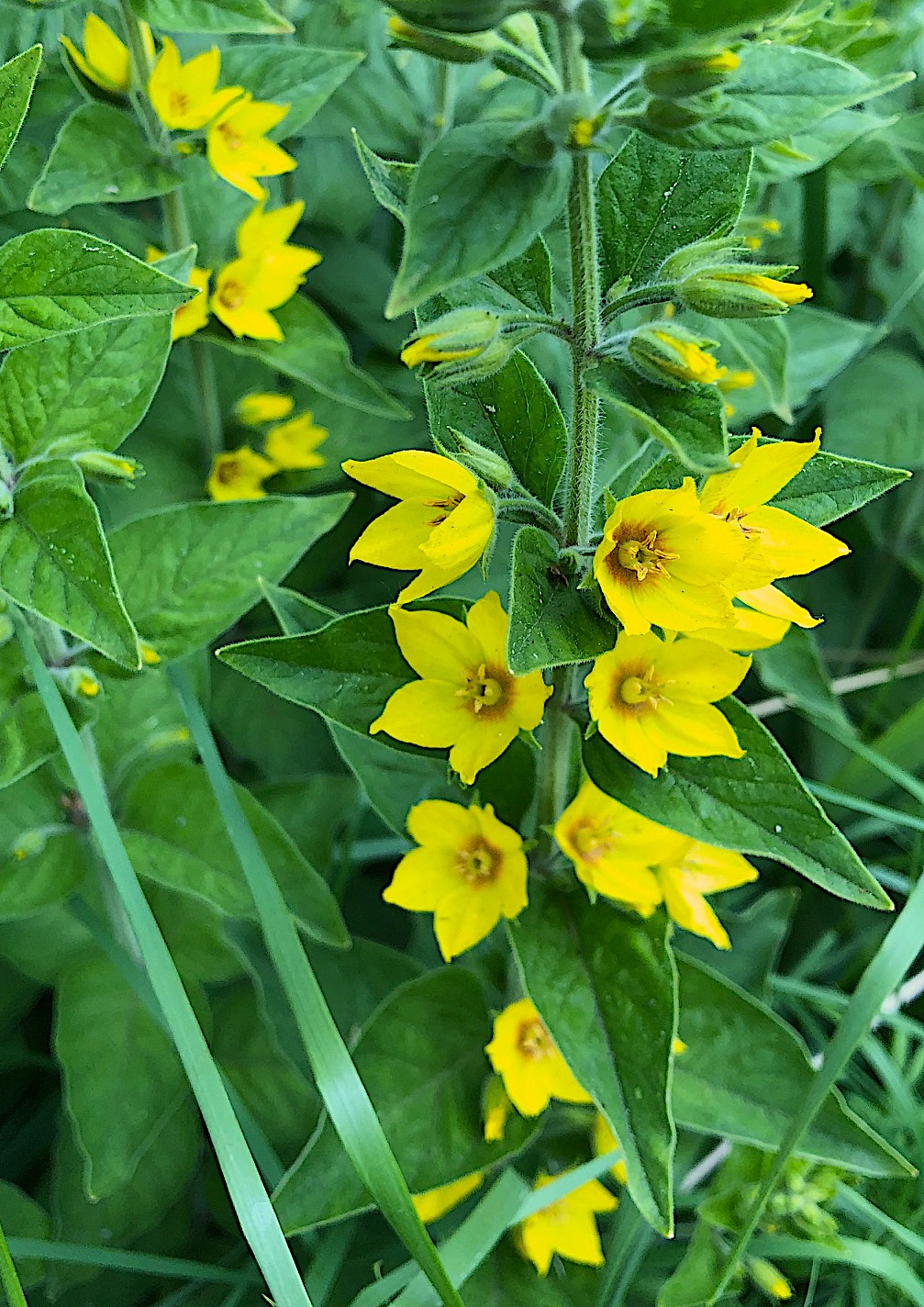
Well, I should have known better than to take that scenic detour. At the old site, nothing was in bloom. There was shrubbery and undergrowth crowding around the community building, but even in mid May there were no flowers. After a little hunting around I found just this brave little volunteer:

What can it be? My search terms didn’t turn up anything similar. It looks like a yellow version of Platycodon, or blue balloon flower.

Update: Just figured it out — it’s Lysimachia punctata, Large Yellow-Loosestrife. Live & Learn! -m

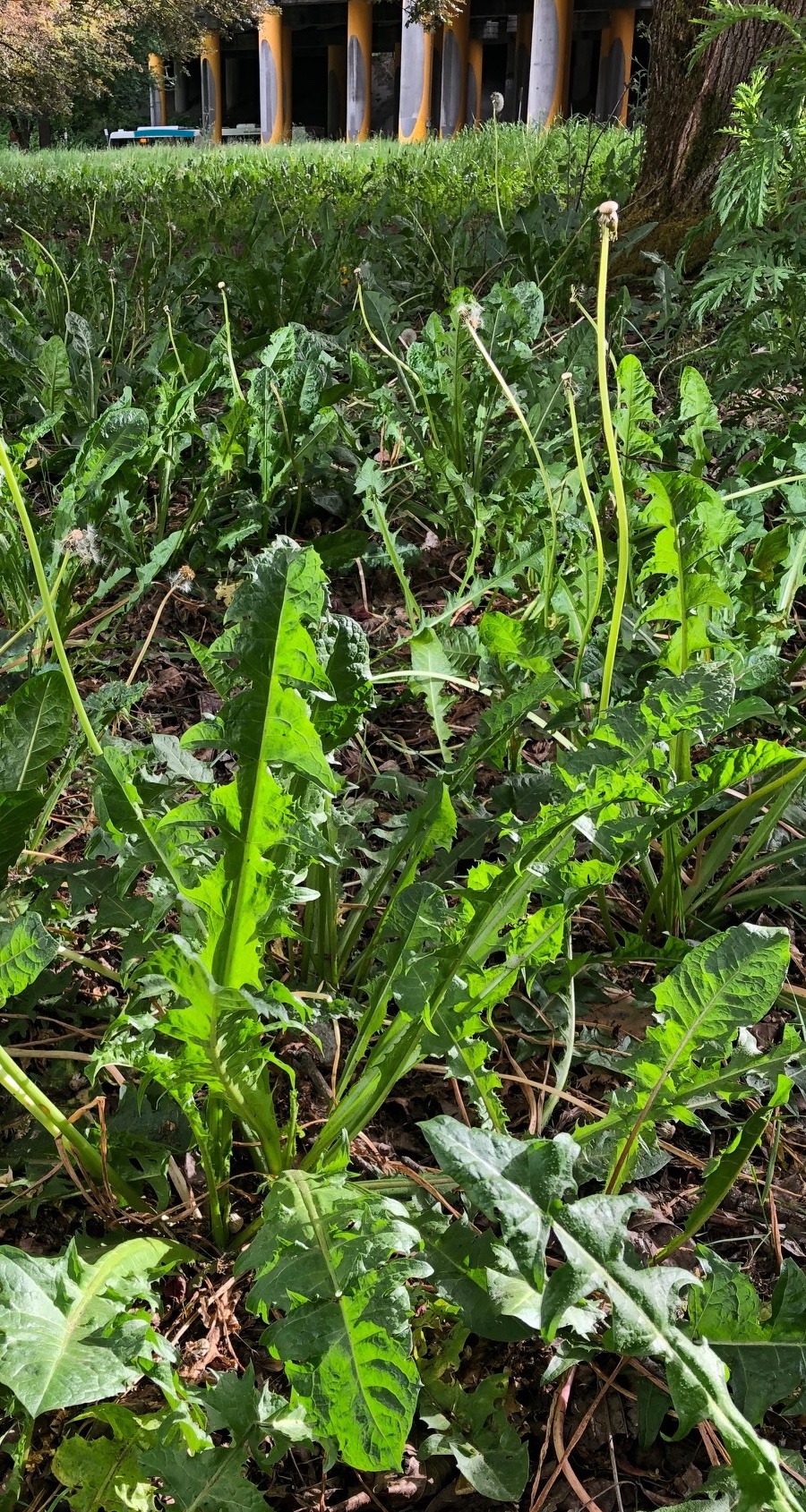
The overcast drizzly day got a warm ray of setting sun as I turned away for the walk home. And right there was a great field of dandelions, the biggest and healthiest that I’ve ever seen. This was no wan fading garden, but acres of edible greens knee high and thriving between the bus station, the bridge underpass, and the interstate highway — enough nourishing food for the whole summer! I sure was tempted to pick them. But I didn’t pick any dandelions, because the field is home base for men living in tents and in cars parked all around. That is why this photo is so narrow and cropped; it wouldn’t do, to bother the men by taking pictures of them or their setup. I photographed only a discreet little snippet aiming away from them, and then I hit the road.

If Mother were around, and just maybe she was, she would tease me and make fun about my looking for signs of life in an old garden left behind. Then she would have been delighted by Life being Life at its medicinal best right across the street. Yes, the visit to the old garden felt like a wee bit of a letdown. But that walk was just one of the rituals that we create, to fill in the empty space and make meaning out of losing someone dear.

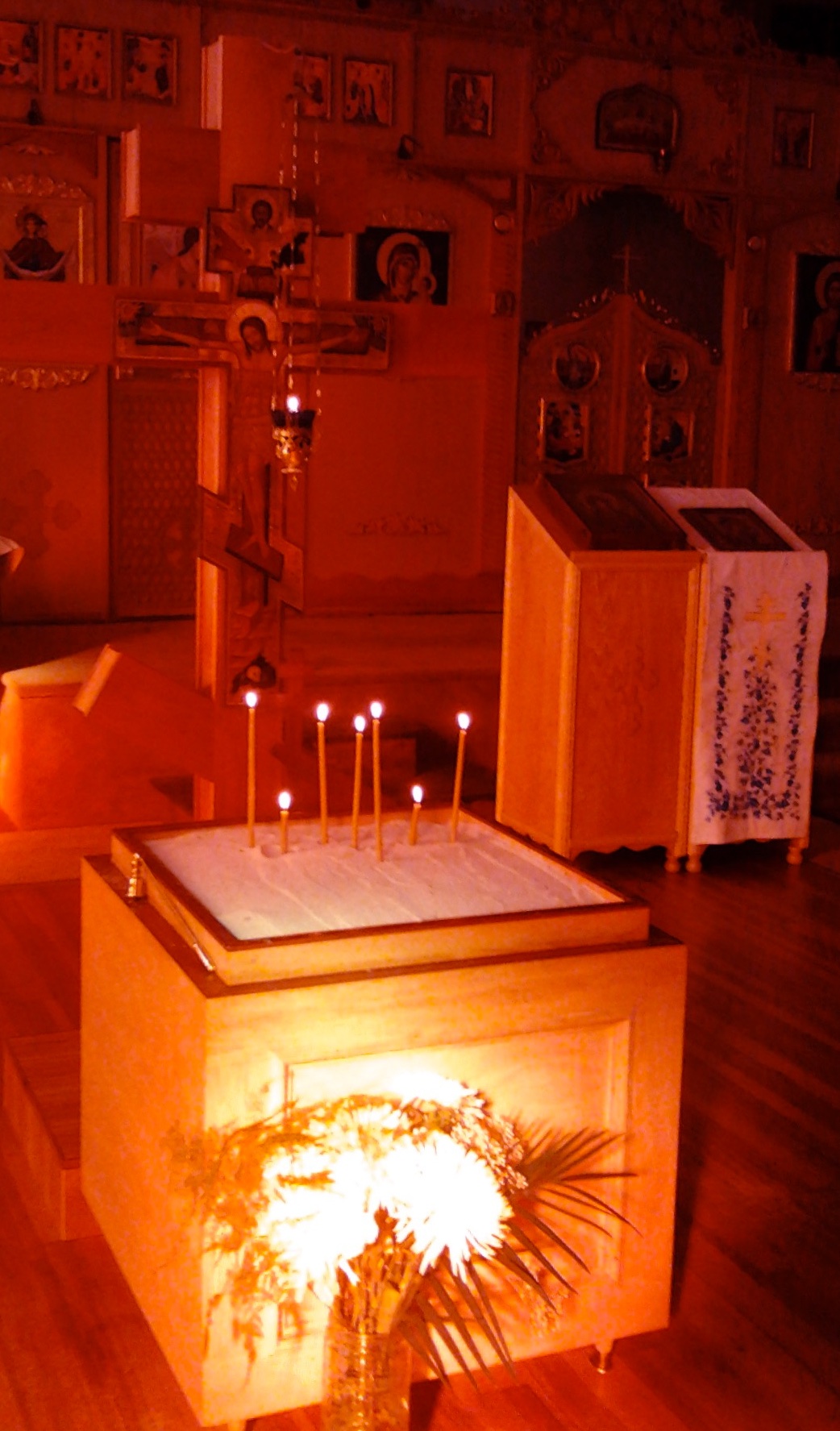
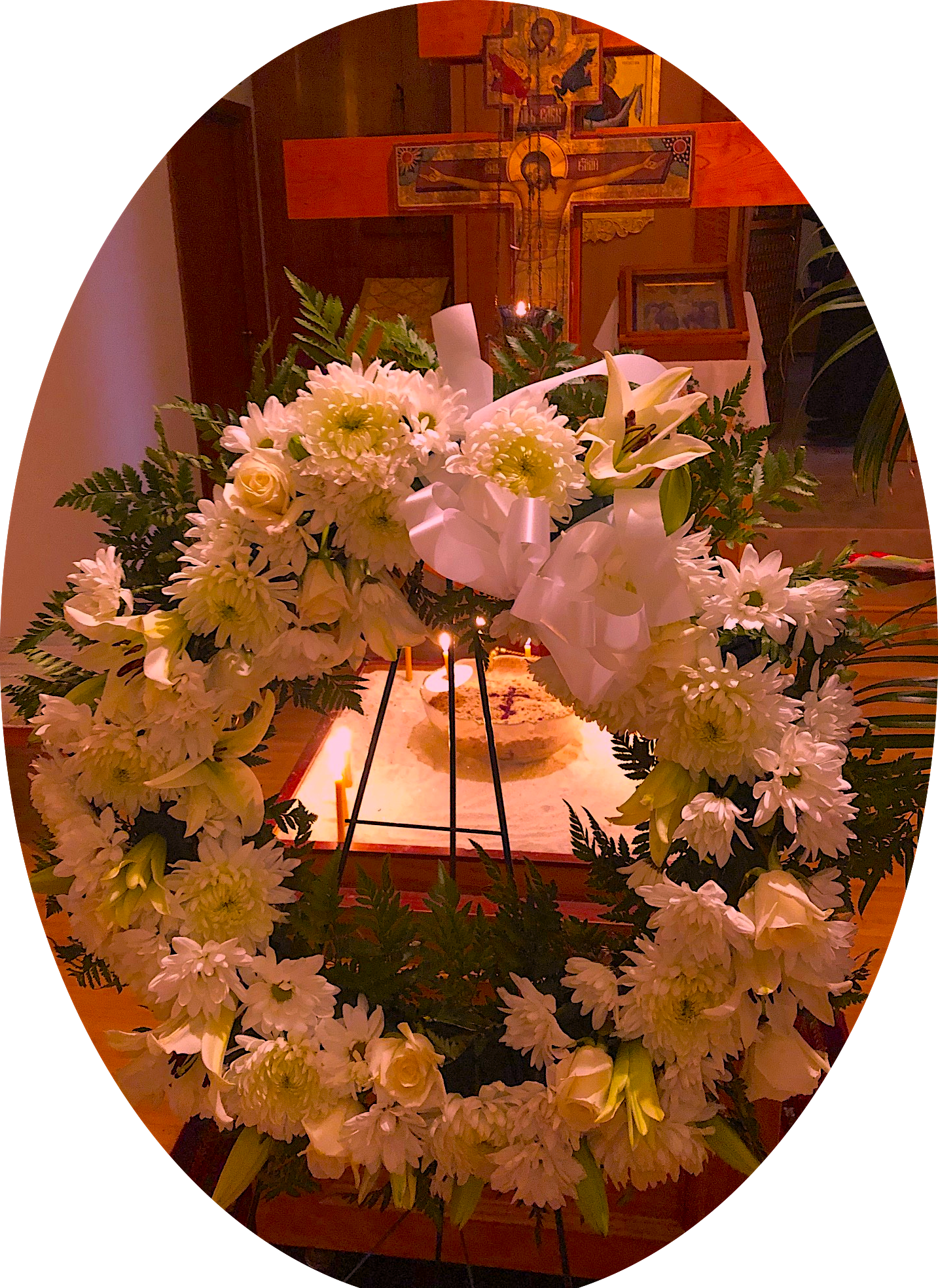
As a consolation prize, at home I searched for and looked through a couple of views of the old church. Mother made every possible effort to deck that little upstairs sanctuary with flowers, often from her garden at home or the garden right outside. This first view is from a warm day, when the woodwork in candle light enhanced her peach-toned lilies.

The other view is a cold day, when the very last ray of sun shot in against a white chrysanthemum.

Mother’s church has moved away. Her garden is gone, and so is she. What comes next? It’s up to me to honor her by tending our own little patch outside with the neighbors, and by appreciating flowers all around us, wherever they grow and whatever they are.

Posted in Uncategorized | 2 Comments

5/12/24: Memory of Mother N.: Blooming Where They’re Planted

After Mother N. passed away, I dreamed about her in a new life restoring an ancient church in the mountains. There was a sequel dream the very next night.

In the sequel dream, the whole congregation was moving away to Mother’s new church. The women brought colorful flowering plants from their gardens, potted in shiny cans of rich soil for the trip. The men took the cans and loaded them on an open-bed truck. For this final load everyone worked fast, so the flowers would arrive still fresh and healthy. Mother would be happy to see them and to have a garden again.

I stood there feeling sad to watch everyone go. The truck looked like a lovely float in some feast day processional. But how would this lush blooming rainbow take to the high windswept altitude, the steep terrain of large stones under the sun?

   “Hurry!” a dreamtime intuition told me. “Speak up! Tell them the names of the right flowers and trees to bring. Things that can bloom where they are planted.”

But how? I didn’t know landscaping. I’ve never experienced a climate like that.

   “It’s in Cancer Ward!” the intuition nudged me. “The ‘j’ word. Tell them!”

Oh! Plants from Cancer Ward might just work. Sol’zhenitsyn’s novel takes place in Kazakhstan. The book’s hero, Kostoglotov, is a cancer patient released from the Gulag and exiled to Kazakhstan “in perpetuity,” meaning that even after his imminent death not even his body can be brought back to Russia. In the days he has left after his hospital treatment, he resolves to appreciate whatever good thing he can find in exile, including its people and its plants.

Does Cancer Ward have a plant starting with “j”? For the rest of the dream, in fitful sleep, my brain went spinning through its memory banks of the text of the novel for any possible “j” words. My memory did recall the almond tree right at the end, flowering like a glorious pink cloud. But the “j” word?

Finally my dream intuition lost patience with me. “Then tell them to plant Camelthorns!” it said.

Camelthorn? That’s not a “j” word, and it doesn’t appear in Cancer Ward. Is that even a plant name? It can’t be. There’s no such word anywhere. The term sounded like some earthy irreverent joke. I certainly couldn’t say it to a flock of devoted Orthodox Christians setting out on a mission!

The congregation finished loading the truck. I stood waving my arms and tried to call out after them, but in the dream I was invisible. They couldn’t see me or hear my voice, because I didn’t know the “j” word to catch their attention. As I stood there trying to speak, they drove away for good. That was the end of the dream.

I woke up anxious and tired, an hour before the alarm set for a day at the office. To fading stars and a single robin stirring from sleep to song, I lay there thinking through the dream. “Camelthorn”? What a strange figment of imagination!

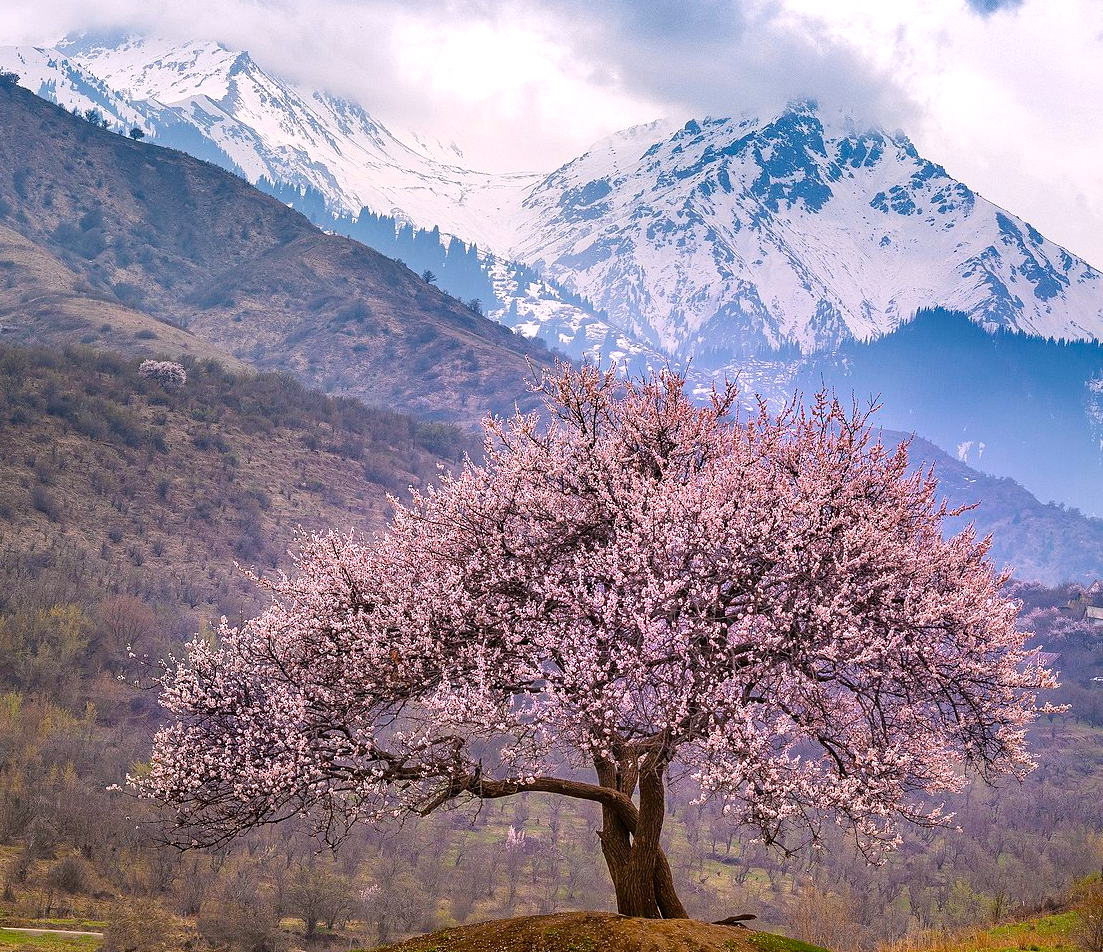
I hopped out of my blanket roll and went to the bookshelf for the English translation of Cancer Ward. First I opened the book toward the end, and found that my dream memory was wrong: the wondrous pink cloud tree is not an almond, but a Central Asian flowering apricot, or uriuk. In the book it’s a touching scene. Kostoglotov somehow survives his long siege of hospitalization. At dawn he sets foot on the streets of the free world outside, and is astonished by the tree’s beauty, a globe of pure rose in the early rays of sun.

Here is an uriuk tree at the Ile-Alatauskii National Park, Almatinskii region. https://ru.wikipedia.org/wiki

Иле-Алатауский национальный парк: Алматинская область

So there was one solution. Mother would be delighted to have her own apricots, and a lavish tree blooming right around Paskha.

But the “j” word? The table of contents showed a Chapter 20, “Memories of Beauty.” Here Kostoglotov, still in the city hospital, is reminiscing about the wild plants in his village of exile. And look: the passage has not one “j” word, but four of them!

[He remembered] …the jusan of the steppe…. the jantak with its prickly thorns, and the jingil, even pricklier, that ran along the hedges, with violet flowers in May that were as sweet-smelling as the lilac, and the stupefying scented blossoms of the jidu tree….

Here are the plants, one by one.

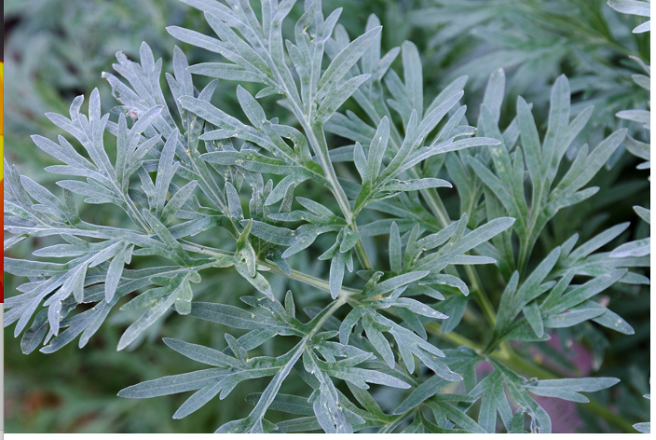
1. Jusan. In English that’s “bitter ” or “grand” wormwood, or Artemisia absinthium. The plant is one ingredient used in absinthe. Absinthe has a reputation as a strong high-alcohol spirit; in some countries it has been banned at various times as a hazardous beverage. Our local county extension service in our mild rain-rich climate calls it an invasive species. But on the steppes, in its right place with other plant life, it’s just a naturallly occurring hardy survivor.

A different kind of Artemisia appears in Revelation 8:10-11:

[T]here fell a great star from heaven, burning as it were a lamp, and it fell upon the third part of the rivers, and upon the fountains of waters;and the name of the star is called Wormwood: and the third part of the waters became wormwood; and many men died of the waters, because they were made bitter.

Wormwood is Чорнобиль in Ukrainian, Чернобыль in Russian, transcribed in English as Chernobyl.’ In the 1980s, over and over I heard devout Christians from Ukraine and Russia quote these Revelation verses. It was heartbreaking to hear them confide their fear that God sent nuclear disaster as punishment to their people for their sins. Perhaps that was one way for them to face tragedy and reach for meaning and connection.

2. Jingil

This search term defaults to “Jingil Bells” as a jolly holiday tune. So I switched alphabets and searched in Cyrillic, trying жингил, or zhingil. Aha! Russian Wikipedia came through. Its additional language options include Kazaksha, or Kazakh, which luckily uses Cyrillic spelling for a helpful cross reference showing original plant names — in this case жынгыл or zhyngyl, a spelling combination not admitted in Russian orthography but fine in Kazakh.

Zhyngyl is a Tamarisk, a tree with dozens of varieties. One is in Genesis 21:33.

Abraham planted a tamarisk in Beersheba, and called there on the name of the Lord, the everlasting God.

The tamarisk has an affectionate mention in Willa Cather’s Death Comes for the Archbishop. Missionary Father Joseph on his long treks through the deserts of New Mexico welcomes the sight of every tamarisk as a sign that nearby there will be water, and a welcoming Mexican household:

[T]he tamarisk waved its feathery plumes of bluish green…. and its fibrous trunk is full of gold and lavender tints.

The whole passage sounds romantic in the novel. But don’t plant it in your yard or anywhere else. The tree can suck up and evaporate 200 gallons of precious ground water every day, to grow into a highly flammable flame starter. But again, in its native arid desert it might stay manageable and appealing, as in this Getty Image:

3. Jidu

This search went nowhere. After typing in various tricks and turns, I wondered: could that final “u” possibly represent the feminine accusative of a hypothetical nominative feminine final “a”? I wasn’t out to correct Sol’zhenitsyn’s Russian, but wouldn’t mind questioning the English translation. I went back to the bookshelf for the Russian text. Eureka! The hero’s reminiscences go on for several independent sentence phrases. But all are governed by the initial verb “to remember.” So yes, in Russian that would place all the “j” word plants in subsequent sentences right into the accusative case. The root noun is Jida. Cyrillic doesn’t have a letter “j,” so one would need to search for either zhida or else dzhida.

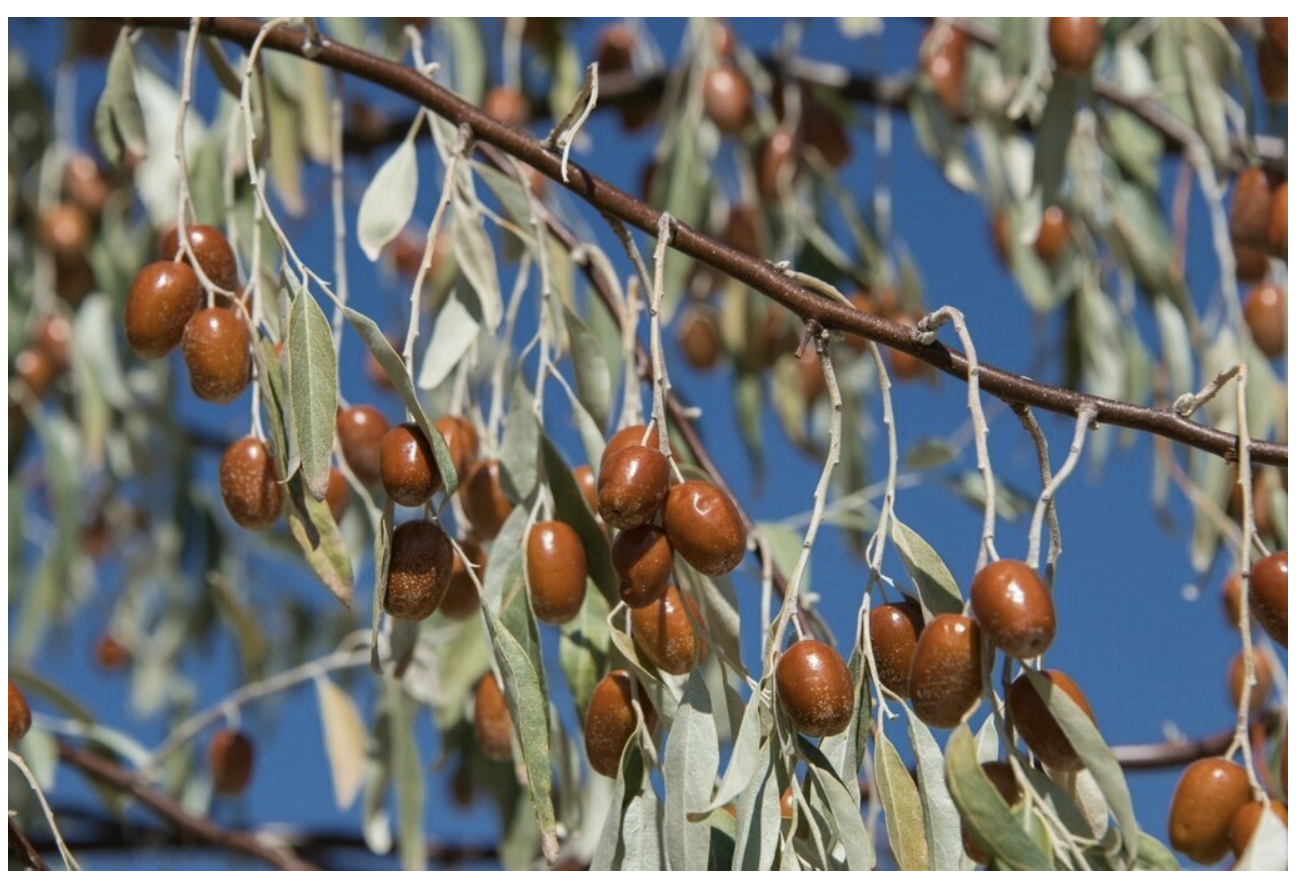
Zhida worked, turning up the Elaeagnus tree:

They’re cultivated for their silvery foliage, the edible fruit (at least in some varieties), and their resistance to wide temperature extremes and drought.

4. Jantak

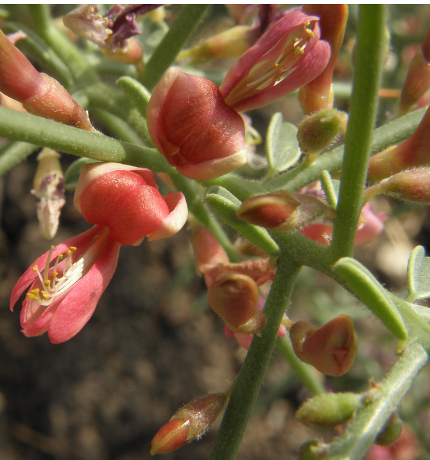
A search for zhantak turned up Alhagi maurorum. In our county extension registry that’s an invasive weed. But in its native desert, the tree’s sweet sap sustained pilgrims traveling for Al-Hajj to Mecca, hence the name Alhagi. https://en.wikipedia.org/wiki/Alhagi_maurorum

Honey derived from the tree makes Alhagi “a promising medicinal plant” according to this PubMed article: https://www.ncbi.nlm.nih.gov/pmc/articles/PMC4739472/

That concluded the search for proper trees to fit with Mother N.’s church in my dreams. All four “j” words from Cancer Ward are searchable in Library of Congress transcription as zhusan, zhingil, zhida, and zhantak. All describe plants which properly belong in arid sunscapes. All four have potential usefulness, and even their own kind of beauty. Mother was an accomplished practical gardener and herbalist, and would have welcomed them all. For someone still grieving her death, it was a comfort to work through this dream and learn new appreciation for the plants of Kazakhstan — the world’s largest landlocked country, origin of the apple and the tulip!

Oh, this last tree, the Alhagi maurorum: According to our county extension guide, the English name is Camelthorn.

Posted in Uncategorized | Tagged , , | 4 Comments

4/29/24: Memory of Mother N: The New Life

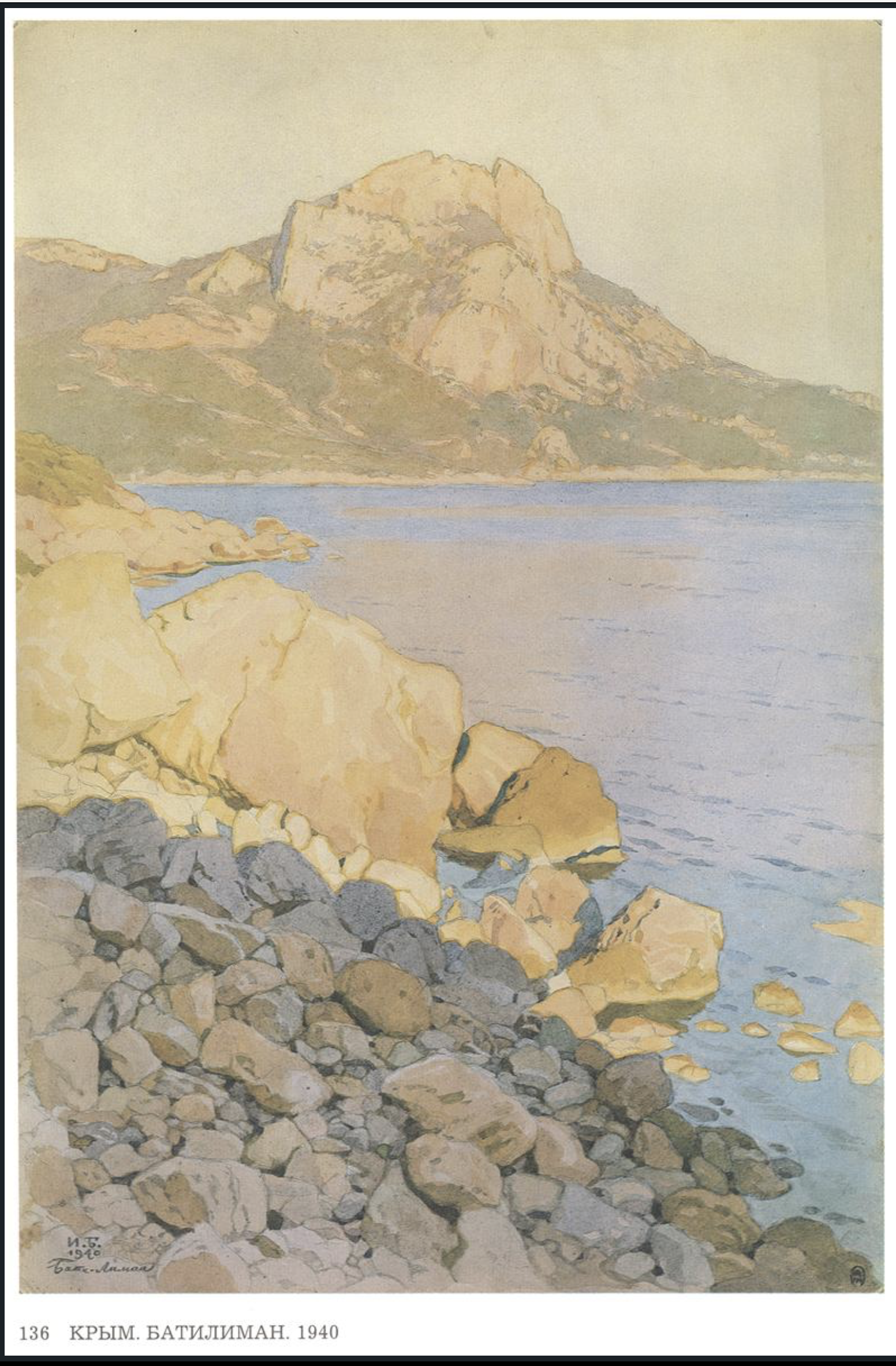
Yesterday I was searching for and admiring the art of Ivan Yakovlevich Bilibin. Here is “Batiliman” (1940), from his Crimea travel landscape series. That was two years before the artist died of hunger, back in Leningrad during the Siege. His paintings give me the hope that in his final days the memory of those beautiful distant scenes were a great comfort to him.

That night in a dream, a Bilibin-style landscape appeared again, as a high summit under a clear sunny sky. But this scene was a pilgrimage site with an ancient whitewashed stone church. A church on level ground would have its rooms spread out side by side. On these rock cliffs the chambers and cells were stacked at facet angles instead, fashioned over many years and braced into the mountain.

Far uphill, there was one lone pilgrim carrying large parcels. Even at a distance there was no mistaking this sturdy vigorous woman with her braided crown of silver hair. It was our loved departed Mother N., by some miracle alive and well in a new country. She was striding along in her Sunday best, a sky-blue flowing silk dress and head scarf. In the dream it was clear that she was heading to the mountaintop ahead of the rest of us to clean and restore that church in honor of Saint Seraphim of Sarov, a place for our Orthodox congregation to gather for Liturgy.

It took an effort to catch up and keep up with her, and then I was too breathless to ask questions. But at least I helped carry the parcels for a while. One was a large planter of blooming red carnation plants for the church door. There were two large earthen jugs from the Holy Land. One held wine for Liturgy, and one held light sweet almond oil and attar of roses, for chrismations.

Following Mother was a tall snow-white long-haired llama, coming along to stay and guard the church. At first the llama made me feel afraid; those are powerful animals, dangerous when they want to be. But I reached out and touched his reins, and he fell in right beside me looking peaceable and content. 

   “Mother!” I asked her. “How is this possible, that you’re back here with us again?”

Mother was never one for chitchat when there was some place to go and work to be done. She and the llama forged ahead, and I was left on the path watching them go. As an answer to her wayward random Roman Catholic she only nodded toward the church with a word of good-humored reproof and a bright twinkling side glance: “Just come Home.” 

Posted in Uncategorized | Tagged | 2 Comments

4/20/24: Memory of Mother N.: A Day of Rest

For one life topic, Mother N. had no mechanical aptitude or herbal remedy to share. It came up during one of our car junkets. As we talked I shared with her that despite my best efforts at attitude and actions, life alone was a lonely place. Mother thought that over during a long reflective silence. After all, her life was teeming with people day and night, all of them needing her for everything. Her answer illuminated my perspective. “I’ve never in my life had a whole day off of rest.”

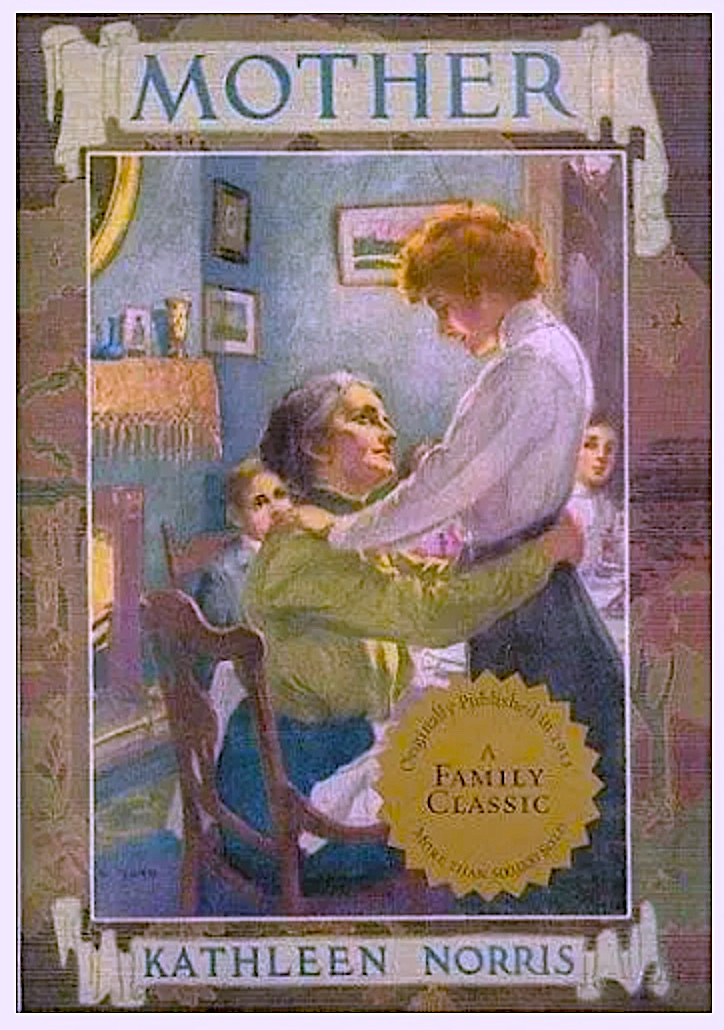
Book Cover of Mother by Kathleen Norris, 1911

For other life contingencies, Mother was flat-out in charge with a workaround in hand. She was everywhere, a strong deft limber woman in sensible shoes, always neat and tasteful in long colorful dresses and long light head scarves, with keen bright eyes and cameo skin and a thick crown of pure silver braided hair. She moved with endless energy and endless equanimity and precise soft speech and self-effacing humor. She had earlier careers in agriculture and textiles, and still created installations of fine artisan metalwork on commission. After raising her own children she welcomed other young ones into the home as well. She kept chickens, knitted sturdy winter hats and gloves in rich colors, farmed and preserved a family garden, taught evenings at a local college (her students posted sparkling online reviews), foraged for herbs, and crafted herbal tinctures and essential oils.

At their Orthodox Christian church, Father was the head — and Mother was heart and hands and feet. The two served a devoted united congregation, speakers of Russian, Ukrainian, Serbian, Armenian, and Georgian, with new American converts coming in. Mother trained and rehearsed and directed the choir. She supervised the renovations and cleaning of their little rented sanctuary. She managed donations and expenses. She coordinated the sumptuous potluck dinners cooked on the premises after every Liturgy, vestments for all the men serving on the altar, the flower beds outside, altar breads and beeswax candles and icons and chrism and holy water, baptisms and weddings and funerals, lists of prayer intentions, counseling for new converts, emotional support and car rides and home nursing and hospital visits and child care for members in need.

Their sanctuary and altar and iconostasis were in a lavishly reconverted rented room, upstairs in a nondescript community building; for years I’d peered out the bus windows of my evening commute, pondering the enigmatic little plaque on the door. In 2012 I was in their neighborhood searching for an office holiday party. Hopelessly lost, I finally gave up on the party and tried their door. The chanted candlelight Vespers service was so beautiful that I came right back for Sunday Liturgy. There the women brought bags of groceries and cooked a whole feast. Then the men washed the dishes and watched the babies while Mother and the women walked in pairs out in the park, arm in arm, singing Russian folk songs. I fell in love with these people and their faith. It was a sad loss when the church moved to a larger space farther away. That meant three bus rides with a stopover early Sunday mornings in the riskiest part of town, away from home for up to 10 wearying hours every Sunday. Considering the history of Orthodoxy, and how the faithful faced tribulations unto death to practice their religion, it is humbling to confess that when pandemic lockdown made the downtown more openly dangerous I gave up altogether on the intention of regular attendance.

But Mother never gave up on me. On special feast days she would call and offer me a ride to church. Every few months she would pick me up for a shopping trip to the produce markets for vegetables. I loved her conversation about the Desert Fathers, the wonderful Orthodox monastics and families she’d met in other countries, her personal witness of miraculous answers to prayer, her gifts of home grown greenery and herbs and knitted gloves and natural remedies. Any free hour that she set aside for me over the years was a privilege and a blessing.

Mother’s emails were always sent at wee hours when the household was asleep. They were missives warmed with reflections on faith, housekeeping, and wry humor, signing off as “your unworthy, MN.” In one of them she let me know that she and Father were leaving for another summer pilgrimage, and that she would contact me for a visit upon their return. It was a pleasure to see the lovely trip photos on the church website, and to anticipate her stories. I emailed her back that I greatly missed our church, but was not leading a totally unflocked life: for the time being I was walking to a friendly little Bible-teaching church right up the street. While Mother was away I prepared a packet to give her at our next meeting. It held readings for her to enjoy in case she ever had time to sit down and open a book. One was The Kitchen Madonna by Rumer Godden. Another was by Kathleen Norris (not the author of Cloister Walk, but an earlier author of the same name), the 1911 novel Mother written as a tribute to motherhood.

Summer ended, with no word about the pilgrimage. There were no more email replies. Messages on her cell phone went unanswered. As time passed the realization dawned: many Orthodox Christians would feel concerned and hurt to hear that I was attending services at another denomination. Mother must have given up on me after all.

Then, a cryptic text email appeared from an unknown phone number account. It arrived by chance; the sender had inadvertently used an outdated church contact list from years before. The message was one sentence announcing the funeral for the departed servant of God Mother N____.

I stared at the message, then tracked down the phone number to a member of the congregation, and called her. During our conversation she told me that after the pilgrimage, Mother had made rueful jokes about the sin of sloth, accusing herself of chronic laziness. But she kept soldiering along for months. Finally her family compelled her into the car and took her to a doctor. By then, it was too late for treatment. The women of the church cared for Mother through a long ordeal of immense suffering. (One Orthodox tradition cautions believers to never be scandalized or disillusioned, if a patient has an especially difficult death. It can be one way for God to truly perfect an especially pure soul, and a means of atonement and relief for the sins and sufferings of others.) Holding the phone, I thought what a grace it would have been, to be on hand to perform any service of care for her. Apparently during that illness Mother mentioned my name to the women, in the certain and hopeful faith that they would all see Mary in church again very soon. She was right.

The funeral was profoundly heartbreaking and beautiful. In a bank of candles and bouquets Mother was laid out in her coffin facing a white wreath at the Golgotha, the large Crucifixion icon before the altar. The customary Trisagion band of white embroidered cloth crowned her shining silver hair. The customary icon of Christ and the Harrowing of Hell was clasped in her hands. Father sat straight and still on a chair beside her. Every man woman and child, gracefully suited and gowned and veiled all in black, stood at attention with candles in hand, rapt in absolute reverence. Our choir director was gone, but the service was chanted by her grown children standing at her feet. The celebrant priest serving the funeral concluded with a solemn ritual prayer for the forgiveness of every possible type of sin that any deceased person might ever have committed over a lifetime. But after the service he added a personal word of his own: what a profound honor it had been for him, to serve as confessor to a soul like hers.

Each member of the congregation venerated the icon of Mother’s body. Each one took turns handing over their babies and their candles, then approached her for three full floor prostrations. Then they leaned close to kiss the image of Christ, then her forehead, then her hands; they lifted their children, who reached out to her with eager warmth and trust. Then family by family they picked up their bouquets and slipped away to prepare for the drive to the cemetery. As an outsider, I spent the service out of sight off in the farthest corner. Later I left by the back door, passing through the dark parish hall filled with boxes and bags of groceries, casseroles, and baked goods. The congregation had prepared it all, to return from the burial and share a funeral meal and final prayers.

I waited and tiptoed last to the foot of the coffin. Too timid to attempt those three floor prostrations, I only made the Orthodox sign of the cross. With one arthritic trembling hand I touched her fingers, and rested the other arthritic trembling hand to touch her crown. I stood staring in dumbfounded wonder and warmth before backing away.

Do I remember all that? No, not in the emotions of the moment. But there must have been a tiny movie camera tucked in at Mother’s feet. My YouTube recommended algorithm presented a startling display of me to me: clown-sized bunion boots and velcro felted lymphedema leggings, a dumpy bowing torso, a head scarf slipping all agley, arthritic hands looming in front and center, and finally an awestruck final gaze. Now it’s a public spectacle for the internet: a meeting between two faiths, from two sides of the veil, of two loving women. One of them at rest.

“…Do Thou, the same Lord, give rest to the souls of Thy departed servants in a place of brightness, a place of refreshment, a place of repose, where all sickness, sighing, and sorrow have fled away.”

Posted in Uncategorized | 2 Comments

4/14/24: A Dog’s Breakfast

Back in the day, one of the elder relatives in our Irish extended family had the hope of inspiring me toward more ladylike and classy behavior, and used to tell me in sorrowful tones that my room / homework / hair / playtime outfit after playtime / looked “like a dog’s breakfast.” As a kid, my reaction was to be equally crestfallen and puzzled: What does a dog eat for breakfast? Today at the stove I made up one proposed option.

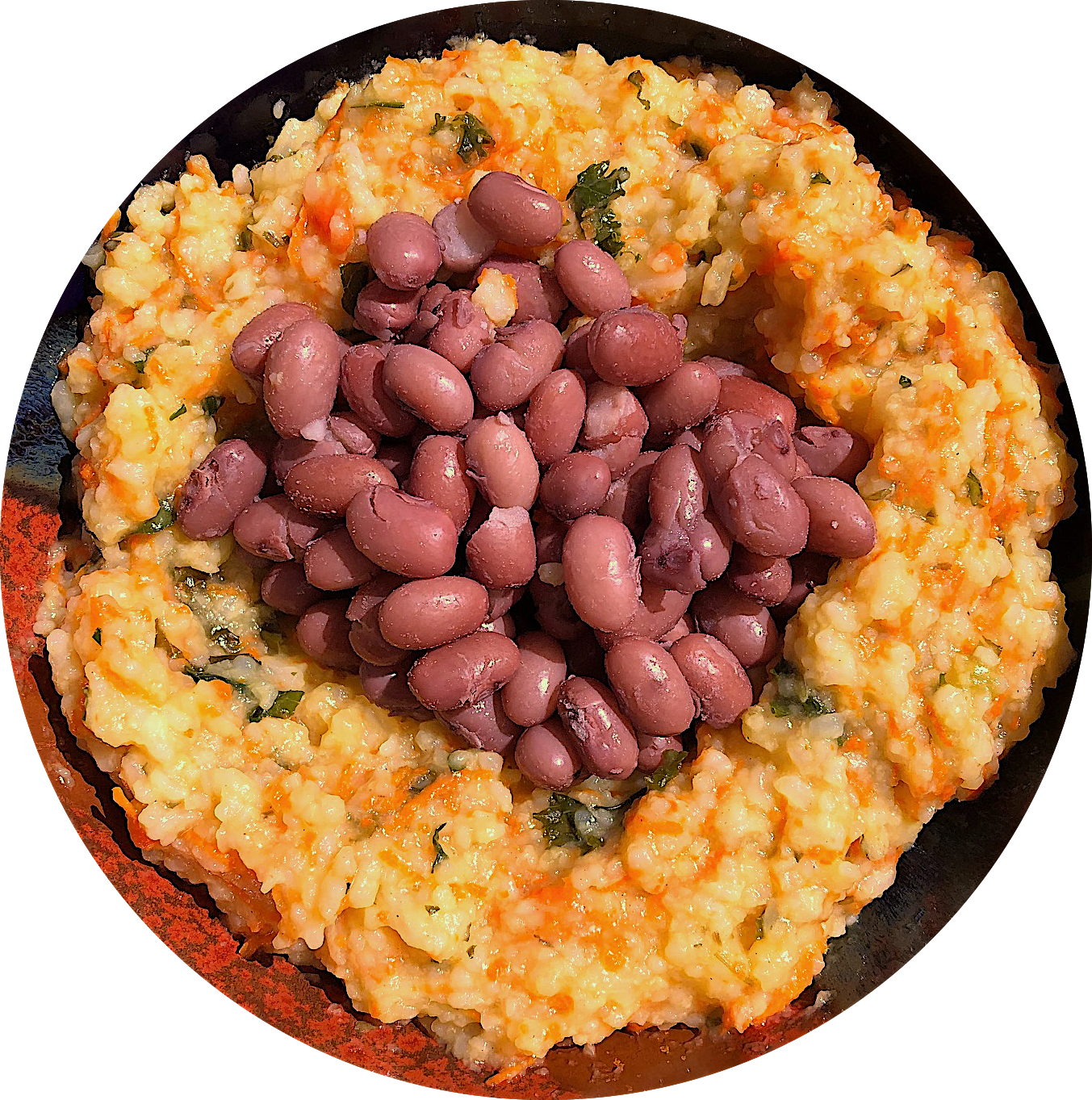
This is for the dog downstairs. If the whole family would like some too they are welcome — there’s a whole potful. This dish is red beans, organic white rice, minced steamed organic kale, parsley, raw shredded carrot, garlic (one clove, removed from the rice after cooking), coconut oil, nutritional yeast, Bragg’s Aminos, and a pinch of turmeric.

Dogs must not eat onions (nor raisins nor grapes nor chocolate nor alcohol), so there are no onions in this recipe. Bragg’s Aminos ought to be ok for them, because it’s listed in reputable whole-food plant-based dog recipes on the internet. My inspiration for this spontaneous concoction was Eric O’Grey, who collaborates with the Physicians Committee on Responsible Medicine. He has posted several creative recipes for dogs on line and in his book Walking With Peety, a warm-hearted memoir about health recovery and the benefits of adopting a shelter dog.

At a time when world news is so grave, isn’t it a fiddling baroque pastime to be devising dog dishes, and to be toting around carrot sticks and other dog treats on the street? Well, unlike cats (who are obligatory carnivores), dogs are opportunistic omnivores. If we cooked them more vegetables and beans and whole grain for at least part of their diets, there would be less packaging to throw away, and it could save money. Besides, this is the stuff I eat every day. (This was my breakfast too, straight out of the pot.) Another reason is pet diplomacy; I used to give a wide berth to two dogs who had a dominant manner and were not about to share the sidewalk at all. Their owners used to drag them away, saying “Leave it!” Now those dogs swoon at a whiff of me and my treat bag, and the owners and I are all smiles. But the most important pretext is the same reason why I bother gardening: it makes friends with more neighbors. At a time when world news is so grave, it seems to cheer up folks to pause and socialize and see their companions munch on something good for them.

Today I set aside some of those soft-boiled red beans. In the cast-iron skillet, rubbed with just a touch of coconut oil, I dried and roasted them at medium-low heat. After they were done I put them in a separate bowl and tossed them with a little dash of Bragg’s Aminos and nutritional yeast, then slow-roasted them dry over again. They were good, with a good umami flavor. Boiled red beans open inside out and turn crispy, making a nice crunchy topping for salad or rice. Angelina’s dogs really go for my boiled roasted chickpeas, so I took the roasted red beans down to their play space for a taste test. The bean crunch was a big hit with Super-Pup and Bingo. Then Caboodle, their high-spirited pal from next door, liked it too. Granted, Caboodle’s owner pointed out that her dog gets excited if somebody hands her a rock. The taste test was still a good conversation piece, and that was the whole point. It’s in the fridge now. I’ll carry the crunchies in my treat bag on evening walks this week around the neighborhood.

Posted in Uncategorized | Tagged , | Leave a comment

4/11/24: Bingo’s Bedtime Walk

Mary: Whenever I take Bingo on walks myself, he really gravitates to that phone pole there.

Angelina. Yes he does. And there he goes. Who’s a good boy?… So! Mare! Back to you. Just read your latest blog page. I’m intrigued! It describes a whole new side of you. One that only people in churches get to see. But I do not, because I don’t even know anyone else who is more inclined to the heart of Christ.

Mary: Bingo is.

Angelina: That’s a given; Bingo is a pure soul. But please walk me through the steps of how these church encounters happen.

Mary: It’s every church. They all have a different path which has always worked beautifully for that community: baptism as an adult vs. baptism as an infant, baptism as triple immersion vs. 1950s forehead dab, fasting on Wednesdays and Fridays and other fasts year round. I fall short at all of them.

Angelina: So first, people meet you being there all quiet and polite, and they underestimate you in a wildly drastic manner or find you threatening for some reason. Second, they walk up to you and just say this stuff, while you sit there listening patiently.

Mary: It really hurts. I mean, how hard can it be to just blend in and be normal and abide as a good church member? Maybe God only put me here as some hapless anthropologist unawares.

Angelina: Now before you step in to churches, do you first put on a pair of Dumb Eyes?

Mary: Yes, the eyes are very large with rolling googly beads. Like on Planarian flatworms, when you view them under a microscope in science club.

Angelina: Then, you stand there looking like a raving idiot?

Mary: Uh. I guess?

Angelina: Thus prompting people to diagnose you with lust, and fleshly desires. Do they even know that you handwash your socks in the sink?

Mary: I did go buy that Mexican scrubby washboard. That counts as a labor saving device.

Angelina: No. That still counts as self-flagellation.

Mary: And I do have a fleshly desire for an Excalibur food dehydrator. Then I can make my own apple rings.

Angelina: Well meanwhile, you’re getting pasta. Here’s some Tupperware; I made lots. You can eat it tomorrow for lunch. Night, Mare! Bingo, we’re not gonna chase that bunny now; let’s go home.

Posted in Uncategorized | Leave a comment

4/7/24: Losing Your Religion

Another Thought, 4/8: Just reading Supercommunicators by Charles Duhigg. One of the points is that to engage in a negotiation (and many personal conversations are exactly that), we have to settle What are we talking about? Who are we? How do we feel? Well, in the conversations described here, let’s suppose that the other people were peacefully tending the home base of their faith, and I was crashing into the china shop with these big sandbags of unresolved grief and then expecting all sorts of understanding and approval? It would be good in the long run to circle back with all these good people and explore how they are, and how they felt. Maybe some day when my plumage grows back in.

The Big Disclaimer: This is not the path of “God must grant me the ideal life that I imagined, or I will not believe!” Nothing in this post is cause for complaint compared to the immense suffering in the world. Religious faith is an immeasurable blessing, and I am very happy for my friends whose faith is flourishing right now. This is only the rumination of a melancholic sort who is alone too much and would benefit from having someone at home to set her straight and help process these experiences the day they come up.

A friendly neighbor, young enough to be my grandson, called “Hi Mary! Heading to work again? Why not just retire?” For this common question I usually have a cheerful joke all ready to hand back. This time to our mutual dismay I just said “Because I’m really tired of being alone.”

“Whoa,” he cautioned. “You know, there is such a thing as being TOO desperate. When women hit up on me I show them this wedding ring and say ‘Thank you Lord Jesus, for giving me such a beautiful reason to say No.'”

In other news on the Christian front, a sweet warm-hearted acquaintance with a delightful family saw me when I stopped in at her church for some quiet time. I confided my bewilderment with the Gospel message, and how I’d tried to live up to it all my life. She kindly sat down for a heartfelt pep talk with me about my spiritual walk. She mentioned the salvation verses of the Romans Road, and our hope of heaven. She gently questioned whether my salvation years ago was really certain, whether my own faith in my salvation was secure, whether at the time I had really been aware of my inherent sinfulness and need of Jesus’s sacrifice on the Cross, whether I fully accepted the church as God’s chosen family for me, and finally the barrier in the way: my fleshly desires. Of course, the fleshly desire she meant was the wish for a family of my own at home, but at first I just stood there with a dumb look, thinking of my bed = yoga mat, and breakfast that day = split peas, with weeds foraged from the tree farm near the post office. I am sad to say that my response was to finally take my leave and blunder off waving my hands in disconcerted surrender; later on I’ll go back and thank this gentle sweet soul for her kindness and concern. (Culture note: the Romans Road to Salvation topic is long long familiar from my years in the Bible Belt, where it came up as a caring everyday pleasantry everywhere — at gas stations, at the Jesus Laundromat, in line at the bakery to buy doughnuts. The town phone book even had little fish symbols to designate businesses owned by Christians. I was sincerely whole-heartedly saved there in 1980. The problem is that no one since then witnessed my conversion, so how can they be sure it was genuine?)

Last year I was attending a beautiful church. After two wise and welcoming interactions with a member of the clergy and his hospitable family, I booked a counseling appointment to discuss membership. He and his staff welcomed me to their office. There I openly confessed the greatest impediment in my spiritual life: exhaustion and despair caused by utter loneliness. “I expect to die alone and to be forgotten right away, and that’s just life for many people. But I’ve always wanted to know what it’s like, to love someone who would actually like to be loved by me. Someone that I have the right to talk to about anything, and the right to touch, in a relationship where no one is assaulted or humiliated or screamed at. I want to go home to my husband, and to lie down and be at rest.”

“Let’s just call it what it is: Lust,” he smiled. “You’ve chosen to feel lonely. You make sadness your comfortable choice, with fantasies about the pleasures of the married state. Our society believes celebrities like Dr. Ruth [Westheimer] — that to be happy, we need to be having sex!”

“No, it’s that… to be human, we need other humans,” I told him. “We need to know and be known as our whole selves. I experienced that one time long ago, with a deeply serious young man in Russia. Right before I left the country he and I became acquainted and spent several days with his family, taking walks and talking about life, and he asked whether I would ever consider a future with him. I took that very much to heart, and I think of him every day. But we never saw each other again.”

“You could have married him, yet ended up right where you are today,” he laughed. “He could have died in a year or two.”

[Momentarily speechless.] “He did.”

“Well, see? There ya go!”

He compared me with my adamant family-life wish to a little kid with his fist stuck because he’s trying to get a pebble out of a precious antique vase; or to an elephant chained up as a calf, who grows up and doesn’t understand that she can just break the chain and walk away.

Then for two hours he encouraged my path forward: renunciation of earthly desire, and union with the true Bridegroom of my soul. He told story after story about martyrs of the flesh, centuries ago in other countries. One young man was so enamored with prayer that he had himself walled in, standing up until he died; his remains are still there, and people come to his grave to pray for special intentions. Another woman in her devotion to God became a pilgrim, and spent the rest of her short life walking. Passersby discovered that she gave clairvoyant answers to their questions, though she lost all awareness of her past and her own name as her clothes fell into rags and her body wore away. “And YOU can have this same divine Eros, this same joy in the Lord! You can have the same trust in God that my children have in me.” He concluded with suggestions about texts to read, and ways to incorporate weekly fasting.

He’s a radiant generous person in general with a warm manner, someone I would ordinarily be happy to see again in his church. Still, as he talked I sat twisting my mind into a Mobius strip, pretzeling out the logic for that cosmic step of renunciation into ultimate fulfillment. I’d walked in looking forward to a meeting of the minds about deep spirituality. I walked out feeling like a naughty little girl harboring carnal thoughts, and haven’t had the heart to return to that church since. Being too dissociated to even remember saying goodbye, I left the church whimpering and groping along in a strange inner darkness to the bus stop. The bus was empty. I huddled up in a seat. The driver checked on me in the rearview mirror. Before starting the bus he turned and nodded to me and smiled with remarkable kindness. Getting off the bus later, still whimpering, I smiled back at him.

I arrived home and packed up all my Bibles and religious books, and boxed them in the closet. “I’m sorry,” I told the icons on the wall with their sad eyes, as I took them all down. “Something is wrong with me. Some day I’ll be ok, and we can all live together again.” That night, and every night for weeks after, I woke up in the dark gripped by fear: for the first time in my life, the night sky was an empty shell. Outer space held no heaven any more. Time was empty too; history had lost its meaning. There was no sense or plan for the full circle of eternal redemption or heaven, not for me.

The day after the session, my dear former dental hygienist passed me on the street. I watched myself cracking jokes about a real estate poster on a phone pole, making hilarious fun of the stylized commercial euphemisms and prices. That night she contacted me to follow up. “How are you doing?” she asked. “Something was wrong today. You didn’t look or sound like yourself.”

She had a point. The counseling encounter had hit like a concussion, a head injury that still hasn’t gone away. Now church services that mesmerized with their beauty seem like a nicely decked out puppet show. Decades of memorized chants from Liturgies and Mass and feast days and akathists and hymns (in Slavonic, Old Russian, Latin, Greek) have disappeared from memory. Those cherished daily prayer books are just obsolete words on a page. The favorite luminous promises and prayers of Scripture sound like trampled dust. God’s whole historic united body-of-Christ plan has marched off without me; he’s in some other part of the cosmos, a pleasant well-meaning guy with good ideas and care for better people.

Maybe the real fleshly desire, other than Trader Joe 72% chocolate, has been the lifelong desperation to belong to a church, to follow all the advice, to feel saved enough, to feel included like everybody else. Along the way of trying so hard, I lost my faith and want it back. I miss the words in print and hearing, the eyes on the wall. Most important I miss myself, and the way God used to lead me — a prompting of intuition that cut cross-wise right through my ordinary thoughts and showed the way, and was always always right. It’s time to find that again.

In fact, after my neighbor had the gentle word with me about salvation, she urged me to try prayer, asking Jesus for guidance. That night I did, and right away there was an inner flash of intuition. “You can be lonely, you can be sad,” that awareness seemed to say. “That does not interfere at all with the work I gave you, of sitting with souls in pain. But do not ever, EVER, speak to them the way those people spoke to you.” Maybe I needed to hear everybody’s advice, to feel exactly which words do not help.

Meanwhile, back to that driver on the empty bus. His silent nod and smile were holy, the sacrament I’d been looking for. He inspired me to carry that kindness forward, to kindle sacramental meetings ever since, all day every day, one human being at a time.

Posted in Uncategorized | Leave a comment

3/30/24: Dr. Michael Greger, MD: Groatnola

Usual disclaimer: If your teeth are delicate, and if any of them are porcelain, they might need a more consistent tender texture in the finished product — even if you bake it extra soft and moist. My groatnola came out with a few random tiny harder bits after baking. The fault might be in my cooking technique. I would need to soften this by cooking it in with oatmeal, which kind-o defeats the purpose of granola.

Update: I made this again, this time with peeled grated organic apple mixed in. I also added some extra Ceylon cinnamon. But I left out the little pinch of clove powder. That way on the street I can pass out samples to not only the neighbors, but their dogs. (Dogs can eat Ceylon cinnamon, but in theory they can get sick eating cloves or clove essential oil. Better safe than sorry.) But honestly, I don’t plan on making this again for just me. Raw soaked buckwheat groats and rolled oats cook up in just a couple of minutes, and it’s no trouble to steam sweet potatoes, so I really won’t need granola in general.

Still, for cereal fans, it’s a nice recipe — ready to eat with no salt, no sweetener, and no oil. It’s wholesome and filling with pleasant-tasting groatiness, and a good unique use of the ingredients. And if kids can enjoy kneading up a batch and can still believe that this is what we mean by “cereal,” that’s all to the good. Now, since it has no salt or sugar or preservatives, then unlike the cereals on grocery shelves this does not have a long shelf life. But a batch could stay in the freezer, as something to throw into porridge during cooking. As it cooled it softened a bit, making it a nice trail snack to chew while hiking the neighborhood.

It’s 4 ingredients: sweet potato, buckwheat groats, rolled oats, flavoring (spices & vanilla). That’s it!

For the YouTube video, search for “Dr. Greger in the Kitchen: Groatnola.” He is way more entertaining as a performer than I am as a recipe reporter, and his presentation is fun to watch. While following along, check out the vertical column of subtitles and cute commentary. (The burpee joke referred to his other clip “Dr. Greger in the Kitchen: My New Favorite Beverage.” In that clip while waiting for the blender to puree the ingredients, he powers through 10 burpees on the kitchen floor.)

I soaked the raw buckwheat groats for a few hours, then rinsed and drained and cooked them soft; that takes just a few minutes, so stay close and keep an eye on them. I steamed, mashed, and peeled the sweet potatoes. Then I mashed the two together with a good dose of vanilla and (my own notion) a little teaspoon of coconut oil for two quarts of cereal. I used a smaller amount of rolled oats than the ratio shown in the video, mixing it first with cinnamon and cloves. Then I mixed and kneaded all the ingredients together and spread it on parchment paper on cookie sheets. In the oven that baked at 250 F for two hours plus the half hour it took for the oven to cool. Dr. Greger’s mixture looked flaky and crisp, but mine was more chewy and tender.

You could stir in a dash of bitter cocoa powder with the spices, and some ground unsweetened coconut toward the end of baking.

Dogs: As Dr. Greger points out, you can feed this to dogs first, and then add the spices after. It’s easy to see that dogs would like this. Of course, dogs are a good sport about putting all sorts of items in their mouths. Still, Angelina is getting a sample for her own snack and a taste test for Super Pup and Bingo. They prolly won’t mind a little spice. (Last week, the doggos were very enthusiastic about my soaked & sprouted & boiled & roasted chickpeas. Maybe that’s just because there was Bragg’s Aminos sauce on them. Maybe the dogs were crawling all over me not for my cooking but only to get at the salt.)

I’m eating a bowlful of groatnola right now with rice milk and blueberries. This has a pleasant gently subtle sweetness, and makes a nice cereal.

Posted in Uncategorized | Tagged , , | Leave a comment

3/29/24: Watching for Bunnies

(No bunnies here. Just a nice view this week, on the walk home after work.)

Each morning, the alarm in their bedroom rang Ding! then with a polite pause Ding Ding! then with another polite pause really warming up with jazzy bright chimes in a doot-doot-de-doo rhythm. A fast online search turned up a picture that looks like theirs — a Westclox Big Ben Chime Alarm. Memory is a curious thing; I had no visual recall of that clock, but spotted it right away just now in a whole page of vintage models.

Every morning, when they turned off the alarm, Grandma’s voice would say to Grandpa “4:30 already! Goodness. After you retire, I’m going to sleep late until 6:00 every morning of the week. What a shame to wake up the little one in there.”

The little one though was up & at ’em, wildly excited to be visiting Gram & Grandpa, with the amazing novelty of being awake in the pitch dark and cold. Soon Grandpa and I were down at the table in the chilly kitchen by the warm gas stove, me on my foot stool for extra height, bundled up warm with an extra pair Gram’s woolly knee socks. Gram whipped up sausage patties, perfect round poached eggs, toast, and sometimes (my favorite) mashed potatoes fried crisp in butter, and delicious oatmeal cooked in milk. I got to eat it all up with a special tiny child spoon of real silver, and drink out of a special glass with a beautiful red Kentucky Cardinal painted on the outside. Every morning I looked at its red and black colors and jaunty crest, wishing I could go to Kentucky and see a real Cardinal, because we all knew New York is too cold to ever have any. (The first time I saw a bird outside that matched the bird on the glass, I burst hollering into the house to tell Gram to come running and see.)

Grandpa was silent at breakfast, and silent in general. He worked every day except Sunday from 6:00 in the morning to 6:00 at night at the family business, generally in the bitter cold. For the coldest days and snow, as outdoor clothes he put on just a quilted vest and a black and white hunting hat with ear flaps, made of hounds’-tooth pattern wool. I never once saw him wear a coat or scarf or gloves. Mornings we left the house at 5:30 or so, crunching through snow under the moon to the car. Grandma put me in the back seat and always said “Where’s your HANDS?” and I had to hold them straight up where she could see them so she knew it was safe to close the back door without hurting me. Then she drove very slowly all the way down the hill to town, to drop off Grandpa for the workday, and he got out of the car with a roast-beef sandwich in brown paper to tide him over until supper.

After work we picked him up. In careful stiff stages he eased in to the car after his long day. If my cousins were in the car, and if it wasn’t too close to supper to spoil our appetites, sometimes Gram opened the glove compartment up front and took out her supply of Black Jack gum for us to chew on. (In Wikipedia I just looked up Black Jack gum. By golly, that was really a thing — a licorice formula confection since 1884, the first flavored gum in the US and the first gum available in sticks. The licorice (pronounced lick-rish) flavor was completely strange to us, but we chewed it anyway. Then while Gram drove the car we kids took the gum wrappers and very carefully speared them on the long pearl pin that Gram always wore with her hairbun. We thought she might enjoy the fun of having gum wrappers falling all over when she walked into the grocery store or took off her hat.)

Back at home, Grandpa sat down on the foot stool while Grandma unfastened his high boots, working the laces free of the metal hooks from toe to top. His hands couldn’t handle small things like bootlace knots, after getting frostbit in World War I. I didn’t understand then how come if the War was more than 40 years ago, why didn’t the frostbite melt away by now? But Grandma said that’s how it goes with frostbite, and that’s why girls have to put on mittens and warm socks for outdoors. After easing his feet into fresh wool socks and slippers, Gran gave him a cup of hot tea to hold and then opened the freezer and took out a package of pure white goose-grease from the butcher, and she rubbed it on his hands to help them warm up for the night. Then he would sharpen his straight razor on a long leather strop, shave with a little mirror on the wall, watch a few minutes of TV news over a very light supper (small patty of round steak chopped, three spoonfuls of cooked spinach, three prunes for dessert). Then he said “Nacht Nacht” to all and climbed the stairs to bed.

But before work, in their half hour of pre-dawn free time, my grandparents went searching for bunnies.

Bunny watching was for short days and long winter nights, before the sun came up, when roads were empty and creatures were still out and prowling. Gram went a little bit out of their way, on the beach road looking out over Long Island Sound. At that hour there was not a car in sight; we had the woods and shore to ourselves. The car cruised at a gentle little pace, avoiding any signs of ice, taking its time. In the dark forest the stars trailed right along, hiding and seeking through the tops of the trees and over the horizon with its twinkling lights from the city.

We watched out both sides of the car with close attention. Gram always managed to spot them first. Bunnies! They dashed along the road with white cotton tails high, and sometimes right across, lucky to be seen by the slowest careful driver. Sometimes it was squirrels. Or mallard ducks. Or a cat with shining eyes. One time a real raccoon! Climbing out of a storm drain! And once it was a ringneck pheasant, with a great flapping soar of surprise and flashes of color and elegant tail. I kept breathing on the windows and rubbing off the frost with my mitten to see everything, and trying to trace the animals on the window so I could have a lifelike shape on the frosty glass to look at later. But the animals were all too fast for me, so mainly I did a lot of bouncing in the back seat trying not to yell and scare the creatures. It was just so amazing and great to see real nature animals that weren’t on TV.

Tonight for Catholic Holy Week, looking for an Easter memory to capture here, what came to mind somehow was bunnies. After growing up, and growing older now than those grandparents were then, it’s easy to see: the point of looking for bunnies was not scoring bunnies. It’s about two greatest-generation Germans born in the 1800s, weathering hardships and heartaches that they were not about to mention to us and that we can never fathom, saving string in a ball and bacon drippings in a jar and keeping a scrubbed warm well-fed home for the grandkiddos to visit and mess up and holler in.

Bunny watching was their one light enjoyable tradition of leisure; traveling in silence, side by side down the years, watching for the frozen dark to yield some sweet surprise along the road.

Posted in Uncategorized | Leave a comment

3/18/24: Wedding Pictures

On Saturday somebody dropped their recycling in shopping bags next to (but not in) the recycling dumpster, the way folks do. One bag held two crumbling pasteboard folders. So I grabbed the bag to toss it to the bottom of the full bin, and then with a yip of surprise saw what was inside. I left the bags and hurried my discovery upstairs.

There I set it on the bathroom counter and fetched a sharp knife and scissors. It took about ninety minutes of chipping in little careful bits to remove crumbling pasteboard and layers of very hard mucilage. Then I cleaned up the bathroom, wrapped up the board and glue debris and ran that straight back to the dumpster, washed hands and tools, then took my find into daylight for a good view.

It was two photographs. There were no names and no date. Both came from Roberts Studio, Brooklyn New York, and were printed on Eastman Kodak film. I turned them face down on the balcony laundry rack for an airing in the sun. Then I opened the internet and started some research.

Roberts Studio was at 683 Fresh Pond Rd., Ridgewood, New York. The Ridgewood Times had a little article about the Fresh Pond neighborhood.

A NY neighborhood that still has its own newspaper!

The newspaper invites readers to share any pictures or memories. I may just make prints of these, and send them to the paper. Meanwhile I photographed them, then showed my cell phone images to people around me. One neighbor made a little fun of my all-out rescue. “You do realize,” he said, “that one day all of your stuff is going in a dumpster too?” I said “Yes it will, but their stuff won’t if it depends on me. The hope and beauty in these faces does not belong in the trash.”

How old are these pictures? Kodak film was invented in 1889. Roberts Studio had a second shop as well, at 1230 Fulton St., Brooklyn. That was originally a family house built in 1910; it still stands today. My sentiment, and it may be wrong, is that the wedding fashions are from before the Roaring Twenties, perhaps even before World War I.

Both pictures have the same faint painted arch background. Both grooms are dressed alike, down to the little flower ornament in their lapels. The brides seem to be dressed alike too. Perhaps instead of buying wedding clothes, they rented them from the studio? If so, that would suggest that they were not wealthy people. Judging by everything I heard from my relatives, and from Brooklyn scenes I saw as a kid, life there 100+ years ago might have had its spirited occasions but was in no way easy or serene. There is something appealing and heartfelt about two people facing the future side by side in the best clothes they could manage.

For right now the wedding pictures are in page protectors at the front of my address book binder, protected from light. At first it was only basic respect, to pounce on ancestor pictures put out with the garbage. Then, the work of freeing these pictures from their old folder frames, and doing the research, made me care about these people. Now I want to find out how to preserve them well. Unless of course a reader at the Ridgewood Times says “Holy Smoke — that’s Grandma and Grandpa!” If so, they’re getting sent back home to be with their relatives.

I like to go open the binder to look at these young people, to hope that they got through the Great War and the 1918 flu, to wish them a good and long life together.

Posted in Uncategorized | 2 Comments