9/2: Good Name

“We called you The Fish,” he told her, when the storm was over.

He was one of six bright young grad students with privileged credentials and gorgeous English who came a long long way to the U.S. for a winter internship. She was the co-ed in campus housing next door who saw them arrive. She knew about these distinguished awaited university guests. She imagined how homesick her new fellow students must be in a different culture. So she left the floor mopping to run out into the wind in her t-shirt and jeans, calling greetings in their language. She stayed to help them and the moving men unload their van. That evening she baked them an apple pie and delivered it to their Reception desk. A week later when the youngest one of them had flu, she brought her specially concocted hot golden chicken-vegetable broth in a big jar wrapped in plastic bags, and left that for their unimpressed building manager. When the grocery store showed Bicentennial spirit by selling tiny cherry-sapling sticks for Washington’s Birthday, she planted one at their curbside out front while the Security guards watched through the window. She did not not stop to think that in most countries planet-wide, a modest decent girl does not tote moving boxes for strange men, deliver home cooking to their door, or dig up their garden dirt while singing Shaker hymns. But the interns did. They showed a range of reactions whenever the group met her at seminars and shops. The youngest one in particular always hailed her with humorous pleasantries; the oldest would keep his distance, looking pensive and saying nothing at all.

Then the six interns were included as guests of honor at an awards ceremony in Alumni Hall. For the occasion her roommates staged a cosmetic intervention to dress up her image. They teased and moussed her hair and decked her out in their makeup, perfume, and a sleeveless slit-side clingy silver gown.

She felt off-center in all that array, so she spent the ceremony evening near the auditorium wall beside a potted palm with her usual khaki knapsack and best brown cardigan. But her roommates were right: she was in fact noticed. The American lads from her building got to bantering with the youngest intern and some guests from his country, all about the escalated eagerness of her new vamp costume. One quip led to another, in a chain of assumptions that complicated her life for the next several months. After the players left the country she pieced together the situation, and salvaged the one good memory: an ally that she didn’t expect.

But behind the potted palm, she heard just enough. She heard her hospitable overtures valued like the fortune cookie at a feast, a party favor to crack open and toss as a mistranslated joke. In 1976 she didn’t know that young men might like to compete in thinking up  off-handed remarks about girls when they don’t know who is listening. She didn’t know that once the guffaws died down, her own peers in post-Woodstock America really gave very little hoot about her welcome wagon hobby. But she did live by the tradition that a girl’s crowning gem is her irreplaceable Good Name, and that night she went home believing that hers was lost forever.

Her well-meaning roommates, who thought the Good Name idea was so much piffle, tried to cheer her melancholic gloom with teasing, pep talks, scolding, and hot brownie sundaes. But for the rest of the winter while the ripples rocked the rumor mill, she stayed quiet and subdued, mostly at home. Above all, she dropped any contact with the new neighbors. Coming and going, she even walked the long way round the block to avoid seeing their building or being seen by them.

On a spring night she got off the bus with her commuter reading and knapsack, and trudged uphill to the apartment. At the home stretch, along a brick wall running for several blocks, she broke into a run ahead of a thunderstorm rolling in from the south. A car swooped in beside her. She recognized the driver as the pensive laconic oldest intern. She darted behind his car to run across the street.

Other drivers honked at him to move along. Lightning cracked across the sky.
“Sister!” He shouted through the thunder, waving her toward the car, and threw open the passenger door.
She hesitated a moment while the first hail stones hit the ground.
He drew something from his jacket pocket, held it overhead out the window.
And that clinched it.

“This isn’t looking good,” he apologized as she jumped in and they took off. “Might as well drop you at the — hold on!” He braked (throwing the back of his hand out in front of her) as traffic stopped.  Fire trucks seesawed through the street behind them. The sky turned yellow-green. Hail hammered and bounced on the windshield. The wind rocked the trees and electrical wires.
Hello,” he murmured, glancing over his shoulder. He took a sharp turn off the main street and up the driveway to the Cathedral. Tapping his brakes to test them, he parked in the downwind side of the building. “Shouldn’t drive in this,” he explained, both hands still on the wheel. “It’s a fast moving front; let’s give it five minutes.”
“Good idea, thank you.” She wondered what else to say that wouldn’t sound forward and wrong. “I appreciate it.”

The hail turned to solid rain, blocking out the view through the windshield.
“So. What’s the book?” he asked. “Bus reading?”
“Yes! Here: Wind, Sand, and Stars. Have you read it?”
“Why, St. Exupery.” He read the chapter titles. “Wait — this is Terre des hommes! I read this as a boy. Amazing — imagine finding it again here. What are you doing, reading this?”
“Well, it’s…” She thought it over. “A reminder. How even flying alone — midnight, desert, storm — there’s always some sign in the sky or land to guide us. Even in desolate places. Often something quite beautiful.”
“Navigational philosophy.” He smiled in recognition at some passage on a page, and glanced up at her. “How is it working?”
“I don’t work it very well. As half the school knows by now.”
He gave the book back. “No, that storm blew over. Too.”

The rain eased up just enough for them to see the Cathedral as it loomed on and off, traced by the lightning.
He leaned closer to the windshield, and pointed through the glass as a creature in wet-pointed fur hauled itself up on the pavement and stopped, gaping into the headlights.”Look who’s come to call.”
“Oh!” She swayed a little for a better look through the raindrops. “The biggest rat I’ve ever seen.”
“Rat? No, it’s…” He tapped his forehead. “Ah: Opossum. We’re intruders in his country now, and he’s dazzled by our commotion.” He switched off the headlights, then cranked down his window and leaned out into the rain. “There he goes. He’ll be fine.”

She cranked her window too a bit, listening. “Around the corner of the building, if there’s a wind high up we might hear the bells in the tower.”
“Well. Shall we then?” He turned off the engine and set the emergency brake. They closed the windows, and she groped for the door handle.
Instead of reaching across her he leaped out and opened the door from outside. They sprinted around the corner to stand under an arch, with the city lights sparkling off to one side and the dark gardens sloping down before.

The rain was a calm steady downpour three feet away, a solid falling veil hemming them in.
“Warm enough?” he asked her, preparing to shrug off the jacket.
“Oh, keep it, really — this is fine, it’s nice.”
They listened to the bells breathe long-drawn chimes, shifting tones with the wind. A startled pigeon tumbled from the tower and soared back up again.

Somehow, on their own in the storm, they felt their way into talking.
“You did have me puzzled,” he confided. “The week we arrived, what was that big jar? Were you behind that plan?”
“My special chicken health broth. I told the manager!”
“He just left it at our door. We had no idea. And you keep Washington’s Birthday, the president who never told a lie. Wouldn’t you celebrate by chopping down the cherry trees, instead of putting them in?”
“Had to start somewhere first. Chop it down next year if you like.”
“Can’t, leaving in two weeks. Besides, it’s got little leaves now. Or what’s…? Pre-leaves.”
“Buds. I forgot that tree. It’s alive?”
“It is. Someone might have watered it. A time or two.”

He reached in his jacket pocket again, and this time dropped the rosary in her hands.
“This is wonderful.” She looked it over. “I’ve had this rosary since I was a little girl. I thought it was gone for good.”
“I was going to leave it in an envelope with your name, at your department office. But, I thought you just might cross paths somewhere around.” He did not trouble to mention that he’d kept it to show a few of the regulars around the department (refugee cleaning crew, a reference librarian, night staff at the language lab, friendly priest from the chapel near the classrooms). He made a few discreet inquiries about her. He drew out his willing sources, then when he was satisfied reported his findings to the local elders from his country, people with all the right social clout to intervene with the rest of the interns. Stopping the domino wall of pointless slander cost him trouble and time and a falling-out with his people, and it gained him nothing. But he did it anyway. “And then there you were. Walking wrapped in your storm and your book.”

“Wherever did you find my beads?”
“Alumni Hall.”
“Ah, their evening bag — the clasp was loose. See, I was lost without all my usual pockets; the dress they picked out didn’t have any.”
“Picked out?” He gave her an instant’s lookover, and narrowed his eyes. “Who picked out what?”
“My roommates picked out the dress. They wanted to smarten me up. They tried so hard, I didn’t have the heart to hurt their feelings. But the makeup and clothes, and all? It was their stuff and their idea.”
“Theirs. Goodness.” He whistled in through his teeth and covered his eyes. “Oh dear. Oh I am sorry.”

He took three steps away for a long minute, jingling the car keys and looking out over the gardens. “Neither evil tongues,” he said, “Rash judgments, nor the sneers of selfish men, nor greetings where no kindness is, nor all the dreary intercourse of daily life, shall e’er prevail against us.” He came back under the arch again. “Or disturb our cheerful faith, that all which we behold is full of blessings.”

She was pleased and heartened by his words and his lovely style of recitation. This was what people did in his country, she knew — recited great amounts of classical epics and chronicles and narratives, and then quoted them on all occasions. True, it seemed unusual that he’d learned this poem in particular; a young man at the top of his career, bright future ahead, winning awards — what could it mean to him? But she felt happy that he told it to her anyway.

“Star.” He pointed. The clouds were already blowing away. “Navigation for the journey home.”
The rain ended in a soft breeze. The elm trees showered their papery heart flowers over the grass and his windshield.
Hands in his pockets he circled looking at the ground, scuffing his heels in the elm flowers. “Can I go back to my unfortunate portion of the Third World, and remember you as being all right again?”
She thought that over, breathing the fresh storm air. True, a complex mindless practical joke had dis-illusioned her natural admiration of men as men. But instead she had this, a gift of time and an arch of shelter from a man who decided to believe in her. “Yes, thank you.” It was her first spark of understanding that in grace, it is never too late to begin amending a reputation.

Back at the car, he walked around checking around the tires. “Let’s make sure our little friend didn’t come back under the car…”
He opened her door. On the back seat floor he found an ice brush and wiped the elm flowers off the windshield. He handled the emergency brake and headlights and ignition. He drove her to her front entry and pulled in under the driveway canopy, waiting to make sure she got in the lobby door. Then he drove off and soon departed for his country, to a storm of man-made workings far more terrible than weather under any sky. For six young men with ties to America, survival was not likely at all.

Did he have a premonition of it, even then? On their way back he recited the rest of that poem for her.

…Nor wilt thou then forget,
That after many wanderings, many years
Of absence, these steep woods and lofty cliffs,
And this green pastoral landscape, were to me
More dear, both for themselves and for thy sake.

“We called you The Fish,” he explained, shifting into Neutral. “That’s the name we settled on, to talk about you. It’s the only explanation we could find.”
“Fish as in cold heart?” Her own heart sank a bit.
“Fish as in no passport, no borderland. Foreign more or less, at home more or less; now this country, now that language. But try to pin her down, and she slips through your hands. Silver and gleam. Back to the sea.”

He got out and opened her door. “Farewell. God bless you.”
“And you.” She handed him the book. “I would like you to keep this, if you please. Thank you for talking to me.” She held out her hand, then realized, one instant too late: handshake across genders; her final cultural error.
“Welcome.” He ducked his head, smoothing back his hair. But, he made his decision and reached out, clasping three of her fingertips for a moment before getting back in the car.

“That poem is splendid,” she called. “Did you translate that? One of your classics?”
“One of yours. Wordsworth, Tintern Abbey,” he called back. “Everything I said, and everything I didn’t. Sister.”


Posted in Uncategorized | Leave a comment

5/31: Step Right Up!

The moral of this story is not that people born outside the U.S. are inclined toward bewilderment or learned helplessness. (Rest assured that in most life skills, the majority of people the world over could rocket figure eights all around my level of competence.) This vignette is only an example of a parallel conversation — times when you think and I think that we are describing the same picture, when in fact we are looking at two different views. Parallel conversations are a mainstay of comedy shows and cross-cultural mishaps of all kinds. Onward.

On a clear summer evening the bus rolled along through open fields, heading for our small town. Over wild blackberry and yellow Scots Broom and crying killdeer, the sun was setting in a clear apricot sky.

The town was a resettlement area for a wonderful array of refugee families. For this white Anglo lady, it was a great interest and pleasure to take in the scene among fellow commuters: thin bronzed wiry young men speaking Spanish, women with grocery bags speaking Ukrainian, teenage girls veiled in graceful hijab gesturing with henna-patterned hands speaking Arabic, senior citizens with splendid silver mustaches and Sikh turbans speaking… Punjabi?

The bus driver turned off the highway toward our little transit center on the green, at the heart of the historic downtown. Just then, a police car behind us switched on its siren and pulled us over, parking in front of our bus. A second car with siren came flying, and parked in back. One officer approached the driver’s window. From the first seat I heard him mention the Justice Center, a local landmark several blocks from downtown: “… So, pull in there, in the back parking lot. They’ll just have to walk the rest of the way.”

Later, the neighbors told me why. At our bus terminal, a high school student from out of town came for the first day of the annual Street Fair; he exchanged words with some local teens. One of them had a gun, and the gun went off. Fortunately, no one was hurt. In the alarm and confusion on the street, police took the teenagers in for questioning, diverted the traffic, and roped off the area to watch out for further incidents.

Meanwhile, the police officer boarded our bus. (One of the teenagers smoothed her veil closer, hiding the baby girl in her arms.) The officer tucked his thumbs in his belt and shouted an announcement. “This bus is coming out of service. We’ve cleared the downtown.  Station’s closed off.” He waved his arms at us in a herding gesture. “Last stop will be up here, on account-a the rioting, okay?” He looked around at his listeners, all sitting very silent and very still. “Riots, riots,” he repeated for their benefit, and left the bus.

Passengers whispered from seat to seat. “Riots? Ri-ots?” I crossed the aisle to the Ukrainian women and explained in Russian that the police were there only for our safety, to inform us of “some fighting” downtown. (To my chagrin, the only word for “riot” that came to mind was забастовка, and that applies to the Pugachev Rebellion of the late 1700s.) Then I explained to the Spanish speakers, again having no idea of the correct word, and hoping that peleando was close enough for describing argumentative trouble. The passengers had the same problem I did: “riot” is not a high frequency word in anybody’s language class, and for the other languages on this bus my  vocabulary would be no help at all.

At first, when the sirens first pulled up, the families and friends looked so tense that they might have been wondering whether one of them would be pulled off the bus by these pursuing police. But now it dawned on them all: the squad cars were escorting the lot of us straight up the driveway to the County Jail!

To this day, years later, it’s a heartache to think back on the fear and helplessness that crossed their faces. Most sat stolid and resolute. A few covered their eyes, or leaned their heads on one another’s shoulders, or shook their heads and whispered whatever words came to mind during that three minute trip up the driveway.

Then, we heard a child’s cry from the back of the bus. “Mira, Papi! Look, Dad!” he shouted in Spanish, bouncing in his seat. “He said RIDES! RIDES!” The passengers turned to stare at the little boy, then looked outside. Oh! Clever kid. Rides, sure enough! Once we pulled behind the building, there they were in plain sight — a Ferris wheel and carousel, and a little roller coaster. There was a stage too, with folk singing and dancing, all kinds of amusements and concession stands with ethnic foods, an ice cream truck playing “Bicycle Built for Two,” and all of it up in lights.

The driver braked and flung open the door. He pointed out the way, saying he was sorry for the inconvenience and wishing us all a hearty good night. The passengers burst out with clapping and laughter. “Rides!” they sang out. Imagine, the U.S. police showing up just to tell everybody about a Fair! They scrambled for their groceries and lunch pails and diaper bags and poured out of the bus like it was dry land on Ararat.

I struck out alone into the grass near the train tracks, with goldfinches skimming all around me. Once I turned back for a last look. The travelers, hand in hand with their skipping children, hurried toward the celebration across blackberries and Scotch Broom, under the apricot sky.

Posted in Uncategorized | Leave a comment

7/7/13: Recipe in Two Short Words

His house was safe mooring for curios adrift.

The lineup of objects in his yard was implausible, yet somehow inviting: stone birdbath draped in lemonbalm, marble cherub in peppermint, oakwood church pew in grapevines, cast-iron weather vane in lavender, bas-relief clay tiles in basil, barbells under reeds grown plumed in copper and pearl like the mane of an Assateague pony. All of it was salvage, all of it found or left behind. Even the wind chimes were rescued from the estate sale of neighbor Glorie, who in her housebound final days welcomed his visits to swap plant cuttings and muffin recipes. The yard had such a population of artifacts that one day the letter-carrier was pleased to deliver one letter addressed to “White house on N. Street with all the Stuff in the yard.”

In his weekday life he worked in sales. In the window of his business downtown he managed phones and accounts, always in a fresh looking white shirt and tasteful tie. His savvy sunburnt long-term customers drove up in their dusty pickup trucks, clinching cash on the barrelhead with a gentleman’s handshake. I never stopped in and interrupted, but one time he stepped outside and waved me in to see his new Facsimile Machine. “It can transmit a letter over phone lines,” he explained, writing his name on a slip of paper and then faxing it to himself while I looked on in admiration. “This is going to change the face of modern business.”

But on evenings and weekends he was free, tending a lush little world where timelessness was of the essence. There, edible flowers and flowering fruit twined over stakes and down stone arches or bicycle wheels or hanging baskets or glazed jardinieres or terra-cotta troughs. In the open back doorway, outdoor foliage met indoor flora, parsley and chives, aloe vera, blooming jade. The snug house had clean sloping wood floors and thick walls. And like a Gordon Lightfoot song, it held both ghost and wishing well. The well was the original water source, a disconcerting shaft just visible right between the bathroom baseboards. The ghost was known to neighbors as the previous occupant, who passed away upstairs and sometimes brooded here and there beyond the corner of one’s eye. I never got to see it, but the present owner did and left it respectfully alone to rest in peace.

He was a host in constant systematic motion, from the massive restaurant cast-off gas stove with several ovens to the butcher block cutting board to the seasoned iron skillets to the coffee grinder. Darting from post to post with tools in hand, he’d toss helpful tips over his shoulder and samples in my hand or mouth: yellow cherry tomatoes, river watercress, kumquat marmalade, roasted pecans, hot slabs of bread. He was 40 or so then, average height, trim and fit with muscled shoulders. After a day at work he favored jeans and flannel shirts and a black leather jacket for errands, or no shirt at all for garden chores. He had good chiseled features, thick dark hair just sparking silver, heated blue-green eyes; when he strode past, men and women swiveled for a longer look.

His temperament was simple and generous, with a steady dignity. He greeted everyone on the street, but brushed aside those pacing in sandwich boards with warnings about the fires of hell. (He told me about three years of crop failure back on the family farm, and the day his father could no longer pay his 10% tithe at church. The preacher called the head of the house to the altar, and condemned him in front of the congregation. “Last time I ever set foot in a church,” he concluded. “The day the preacher made my father break down and cry.”) He was always happy to see me. He expected me to drop by any time and help myself to food and books. One evening as I pored through his record collection he said “Stay as long as you desire. I’m off to bed; shut the door when you go.” For me he had only one ironclad boundary; twice when I replied to some kitchen instruction with a cheery “Yes Sir,” he turned on me like a steel trap. “Do not,” he blazed his eyes, “ever call me that.”

“Oh, that’s from Vietnam,” said Niels, my neighbor and good buddy. “He served with honor, but he’ll never talk about it.” It was Niels who introduced us, insisting that I make friends with the gardener of N. Street. One night after a lecture at the public library Niels walked me home, and we passed a white house with a lot of Stuff on the porch. The kitchen light was still on. I was too shy for a drop-by visit at 10:00 p.m., but our host opened the door and waved us right in, taking off his baking mitt to shake hands with me. He plumped the sofa cushions and brought me chicken pate on French bread. Soon the two men with their wine glasses were hornlocked in happy debate at the stereo, about the German lyrics in Carmina Burana.

Host and garden took me in as one more permanent fixture. While he worked out recipes from various gourmet magazines, I helped fetch his utensils and seasonings. We collected and told each other our favorite stories, often about overlooked people with underrated lives, remembrances salvaged and cleaned like eyelet linen spread to bleach on sunny grass. Once I found him in tears listening to a radio commentator; we didn’t catch his name, but judging by the topic it might well have been author Daniel Pinkwater. The narrator took his dying Malamute to the veterinarian, and ordered his dog to Stand-Stay on the table while the vet administered the last injection. He and the doctor were horrified when the staggering animal endured dose after dose of euthanasia drugs. At last, the commentator realized the problem. “At ease, boy. OK to lie down now.” At that command the dog finally collapsed.
My companion put down his mortar and pestle to dry his eyes. “Who doesn’t need that?” he murmured. “Somebody beside us to tell us it’s okay to leave.”

One day we sat on the back steps with our toes near the sprinkler, trimming string beans. He brought me an apron, five vitamin pills, and a spoonful of mead from a stone bottle in the pantry to wash them down. “There’s all your B Vitamins. For depression. Or whatever that is, weighing on your mind these days.”
I shrugged and took the pills with mead and put the apron on. But soon I was staring off at honeybees instead of helping out, and confessed everything on my mind.

I was worried about our friend Niels. A few days before, Niels had made some casual side mention of being gay. It was the shock of my life. As a girl, I’d been warned about that ominous big-city subculture of catcalling men on street corners who throw tantrums and high heels. Thank goodness, so far in life I’d been able to avoid ever running into any of them. But, how could such a thing have happened to our Niels? “Niels is in that research lab night and day,” I reminded my host. “Where did they even find him to put those notions in his head? And if he’s like that, how will he ever get married? Who’s going to take care of him and fix his dinner now?” I was heartsick at the thought of our friend going through life with no wife to pick up his socks or even pat his hair and read the thermometer when he was ill. The truth was that I would have liked the dinner-fixing and sickbay job myself, though Niels was neat as a pin, enjoyed radiant health, cooked beautifully, and in lieu of dinner preferred a green apple and saltines at midnight right at his humming mainframe.

What really distressed me was a sense of guilt. Doctors explained that the cause of Being That Way was aggressive or overbearing female figures in a man’s formative years. Well, that would be me. All year I’d been nudging my pal’s shoulder on the street, snatching off his stocking cap to fling it at him in the snow, even hugging him with backpats last Christmas when he brought me a gift. Clearly my manhandling revolted sweet owlish little Niels and sent him over the edge. And if a wholesome boy like him could consider that exotic lifestyle, then who was safe from it? “What if any other people in my life are like that?” I fretted out loud. “If it happened to him, then no one is safe from turning out that way — not even me.”

My host listened, gazing intently over the ornamental plume reeds into the distance. Then he got up to smoothe a kink in the hose. He broke off a thick handful of blue lavender, warmed its volatile oils with a brisk chafing, and handed it to me. He took back the string beans and trimmed them himself. He picked some cherry tomatoes and sugar peas and lettuce and nasturtium flowers and herb sprigs here and there, then went to dish up the poached salmon and new potatoes. He brought my plate outside. As I ate in the lovely garden, he turned off the sprinkler and settled beside me with the hand barbell, putting in a few thoughtful arm curls. The afternoon calmed in toward day’s end with its fragrance of lavender and warm brioche, sun-flicker through the arbor vines, Glorie’s chimes, bees in balm. 

When the dishes were done he threw on a flannel shirt and grabbed his black leather jacket and the car keys. He drove us over gentle hills through open country, drawing me out of myself with thoughtful insights about the native trees and grasses all along the way to the Lake. He parked on a scenic sunset overlook. He put Mozart on the tape deck. When I started hiccuping with sobs, he put me on his shoulder for a little cry.

Over the next year, he did a lot more listening. When I had questions about relationships he would dole out answers, carefully chosen healthful insights, cooked up in manageable portions for an ignorant panicked 25 year old. They were all about relationships and safety first and excellent self-care and integrity and honesty and honor, and appreciation for small and ordinary blessings on the way. After I grew a few wits of my own and two feet to stand on, he began to share trusting confidences about his own experience of making his way in the world as a young man. It was a privilege to hear his wisdom seasoned with dry yet daffy humor.
But that evening he said only one thing. “Well, whichever way you are, your life is not over. I’m gay, and my life isn’t over; I’m right here.”

That tied my tongue for minutes on end. Him? How did that happen? He grew up in cornfields and served with honor in the Army! Now I had two of them! They even knew each other. What were the odds of that?

Well, one thing I’d always learned is that women mustn’t crowd men like that. But here was I leaning right up to his arm. I clambered upright to give him some proper space. But he opened his jacket and gathered me closer. “I’m right here,” he said again.
And he was. He had a few years to go until his heart attack. Then it was Niels himself, a professor by then back at home overseas, who called me with the news that we’d lost him.

But for that night my host held the pain in someone else’s heart instead. We sat with sunflowers and stars, the hay-sweet breeze off the lake, the far plaint of coyotes and the near creak of leather at my ear.

“How do people sort it all out?” I asked him. “How does anybody find anybody? Where do they start?”

He settled a palm on my hair and gave me my next step. “First? Breathe.”

Posted in Uncategorized | Leave a comment

5/25/13: Reconciled

I’d be happy to give his name here.

But he wouldn’t see the point of that. People who truly help, that’s how they are. If anybody needs them, then they’ll stop, set things straight, move on to the next indicated thing. And if you come back years along to thank them, they won’t remember or see why. To them, it was just walking through their day.

At the time, though, I wanted nothing to do with the guy. In fact, I stalled all the way. But Rick (we’ll call him that) would not let go. “I know you’ve given up the whole idea. And yes, you’ve tried for years,” he conceded. “But you haven’t tried it here. And you will. I’m picking you up at the commuter station. Saturday, 6:30.”

Rick was still in seminary then, in 2001. He was sent to a parish to assist the Pastor. Once he got to know how Father lived and worked, Rick got this bonnet bee that his friend Mary was going to give Confession one more try.

Me, I was through with the Sacrament of Reconciliation, through with trying to tell things to a new priest who would either be annoyed, laugh, or think I was making it up.
So all that week I was upset and apprehensive about Saturday night. Several times I picked up the phone to cancel. But I also composed a comprehensive orderly outline, a script of what to say. And somehow on Saturday I showed up at South Station. For distraction I stopped at Rosie’s Bakery, and bought a splendid chocolate cake as a present for the church rectory.

Proceeding to the train platform, I glanced down at the box and noticed the label. In proud ornate letters, it proclaimed that my gift to my new confessor was called a “Chocolate Orgasm.” Tears sprang to my eyes; what a terrible omen of the state of my soul! Father would be horrified. He’d never agree to see me now! This could be my last chance on earth to make a good confession, and here I’d wrecked it all by being too nervous to read the little sign in a bakery display case.

As the train pulled in to the station, I fled back to Rosie’s, weeping my heart out. The counter staff and customers in line listened in concern and alarm. All they could make of my lamentation was I was in trouble and a priest was mixed up in it somewhere. They absolutely rushed to take back the cake, readily exchanged it for some chocolate chip cookies, gave me coins in change and pats on the shoulder, and waved as I ran for my train. (Rosie’s South Station must many anxious Catholic customers on their way to confession; a check of their website shows that they’ve renamed the cake.)

Father met us at the rectory after evening Mass. He was welcoming and unassuming and calm. Gathering my courage, I piped up with my first concern. “Can we talk outside? Instead of inside a confessional?”
He led the way right out to the yard and handed me two folding lawn chairs, to place wherever I wanted.

Confession took a long time. My careful outline, written over and over and packed in the knapsack with the cookies, completely slipped my mind. Instead I first blurted out the story of a major life obligation, when I didn’t show up and stayed home instead.
Father locked his attention on the words, watched me tell the whole thing, and stated, “You had to protect yourself somehow.”
I stared at him as it dawned on me that his take on the situation was absolutely correct. His perspective cracked years of burden off my conscience. It called to mind the flamingoes who walk around in alkaline salt flats until balls of salt form shackles on the poor birds, weighing them down to a slow death by starvation. Then whack! volunteers come along and tap the salt away, and the birds fly away. At those words of his everything shifted; the light on the grass, the way I breathed air.

After that the words just flew at him for over an hour.
He took in all of it. He did not interrupt, admonish, contradict, doubt, belittle, or ridicule a thing. He did raise a hand several times with “Now that is not a sin, and here is why,” or “That’s not a Church law at all,” or “That was not your responsibility in the first place.” He did ask a few questions to draw me out, and a few more to make sure that my life now was safe. Then to my surprise he gave me general absolution, not only for the sins I’d confessed but for all the sins of the past.
“Really?” I dried my eyes. “All of them? What if I forgot to mention them? What if I forgot them altogether?”
He smiled. “All gone now. You only get to keep the sins you really want.”

After Confession, Father put away the lawn chairs and headed for his room. His walk looked tired. Later on I learned that my visit interrupted his packing for the airport, for an assignment in Rome.

In the cozy rectory kitchen, Rick and another seminarian were studying hard, and ready for a break. They welcomed me in for tea and a chat. Soon we were laughing happily. When Father appeared in the doorway I shrank a little. Maybe we were making too much noise. Maybe he would not like to see a girl here laughing with his seminarians. Maybe he would think my good time meant an unrepentant heart. But he smiled kindly at our harmless fun, poured himself a cup of tea, and went back to his packing.

Then, I remembered to unpack my present.
“You brought us cookies!” said Rick. “Thank you!”
“Chocolate chip, my favorite,” said his study partner. “Ooh, look, they’re from ROSIE’S! Do you know what’s our absolute favorite of all? Sometimes when we’re hitting the books until late, we drive to Rosie’s to bring back…” He stopped short, and the two exchanged bashful looks. “Well, never mind. The name of the cake is pretty outlandish. You wouldn’t believe it if I told you.”
“Let me guess,” I said.

At the end of Confession, the priest assigns a penance. It’s some spiritual exercise of repentance and mindfulness to help us focus on amending our path and charting our course for the future. I waited for Father to assign one to me. But he didn’t. Instead, in closing, for a moment his centered calm flickered; there was a catch in his throat, and his eyes misted over. “Pray for hope!” he exclaimed, leaning toward me. “Pray for hope, every day of your life!”

Father, I still do.

Posted in Uncategorized | Leave a comment

She Don’t Fade: 5/18

Late last week at 3:00 a.m., along came two whole different nightmares about the misty far-off past, leaving me wide awake and wondering “What does it all mean? How am I supposed to cheer up enough to go face the day?”

Then intuition got to work, trying to think up of some friendly tidings for a situation like this. Eureka! It delivered a special message. This one was in a secret code — a sequence of 10 sweet rising notes:

G-D (and)-B, G-D (and)-B, G-E (and)-C, A…

What lyrics go with that? What is it? Think. Keyboard? Woodwind? Strings? The vocals floated to the surface then, gender, timbre, accent. And there it was:

The + Ghost + In + You

Huh. Psychedelic Furs. Well… yes. No doubt. For extra moral support, I took out Father’s prayer book. (Father gave it to me in 2006 as a present when I stopped in at a local Orthodox church to say hello. He took it off the shelf and handed it over just like that.) I leafed open to the short penitential prayers of John Chrysostom. There are 24 of them, one for each hour of the day and night.

The short prayers of John Chrysostom always seemed a dreary lot before. And they didn’t seem a cheerful idea on a shaken up morning before sunrise. But I worked with them anyway, one prayer at a time, breathing each one every 60 minutes of the day. And they were just the right thing. That’s what it took, to let those prayers bloom open and to let me walk out of those dreams.

My proofreading assignment of the day was about treatment of wounds in communicable diseases — tetanus microorganisms in punctures, typhus from lice, rabies from dog bites. The treatment plan was never “It’s the louse’s fault. Make the vermin take the medicine instead.” The first step, no matter who caused what, was to attend to the patient by cleaning out that wound from the inside out. It struck me then. Penance wasn’t all about what victim deserved what they got, or who’s lower than anybody else. Maybe it was more about shaking off what weighs us down and climbing the mercy to get back into the sense of ordinary grace.

For me, wound cleaning on the psychic level also meant reaching out, or leaning out really, to other people here and now. It meant going to the co-worker down the hall whose name I’ve forgotten two times now, and asking for her name again please and this time writing it down. It meant going to the volunteer job and apologizing in person for being sick and missing so many chances to help. It meant finally stopping to meet that nice neighbor and wee dog who ride the bus every day. It meant bringing that funny news article to the team upstairs so they could make me laugh. It meant asking the bus driver what he likes to do on his spare time, and getting to hear about his 3 year old son, whose little world has been blasted open with excitement after his very first ride on Dad’s bus!! (Now he knows why Dad keeps leaving him behind with Mom! So now instead of crying when Dad puts on his uniform to go away, the little guy starts dancing and clapping.) It meant going back to the drugstore and asking yesterday’s cashier whether her daughter found her lost loaner viola. (Yes! Somebody turned it in to the school.) And all of those people, including the wee dog one, were just so welcoming about it. That turned a dark day into a good rich one.

Maybe having a ghost is not a bad thing. Maybe ghosts are not the harm itself, and they only seem harmful when we slam them into closets and ignore them. Maybe ghosts are there to say “Pst. Time for more clean water and sun and air and some new gauze.” So at home I looked up “The Ghost in You .” Humming along, “Inside you the time moves and she don’t fade; the ghost in you, she don’t fade…,” I picked up my copy of The Gift of Fear by Gavin de Becker, to pack it for work so my colleague can borrow it. The book flipped open to a sentence in Chapter 1, about his childhood and later work. “My ghosts,” he concluded, “had become my teachers.”

Posted in Uncategorized | Leave a comment

New Mexico. Update 5/1

The Land of Enchantment has a quiet voice. It’s patience in adversity, and the sound of past stories over and forgotten. The place for hearing it is ear to ground, kneeling on hardpan or sotol brush or the cracked concrete of some abandoned homestead. Anything will hush this voice — any inkling of derision or disparagement or quips that there is no There There. I hope for another chance to go and listen in reverence.

One way to tune the ear is reading Willa Cather in advance, Death Comes for the Archbishop. After that, it’s just attending to the random things that fly or mill around or fall apart in pieces. There are cotton balls from harvests long ago. Red dust that snakes across the road. Mirages. Glare. Dogs in chain link barking down the day. A far-off cloud that sent a black chisel of rain over the Texas border. Three turkey vultures who circled over my head until a neighbor called from his house “You gotta move quicker’n that. Them buzzards are gainin’ on ya.” Or this little pony shoe from the middle of Main Street:

waiting for the other shoes to drop

But the heart of the trip, making it all possible, were Hostess and Host. They’ve adapted to the place on their poised tightrope of detachment, watchfulness, intellectual and cultural pursuits, socially creative connections, and humor. They were my trusty native informants, spelling out for me at every step the signals of society and nature.

Hostess waited at the airport with a tall drinkspout cup of lemon water! She even served a lavish head of organic lettuce and a stash of rice milk with my breakfast next morning; she brought them back for me from Albuquerque hours away. Her hospitality thought of everything. Like the perfectly new bar of Bronner’s Castile soap waiting in the shower (I didn’t have the heart to open it, it looked so pretty). Or the abundance of fluffy towels, home-cooked meals, and the extra blankie on the bed.

Our Host, faced with a spouse’s college galfriend from 25 years yore, could have said “Hello she’s mentioned you, have fun catching up this week, knock yourself out to anything in the fridge.” I expected him to shake hands over his evening paper, with perhaps a friendly nod at mealtimes. But, no. First, Host did an exorbitant amount of driving for five days, to claim, entertain, and then return said friend, one who kept hollering “Look! Wait! Can we pull over? Can I take a picture? Is that a tumbleweed? Prairie dog? Sagebrush? Purple Finch? Dust cloud? Barbed wire? Cotton ball?” He made a point of detouring to an improbably placed Middle Eastern restaurant with carpet shop, and to a fabulous Thai restaurant serving huge portions of fresh-cooked vegetables. During all five days he wracked his mental database for all topics of common interest, including the Orthodox Church, the Russian language, vegetarianism, Irish community of Boston, Todd Rundgren music, on and on. He sent off to Netflix for a movie about Russia. He left the Christmas lights on in the yard for my photo-taking glee. He got up out of a sound sleep in some wee hour to cheerfully re-install my entire window when from another floor on another side of the house he heard me clumsily try to open it and accidentally dislodge and unhinge the frame screen sash weights and thingabobs all falling out of plumb in a 100-year-old handbuilt house with handbuilt detailing.

Hostess meanwhile planned us an excursion to a special archaeology site. But due to a cut in the state’s budget for petrified bone displays, we missed their open day. So she took me to the natural history museum, and in good humor waited for me to frolic about yipping with excitement. I pushed the black-light button to ooh and aah over glowy minerals. I admired the stuffed songbirds mounted on snack sticks. Best of all, I stood mesmerized by the tanks of assorted local rattlesnakes, listening to their rattles and buzzing. A young staff member came and gave us the most helpful companionable tour imaginable. “And when you hear that rattle in the grass,” he advised, “Why that is not a friendly sound to us. The fields here are full of rattlers. My dog has a special bark for them. Means she’s cornered or treed one, and then I have to go kill it.”

Host has the long-established custom of leading neighborhood walks with his elaborately carved walking stick from one of his years in Africa. The stick is to intermediate between the walking party and the local pit bulls. (In one of the Africa house portraits, he is strolling happily with a cheetah on a leash. “That cheetah,” he observed, “was considerably better-behaved and more predictable than these pit bulls.”) On windless moments when we sallied forth, Host led the way with stick in hand, a striking figure marching in dark glasses and long hair. This is when it struck me: instead of classifying me as a distraction in his family routine (which I was), he was shepherding me along as an extension of the flock. And only once did I break formation: to clamor for an early return to the house, spooked by that chisel of rain over the Texas border. (He explained patiently that the cloud was too distant to overtake us any time soon, and he was right.)

Hostess keeps a morning room, stocked with lush flowering plants. The windows, golden wood floors, and white plaster walls make it indescribably inviting. Outside, the immense Grackles and the Eurasian Ring-Necked Doves set up a fantastic human-sounding racket: “Who cooks for you? Who? Who? Oh…” or “Gak! Turn off the water, Clyde. CLYDE!” Every day as the first ray of sun sparkles in at the flowers and glass, Hostess and Host settle down for tea, and take turns reading books to one another. It did my heart such good to perch in a corner and hear them. What a blessing, to have and to hold a custom like that!

Then after sunset, with supper over and the dishes put away, they would settle the rocking chairs on the front porch. We would sit out listening to feral cats and pickup trucks driving in circles on the main drag, and under a carpet of stars talk about the meaning of life.

I miss them.

Posted in Uncategorized | Leave a comment

Welcome to Big Sky Country! 4/14

This is Dallas-Fort Worth International Airport, and I am pretty good & sick. Deep calliope cough. Some fever. It changes perspective in an interesting way: every detail seems equally important and overwhelming, down to the most random bits of color or conversation.

For instance.
“No matter how high we fly,” said a lady in a seat nearby, laughing to her companion, “Or how far we go — we always come back home again to you.”

Now that, clearly, is part of a prayer.
Is she carrying a Church Slavonic prayer book too? Because I am sure that statement is in there someplace. Maybe the Morning Office? I flip a few pages, but can’t find her prayer anywhere. Why not? Am I losing my mind?

Crash! What is that racket?
Oh. Crushed ice, lots of it, cascading out of a machine into drink cups at Starbuck’s as a clear avalanche of noise. But look, nobody else can hear it! They just rush right by with their wheeled luggage cards. And the blue LED light at this here cell phone recharging station — is anybody else dazzled by that? It’s brighter than bright, it floats right out in air and into my nerves. I have to turn away from it just to concentrate on the window on my phone (charged 72%, 74%, 75%…).

Back to these Slavonic prayers.
But now there’s something’s wrong with the Cyrillic alphabet in the text. I can only focus on one word at a time; they’re not linking up to form meaningful sentences. And that’s not praying. Is it? Even though the words are beautiful all on their own and one at a time (небесный, слава, серафим; heavenly, glory, Seraphim). Maybe that is prayer after all. Who knows?

Back in New Mexico, my concerned and caring hosts tried to warn me. “Careful — don’t go walking out there today. We’ve got a 20 mile-an-hour wind.” Really? How bad can that be? I never get hay fever any more. So off I went walking.

Yeahbut this air is not full of hay. It’s powdered manure from grassless shadeless cattle stockyards all around town, and veal calves in metal sheds the size of a phone booth as far as the eye can see, all baking in the sun after three years of drought. A century ago, this area was a Paradise, with abundant water springs and magnificent topsoil. But mankind and his land stewardship changed all that. Now the land is red dust that snakes in waves across the road and piles up through closed windows on people’s desks at work. We took one short delightful drive (windows closed, AC off) through splendid scenery to a fantastic ethnic restaurant down the highway. But on the way back a fuzzy feeling crept into my lungs, with a cough that feels like hot coals. Last night there were high-speed sleigh bells in my ears, and gibberish in my own voice kept waking me up.

That’s the travel lesson. When the local people warn you, do what they say.

Early this morning we said goodbye. My kind Host drove me to Lubbock Airport for my 16-hour trip. That was a 2 hour drive under open full-glory sun. I was thrilled by the view, longing to stop and romp around with my camera: antelope sagebrush barbed wire prairie dog antelope sagebrush barbed wire prairie dog. But to save on air and keep from coughing I only sat still, answering my Host in little monosyllabic murmurings. Host purchased parking just so he could leave the car and stand at the gate to see me past Security; how nice is that? Then he did something especially endearing and unique: gave me a hug with our heads over each other’s left shoulders, then he gave me a whole second hug with our heads over each other’s right shoulders! That’s not an American thing. Maybe he learned it from his studies and work in Africa? I was so touched by it, that on impulse I turned to give him a peck on the cheek. Unfortunately after two hours of trying to not cough inside Host Car, I suddenly wrenched a huge cough and sneeze in his face, like a surfacing sperm whale. I was appalled. But he just said “OH!! Are you all right??” and patted my shoulders. Then he stood on tiptoe peering through the gates until I made it through security, then while I walked backwards waving he waved and waved until I was out of sight.

2 hours down, 14 hours to go to my own airport.
This presented a little problem. Do flight attendants allow coughing people on planes? Maybe not. On East European trains during that whole bird flu scene, people with colds were dumped off bag & baggage in Khabarovsk or wherever. So what if that happens, say, up ahead in Dallas? Then I’d have to book a flight back to Lubbock and ask my lovely hosts to come pick me up again (driving 2 hours each way) until I’m better. But then they might get sick too! And it’s a no-refund ticket; to book a whole new flight home is $700 but my emergency credit card has a $500 limit. 

No, can’t let anybody see me cough.

For moral support I concentrate on women older than me, some in their nineties, who traveled the U.S. or the world with one or two dresses and a Bible and little or no money at all. Mother Gavrilia Papayannis, Peace Pilgrim, Catherine Doherty, Doris Haddock. Corrie ten Boom was almost my age, and she had flu and pneumonia and pleurisy when they arrested her. Then after Ravensbruck she traveled to 60 countries without asking for shelter or food or a dime. So there’s nothing to complain about. It’s a friendly airport. Just don’t cough.

Lubbock Airport turned fine. I got a good scare when my cell phone jumped ahead an hour. How did it do that? But then a cheerful volunteer in a big Stetson hat explained to me that traveling east from New Mexico gains an hour, and most cell phones will automatically correct for that. “Next time you drive to or from New Mexico,” she pointed out, “You keep an eye on the cell phone; depending on which cell tower you are passing, the time will keep flicking back and forth by one hour. Around here, we call that entertainment.” On the little plane, our presiding flight attendant was a gracious African-American gentleman with graying hair, serving drinks with unbelievably fast multi-tasking skills. “Yes, yes — comin’ up,” he informed us. “I am juggling away with this cart to entertain y-all.” All through the flight you could tell where he was, by the appreciative laughter among the passengers; not a one could resist bantering with him. He even stopped and lectured one young man ordering a drink. “Now I will tell you what alcohol to avoid on a flight,” he advised. “Stay away from those mixed cocktails, like Cosmopolitans. That is all high sugar. Do NOT mix alcohol and sugar on a flight. Drink it neat and straight in moderation, or do not drink at all.” The other passengers murmur their agreement. “And, always buy high quality,” one of the older men tells the young one. “Decent vodka will run you sixty a bottle or it is not worth your while.” The sheepish young man admits that at school they go for the vodka in the five dollar bottles instead. “Five dollars!! Why, for real value just take your five and buy you some turpentine.”

Dallas means a 3 hour stopover.
It’s freezing in here. It was freezing in the car too and back at the house, even though the weather is so warm and sunny. So in my sweatshirt with hoodie pulled up I’m rocking back and forth to warm up. I gave up on following Slavonic, but now I can’t even keep the prayers straight on this pocket rosary either. There’s a Pilgrim’s Progress right in my knapsack, a nice annotated one with the Scripture references and notes, but today even that will be over my head. So I settle on the Jesus Prayer, matching it to a little French tune about the bells of Paris, and then it runs along all by itself.

I fall asleep, and wake up as my head topples over toward my lap. My phone battery is charged to 92%.
“Young Lady?” says a smiling man in a Stetson hat. He’s part of the volunteer brigade staffing booths all over the airport. “Is your phone charging up all right for you?” Half an hour ago he helped me find this recharge terminal, and now he’s clearly just passing by to check up on me. We have a nice chat, until — presto, cell phone’s at 100%. He walks me to my gate. I give him a big smile and nod and wave, and he heads back to his station.

Better get some water. Dehydration was a big problem all week, no matter how much I drank. At the newstand I look around for room-temperature water. There isn’t any. I finally choose 2 icy liters from the cooler. The cashier is a young lady from… Somalia? I stop short, totally thrown off by how beautiful she is. That is, her looks are pleasantly ordinary, like any of us, even a little tired and careworn. But she has some kind of radiance that makes my eyes mist over. I just want to stay close and look at her. But getting a grip I just say “Hello!” and bring the bottles to the cash register. She sees me coming and lights up. Just beams. She lines up my receipt and change. Then we stand there staring in each other’s eyes a minute. After handling the cold bottles, my joints are having trouble picking up the change from the counter. Before we say goodbye she takes my knapsack and puts everything away and ties it up, and puts the change in my palm, closing my hands and patting them.

There are no empty seats.
I stand blinking for a while, and then gathering my courage head toward one seat with just a handbag on it, to see whether that seat is reserved for anyone.
“Why howdy,” says a smiling lady with a crown of braided hair and a long spring dress. She immediately moves her handbag to make room for me. “Let’s have ourselves a seat so we can jump out of it again soon as they call us to board! Betty Dietz from Abilene. How are you doing? Visiting family?” I smile and whisper a howdy back and give her my name.
“You are a schoolteacher, aren’t you?” she asks.
“You’re absolutely right,” I croak back. “I was.”
“And what did you teach?”
“Russian.”
“Oh.” She thinks that over a minute with a kindly reflective nod.

The man across from us is actually not wearing a Stetson hat. He is wearing boots and full desert camouflage. Dallas Airport is full of men in camouflage with no luggage at all. I would have thought that military men would travel with a lot of banter and joking around. But not this wave of them. They move very fast in quiet groups, and they sit very close together wasting not a fidget of energy and looking down with faraway eyes. This man has a chiseled sunburned hardened look; it’s a little intimidating until he speaks up. “I can not get over these Texas bluebonnets in bloom,” he says out loud, to anyone listening. “Why, to come back home and see them coming right up.” His voice breaks, and he drops his head with his hands on his knees. All the passengers in earshot drop what they’re doing to turn to him and chime right in. Yes, isn’t it something wonderful? Those bluebonnets! A pretty sight.

A very petite neighbor with a neat hairbun turns to me. “Young Lady? Do you mind saving this seat for me? Here I’ve put my old hat on it to mark the spot. I don’t think that anybody will be lookin’ to take my old hat!” I promise to put up a good fight in case anybody tries.

Another lady strikes up a conversation with Mrs. Betty Dietz. “So my sister-in-law says to me, ‘Until the politics at church simmer down, I am not setting my foot in the door for worship a-t’all.'” Mrs. Dietz and the other passengers are all smiles at that. “Haven’t we all said that!” says one woman. “Haven’t we all done that,” says another. “Church politics? Simmer down? She may be waiting quite a while,” says one of the men.

Another man is talking to a high school student.
“What do you mean!” he exclaims. “18 years old and have never left home or gone up in a plane?” The 18 year old laughs, a little bashful. “No Sir. We did go to Michigan once. Took 30 hours by bus. But this flying — I am a little nervous.” Every passenger in earshot turns to him, joining right in.  “Why, you will be amazed at the ease and convenience of air travel. You are going to be just FINE.” The first man agrees. “YOU will be fine. ME, I just hope it ain’t your day to die.” They all enjoy a good laugh.

Uh-oh. The lady who left her ol’ hat is standing way off in the terminal aisle looking lost and afraid. I grab her hat and leap up, waving it in the air. She looks relieved and comes right on over. “Thank goodness. I got so turned around; this same old place looks like a whole new place to me! Thank you, Young Lady.”

At the airport information booth, a beautiful young Mexican girl with long flowing hair takes the mike and makes a public service announcement. In earnest precise words she announces that it is not good to sell your town’s water rights to factory farms, to let stockyards deplete the aquifer for miles around. I wake up with a start, gripping my luggage and turning to look at the info booth; it’s staffed by the same cheerful Stetson team that was there five minutes ago when I fell asleep.

Mrs. Dietz gives me a sympathetic look. “You feeling all right? First time flying for you too?” Little does she know that if I can’t fool the flight attendants I may not be flying at all. “Just fine,” I tell her, with a big smile.

Finally we are boarding.
And — what fantastic luck! The seat neighbor they give me is coughing non-stop all the way to Seattle. It’s like my own set of desert camouflage. Nobody is going to notice me at all. “Sorry,” he says. “Got over flu over a week ago. They say it’s not contagious at this point, but it certainly sounds dramatic.” He is also kind enough to open my next water bottle for me.

We taxi down the runway.
The 18-year-old across the aisle says “Gosh! Flying is just like a drag race!” And at the point of liftoff he’s peering out saying “Aw, crazy. Man. This is just crazy. Look at the ground pulling away like that. People look like ants. This is nuts!” His seat neighbor from the terminal congratulates him on his first flight, and adds a warning. “Now remember: once we touch down, the real danger of air travel is only beginning.”
“It is?” says the student, giving him a wary look.
“Yes. That is when you start driving in your car.”

Home airport at last.
But wait, where’s my shuttle? Isn’t it supposed to be at this terminal? What if I miss it and have to spend the night here? In a panic I dial Shuttle Express, but it takes a minute to stop coughing long enough to say “Help! Help! I can’t find the shuttle stop!”
The endlessly patient dispatch operators talk me out of my panic and direct my hacking croaky voice to the correct parking garage for the ride home.

At 12:30 a.m. New Mexico time I stagger in the door of my studio, drop my stuff, set up my blankie corner, wash up — and see my copy of Corrie ten Boom in the bathroom. How can it be sitting there? I don’t remember taking it out before the trip at all. It’s open to the page where she’s under arrest in the police station and her father recites Psalm 91. I put the book down and have a little cry and go lie down. Ah.

But it’s not over.
I sit up in a hurry when a strange man steps in through my studio wall. He’s trim and neat, wearing a white shirt with the sleeves rolled up. He has a deep suntan, black hornrim glasses, black hair slicked over from a side part. Right away I know who he is, though we’ve never met and he died many years ago. He’s the founding medical doctor of the New Mexico town where I’ve been staying (I even stayed in the house that he built himself). Now he’s returning the visit. In a brisk no-nonsense way he lectures me about what I should have done first thing, arriving in New Mexico, to keep from getting sick. Get a bottle of straight vodka ($60 a bottle, he reminds me, or don’t buy it at all). Take some sotol plant, the kind growing all over the landscape. Steep it in the alcohol to make a tincture, and add the local plants: yucca, sage, prickly pear, on and on. Take 5 drops a day in a glass of water. I can’t hear his voice, but can read his lips and see him point to all the desert plants and red dust springing up out of the carpet. He finishes his consultation, wipes his hands on a towel, and strides off through the wall to visit his next case. I lie there listening to my heart pound, thinking Wow. A doctor who makes house calls.

Four days later I’m still in bed, consuming hot lemon-honey-cayenne water, still moved to tears by the local people during the week’s adventure. The trip calls to mind Thor Heyerdahl’s account of sailing bright phosphorescent seas of plankton in the Kon-Tiki: some network of goodness from person to person just lifted me up and bore me along. I didn’t travel alone at all.

Now, about the politics of the people of West Texas I have heard some terrible things spoken, especially by the people of New Mexico West Texas. But for a traveler short of breath and mildly hallucinating, the people could not have been more jovial or kind. May it bless them back many times over.

Posted in Uncategorized | Leave a comment

2.20/12.29 Unexpected Joy (Нечаянная радость)

The Akathist Before the Icon to Our Lady of Unexpected Joy opens with this prayer within a prayer:

“Today we, Your faithful people, rejoice in spirit and glorify you, our fervent Advocate. Coming to your most pure image we call, ‘O Most Merciful Lady Theotokos! Grant Unexpected Joy to us, burdened by many sins and sorrows. Preserve us from all evil, praying to Your Son, Jesus Christ our God, to save our souls.'”

Does anyone know the source for this icon? Image posted by Oksanya at Live Internet, at http://www.liveinternet.ru/users/oksanya/post165945545/

Here is the Slavonic: Днесь вернии людие духовно торжествуем, прославляюще Заступницу усердную рода христианскаго, и, притекающе к пречистому Ея образу, взываем сице: О Премилостивая Владычице Богородице, подаждь нам нечаянную радость, обремененным грехи и скорбьми многими, и избави нас от всякого зла, молящи Сына Твоего, Христа Бога нашего, спасти души наша!

And here is the legend behind the icon, and the Akathist prayer.
Once upon a time, a “man of many sins” would set out every evening for riotous worldly pleasures and amusements. And every evening, before leaving the house, he would stop at his household icon and venerate the Mother and Child, saying “Hail, Full of Grace!” But one night on his way out, the man cries out in astonishment when the Child in the image begins to bleed from wounds in his hands, feet, and side.
The man cries out “O Lady, who has done this?”
The Blessed Virgin explains that her Child is wounded afresh by the sins on this young man’s soul. In an older version of this story, the Bearer of God specifies that in the harm he has caused, he is “like the Jews.”

At first, those words drove me away from this icon, and this story. That judgment of Mary’s (and the many versions of this icon where Our Lady beams x-rays of wrath from her eyes to the young man’s heart) didn’t seem like Mary in the Scriptures, with her one spontaneous “Magnificat” in a lifetime of near silence, the woman with seven swords of heartbreak who never raised a word of reproach. 

But then, in my new copy of Father Arseny: Cloud of Witnesses there was a lovely chapter about bereavement and healing, giving a translation of the Prayer of Unexpected Joy with no sign of the race guilt. That encouraged me to look up the original Russian. Apparently the legend was recorded by Dimitrii Rostovskii (1651-1709) in his work Руно орошенное, or “Dew-Bedecked Fleece,” named for the miracle experienced by Gideon in the Book of Judges. Apparently Dimitrii added the race idea as a Scared Straight approach for his work with men afflicted with late-stage alcoholism. Apparently this shocked quite a few of them into giving up drinking for good. Nowadays, Orthodox texts keep the prayer but omit that phrase, substituting the idea that Christ suffering is a response to anyone who deliberately chooses the same downfalls over and over. One such amended source is the extensive illustrated icon & prayer site PravIcon, which also shows 32 color versions of “Unexpected Joy,” visible if you scroll down. Another amended form of the prayer appears on PravMir.ru, the outstanding cornucopia of Orthodox religious culture,  with a very nice article dedicated to this icon.

In the end, the man in an unprecedented flash of empathy grasps that his actions really do ripple out and affect other creatures. He has a total change of heart, and asks Mother and Child to forgive him. Then he discovers the unexpected joy that all his sins and their effects are washed away, along with the addictions and compulsions that were driving him out of the house. From that moment, he leads a reformed life. 

What can this icon mean today? Well, in case the world really does have a lurking conscious spirit of malice, and it just might, isn’t it interesting that Jesus named it not the Father of Fisticuffs or Father of Pandemics or other damage, but Father of Lies. And the ultimate lie is the one that says “You’ve wrecked things so much that it’s all too late; it’s no use to change now.”

But that is just where this icon comes in. It’s a reminder that it is never too late for a true change of heart. Unexpected Joy is the promise of atonement. It’s the hope that anybody can, as Brother Lawrence said, at least pick up a straw off the ground for the sake of goodness and love, and start anywhere.

That idea came to mind on my February walk on the greenway. By the end I’d caught a chill that flared up my arthritis and later led to a day or so of coughing and hunkering in my blankie corner. The day of cold pavement also whammed all four bunions until for the last long hill home I rolled along the sides of my feet like a sailor on a stormy deck. More than that, the absence of neighborly rapport among the speeding bikers and joggers all afternoon finally brought on a whole cloud of emotional darkness. Also this was my first Sunday of taking a break from all church-going, because congregational interactions leave me baffled and hurt, so out on the trail the discouraging thought came along If only you had GOOD PEOPLE SKILLS, then you would be IN CHURCH like other Christians, and would not be in this pickle.

So at the foot of the last daunting mile hill before home and a hot Epsom Salt foot bath, suddenly the icon prayer came to mind. I pulled out my Church Slavonic prayer book to see whether by chance it appeared in there. Sure enough! So I learned it by heart right then, one word and step at a time. “Днесь вернии людие/ духовно торжествуем… Today your faithful people rejoice in spirit…” Praying in Slavonic is like biting into sourdough-desem whole rye bread after a croissant, or putting on ice cleats over silk slippers — it adds brass ballast to the job. In no time, even though it was still all about dusk and cold and joint pain, the prayer illumined everything in a whole different way. So learning it brought a little thread of hope that even a person who gets tired and discouraged and cold easily can still find some unexpected joy and get better at dealing with life. In bed that night it took forever to get warm, and I woke up often; but all along the prayer kept running in mind like a delicate thread of unbreakable gold.

Anyway I was chanting it right out loud all the way up the hill in the dusk. This completely fascinated a boy of 10 or so. He was walking with his grandma. He ran right over to me to find out what I was up to. The three of us all chatted a bit. He looked and looked at me, trying to think up something to say, and finally said “This is a nice day, isn’t it?” And of course he was right.

Posted in Uncategorized | Tagged , , , , , , , , | Leave a comment

Adorned with Precious Gems: Sunday walk, 2/5

Sunday I was carrying groceries home and fretting over a hymn for the Feast of Stephen.

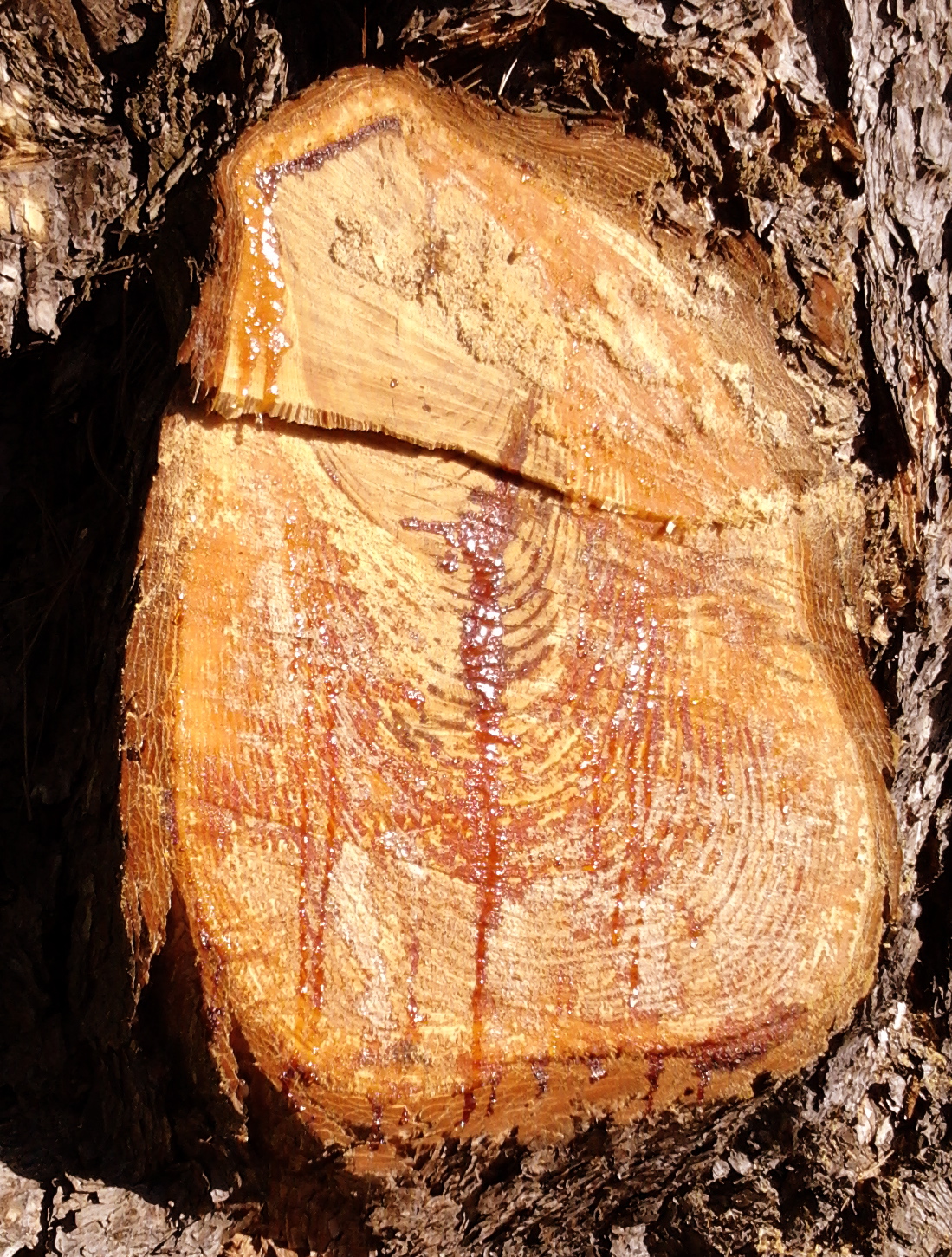
The picture doesn't look like much. But precious gems galore are in the making, on this cut evergreen in the winter sun.

The hymn about this first Christian martyr is in the Thomas Hopko book Winter Pascha, a lucky dollar buy at Value Village. I am hoping  there’s no copyright on quoting traditional prayers:

…The most beautiful Stephen is offered today, adorned in the crimson of his own blood as with precious gems. Come, O lovers of the martyrs! Weave the flowers of song into a crown….”

The fretting was about this. Is it fair to salvage edification and rejoicing out of other people’s tragedies? Maybe there would be even more to rejoice about if Stephen had sympathetic countrymen and could live a long happy life with a wife and kids and go right on being filled with the Spirit and working signs and wonders.

So on Sunday I trudged along with the shopping bag ruminating over all this. It was a sudden warm clear afternoon in late winter just before the first signs of spring. Suddenly the tree in this photo caught my attention, some fresh-lopped pine, or cedar, or spruce. The sight held me there for a good 15 minutes. (It would have been longer. But my cue to move on was a hand stirring the curtain in the house window. “Honey? Greenpeace is outside inspecting our hatchet job.”)

But meanwhile I stood leaning right up close, swaying like a charmed cobra to catch the full optical effect. The sap was spilling over with a keen fragrance, like incense. The taste was sharp clear incense too, when I touched a drop to my tongue. The rings of the tree formed a lovely pattern, delicate to the touch. The fine lines called to mind the 1,000 year old downed pine described by gentle gentlemanly explorer Enos Mills. (He deciphered the individual growth rings and left us a beautiful book about the old tree and the historic events that it lived through.) But most striking was the sunlight. It didn’t shine through the sap, but shattered into glitter against it like moonlight on snow. It sparked the surface into crimson gems, like cut rubies set in sidelights of sea-green and gold.

That was a lot of special effects emanating from one cut tree. It occurred to me that if a tree could manage all that, then what light shattered off a young man with a “face like an angel” who was a good orator and died praying for his executioners? (The eyewitnesses after all were also the people with stones in their hands, except for Saul of Tarsus minding the coats, though who would be stealing coats at a time like that?) If a tree of rings and gems could spell its own story, it might be “Martyrdom is a quantum transformation. Don’t bend your mind on it now. Pick up your vittles and walk.” But first I scooped up a liquid gem on a wood chip and took it home for the icon shelf.
P.S. – 6 weeks later, the tree stands at the front of a bed of daffodils. The sap froze in rows of amber icicles all along the base. The wood has aired out to a lovely gold, and lovelier still are fine gold lines etched all around the bark. Worth another visit on some sunny day.

Posted in Uncategorized | Tagged | Leave a comment

Light in the Window

Somebody else in our building complex is awake too. Hello neighbor!

One winter I was house-sitting an elegant new condominium in a pretty much empty building, keeping an eye on the place rent-free to work off my student loans. Back in the day, the neighborhood was tight-knit immigrant families in fishing and shipping. Then the jobs disappeared, and by the time I moved in it was all auto-salvage yards and boarded-up factories and a manicure salon and elegant new condominiums that were going to be great investments some day.

The condo had a huge collection of classical music records, and speakers that piped sound through the ceiling. But instead of handling any of that I taped a few rock songs off the radio by standing on a chair and holding my cassette player over my head. My favorite had a good violin line; the vocalist as far as I could tell was Richard Butler from the Psychedelic Furs, and the lead line in the refrain was “You Know the Way.” Until the cassette broke I played that song over and over all winter. I couldn’t replace the song because when I went into record stores and asked for “You Know the Way” and sang to the guys at the counter, they didn’t recognize it. Neither did my co-worker, an expert on all things Psych. Fur, so I finally gave up on finding my song.

My friend Bill moved me and my pots and pans in at the start. But otherwise my friends didn’t visit the condo, only because the winter was too cold and it was out of everybody’s way, and I didn’t have the energy to visit them and then trek over there. So it was a quiet winter. After work it took two subways and a bus in 1 hour 45 minutes, then walking a mile uphill over a freight train trestle and past an empty warehouse wall of barbed wire with graffiti and kung-fu movie posters and a chained up angry Great Dane. Being pretty anemic I’d stop halfway up in the snow to breathe and to borrow some encouragement from a light at the top of the hill. It was a flickery blue-gray sheen from somebody’s TV. The houses had front doors that opened right on the sidewalks, so anyone passing by could look right in to the living room. I didn’t actually look, but from the corner of my eye could tell that by the TV light there was a couple sitting side by side sharing an evening at home. It cheered me up to think that this couple was there together, braving all the changes in their neighborhood, loyal to their home and one another. Every night, their light helped me make it up the hill. Every night I’d trudge past and wish them a blessing.

Finally, the long winter was winding down. The student loans were paid off. House-sitting duty was over. My friend Bill offered to drive over and pick me up with my pots and pans. I even found my song again! It came on the radio one night. I called my sister and got on a chair and held the phone up to the ceiling and made her tell me what it was. “‘Cuts You Up,'” she said. “Peter Murphy.”

Coming home one last time I promised myself a quick peek in at that light on the hill, at those neighbors and their cozy domestic life. All the way up the street, past a bedraggled pussy willow tree in bloom and a wet robin sitting on a drainpipe, I had this sweet notion that the older couple inside would see me look. They’d wave and say “Hey, we’ve been watching you! Come on in.” Maybe they’d dish up some nice calorie-packed spicy food from the old country. I would tell them all about how much their light meant to me, and they’d have a good laugh about it, and then I’d come back and visit them. Here was the house! I looked in, and found out that all winter my devoted couple was a guy drinking a six-pack of beer on a sofa next to a life-sized stuffed clown. I forget which one of them was wearing the Kaiser Wilhelm hat.

That moment taught me to appreciate lights in windows, all kinds.  There was one in my neighborhood last fall. Somebody in a little house must have seen me stop and pick up a few apples from the street by their tree; next day the tree wore a new little hand-drawn sign, “Take some more! Good in pies and sauce.” At a rehabilitation home a young motorcyclist was getting over an accident, and for a while he couldn’t speak except by pointing to letters of the alphabet. But every morning he wheeled out to the street to set out a checker board and checkers and some lemonade and paper cups, just in case someone passing by felt like a game or a drink. He met quite a few of us that way; sometimes he even let us win. On New Year’s evening, the Sisters at St. Joseph Carmelite Monastery stayed open until 6:00, after Vespers was over. There was a wind-driven deluge of rain that night. Since it’s a cloister anyway, there were no sisters in sight. But they kept that chapel all warmed up with a red sanctuary light and candles and a Christmas crib. And in fact a steady line of people, most of them young men, filed in to sit and be in the silence.

Lights can be small things that don’t take much trouble. We all do things that look like lights to someone else. We never know who might come by and notice. Or what hills they were trying to climb along the way.


Posted in Uncategorized | Tagged | Leave a comment