
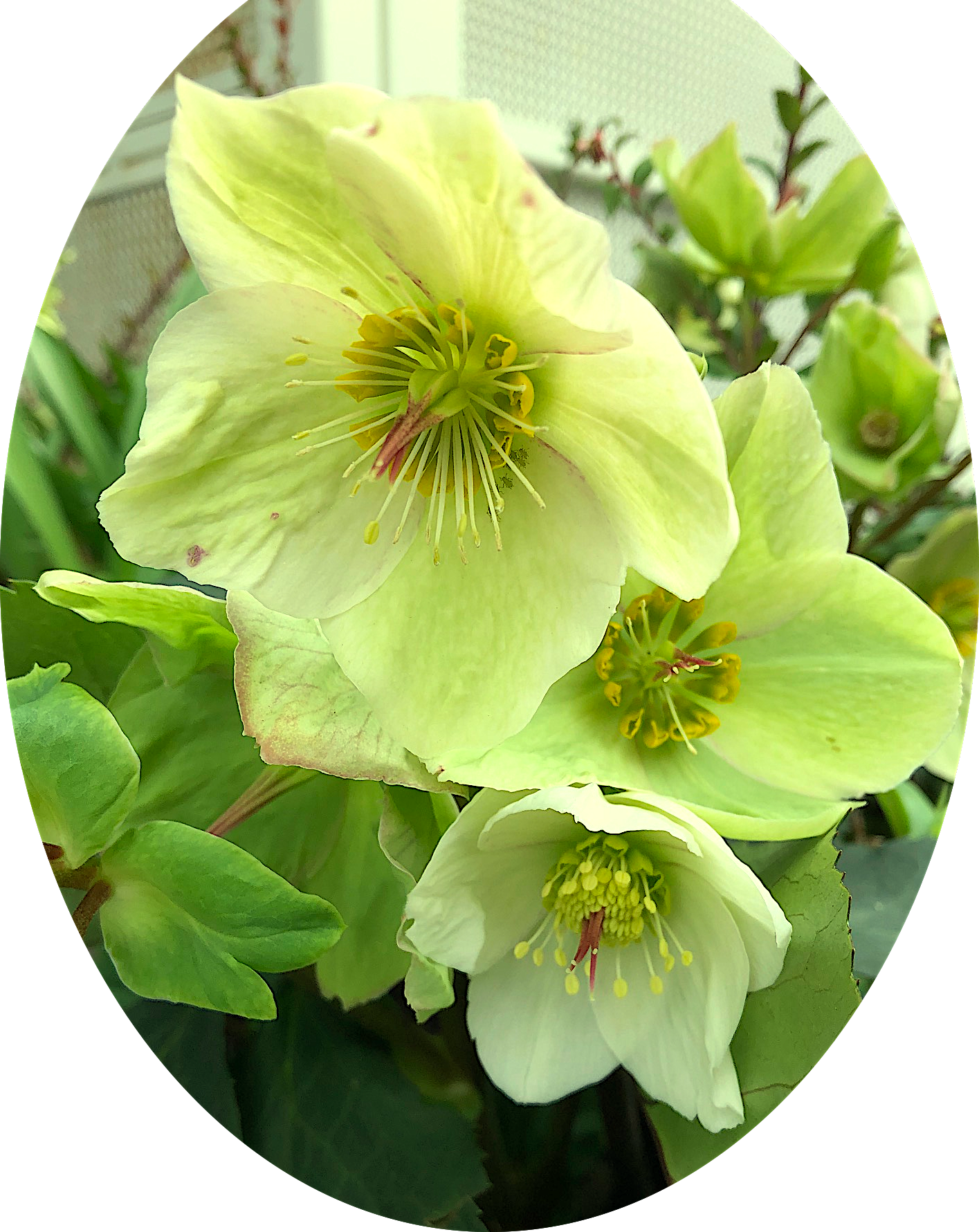
These Hellebores didn’t come from the green valley. They’re at the local garden center.
Last Friday at our beloved surviving store of venerable books, the dollar cart turned up a real gem: a mint new Richard Llewellyn in the prettiest jacket with a picture of a village in the mountains. Of course I carried my find to the sensitive sweet cashier, and gave her my dollar and a story: “Once upon a younger time, a man ended our dating association with a dire prediction: ‘Some rainy Friday night you’ll think of me, when you’re in bed all alone. Probably reading How Green Was My Valley.‘”
The cashier’s look of eager friendliness slacked down to dismay.
“And — I can hardly wait!” I confided to her, waving my new copy.
She was all smiles again. “Oh, what a lovely cover! Well, we can say he was giving you a helpful book recommendation.”
That night the rain and wind were in great form, a comforting racket for being all tucked in with this nice edition. It’s a good size copy, easy to hold and read. It fell open to Chapter 40: “I had splendid minutes in a bookshop…. O, there is lovely to feel a book, a good book, firm in the hand, for its fatness holds rich promise, and you are hot inside to think of good hours to come.”
After joining narrator Huw Morgan from cover to cover this week, I watched the lyrical warm-hearted 1941 film, made in California, and enjoyed the many viewer comments full of nostalgic memories and praise and movie lore and wit:
“This film stole the best picture award from the amazingly brilliant Citizen Kane and it is considered a shocking lapse of Hollywood’s taste. But you know what? I have watched this a dozen times and haven’t had the slightest desire to see Citizen Kane again.”
“Some weird accents to anyone who’s ever heard a real Welsh voice. Are the adult sons played by German POWs?”
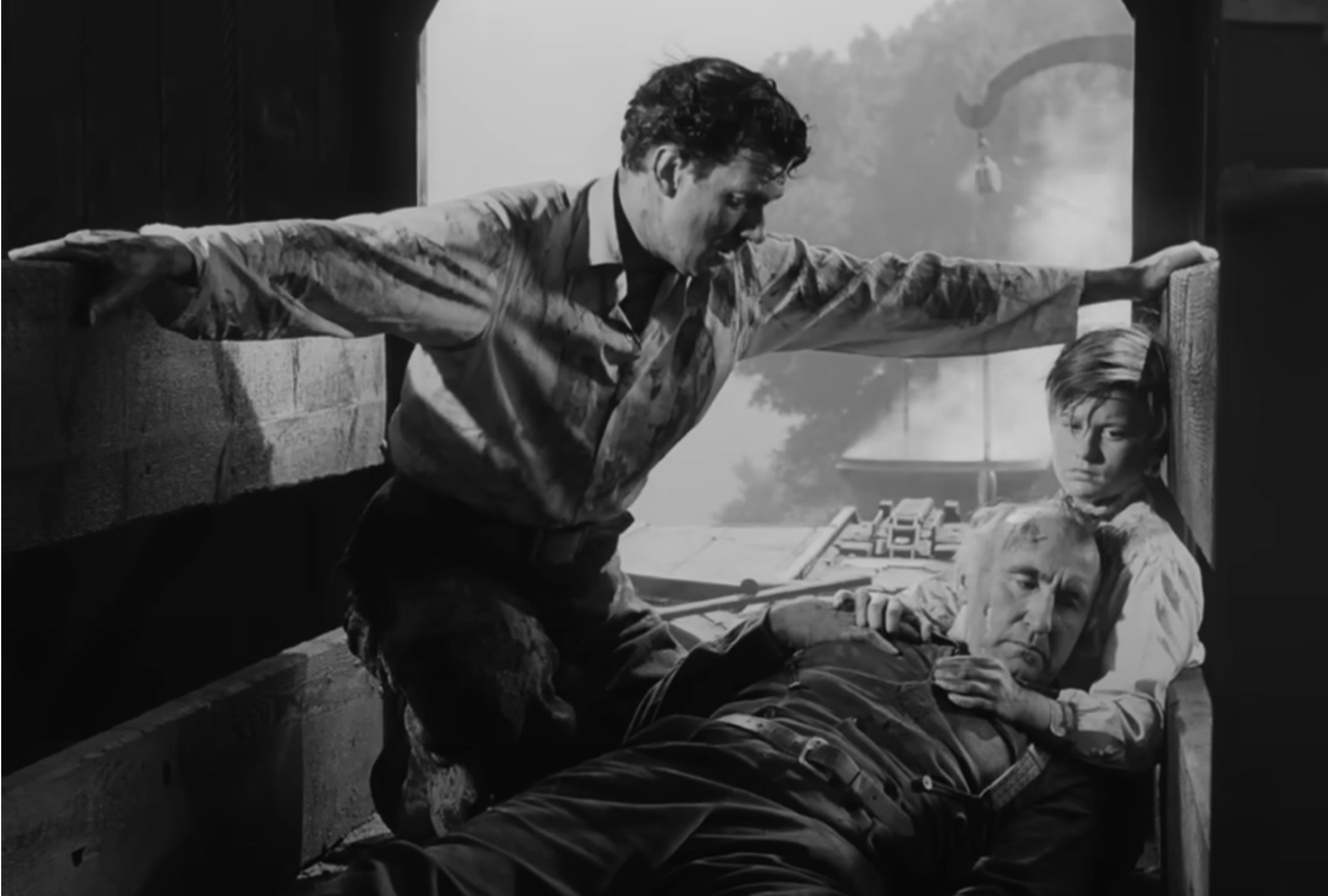
It was a pleasant surprise that the plot faithfully followed the book and its dialogues. The choral soundtrack brings us “Cwm Rhondda” (we English-speaking Catholics call it “Bread of Heaven”), “Calon Lân,” and other fine songs. The black and white sets and scenes were beautifully composed. Young Roddy McDowall as Huw was a luminous hardworking presence all throughout. In the climactic scene shown below, Huw finds and brings Dada’s body up to the surface of the shaft with Chaplain Gryffud just before the mine collapses.
Why isn’t this book popular??? Maybe Americans want a plot that builds up something successful. Maybe they don’t want a lengthy plaintive remembrance about family and friends cherished and loved who all die under a mountain of coal or fire or starvation or exile, about a village and valley abandoned under creeping black slag as the narrator ties his last belongings into Mother’s head shawl, and walks away from his crumbling house never to return. There’s graphic violence and heartbreak too, hair-trigger tempers and fisticuffs and bloodshed and suffering at childbirth and drunkenness and madness and social shunning and English cruelty to children who use Welsh at school.
But through it all, there are lilting passages of intricate ecstatic praise of family and hearth and home and singing and the valley and animals and flowers. There is even tenderness for the little beasts of burden who power the mines underground their whole lives. Before the final cave-in that destroys all the life they know and Huw’s father at the bottom of it all, Huw rushes into the dark to get them out:
“Well, if you had seen the little horses when they saw us. Like children, they were, ready to sit down at a party, and with just as much noise…. the ponies were so full of joy that they pushed against us with their noses, and rubbed their necks…. all shouting to be going on top to grass.
Eh, dear.
If you had seen those ponies running when we let them loose. Blind they were, but they knew that mountain had only kindness for them and nothing for them to trip on or trap to bring them low.
If only we could all have been as happy.”
An improving read, something to be grateful for on a rainy Friday.
 consolationland
Perfectly timed for St. David’s Day. Dydd Gŵyl Dewi Sant!
<
div>
— Bill
<
div dir=”ltr”>
<
blockquote type=”cite”>
Dear Linear A, It is? How nice is that? Now I want to go find out who St. David is, and what we should do about it. It is good to see your message. Will keep it in mind while simmering up the potch. Love, M
Hi Masha,
Not sure why WordPress links me to my long-moribund blog, but it’s me, Bill Sheehan.
<
div>St. David is the patr
Perfectly timed for Saint David’s Day! Dydd Gŵyl Dewi Sant!